






 Portuguese
  Spanish


Researchers Identified Unusual Events in Antarctica That Do Not Fit Current Physical Explanations, Intriguing the Scientific Community.
An experiment conducted 40 kilometers above the Antarctic ice recorded signals that current physics cannot explain.
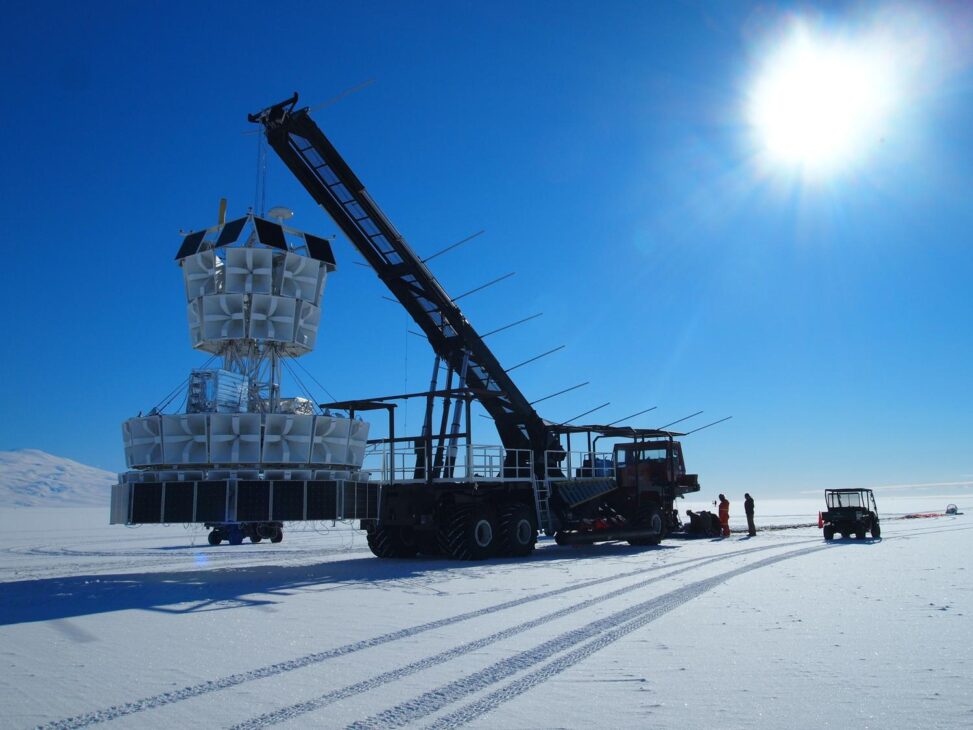
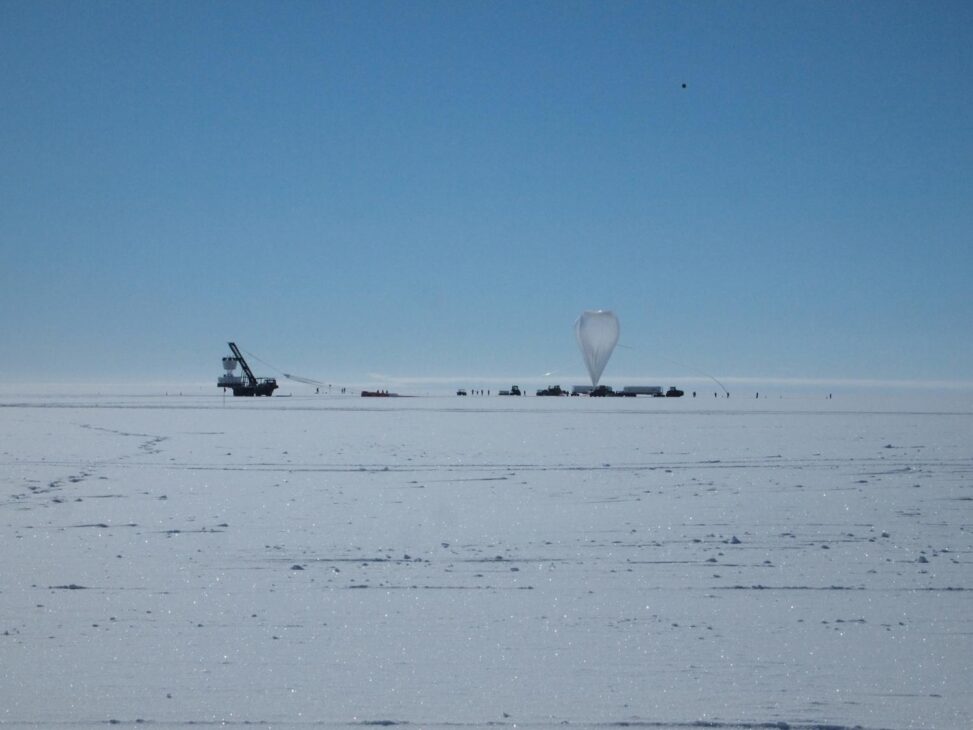
The data were captured by the ANITA detector, a radio device installed on balloons, and indicate a phenomenon that intrigues scientists: radio pulses coming from below, as if they had traversed the entire Earth before emerging from the ice.
Signals That Challenge Logic
The project, called the Antarctic Impulsive Transient Antenna (ANITA), involves an international team that includes physicists from Penn State.
-
China Develops Custom 140-Ton Electric Mining Truck with 770 kWh Swappable Battery, Deploys 290 Units in Xinjiang’s Largest Zinc Mine

-
Meta to Launch Arena, a New Prediction App Targeting 3.56 Billion Users, Competing with Polymarket and Kalshi

-
Scientist Challenges Famous Human Evolution Theory, Argues Homo Sapiens Evolved Gradually Over Thousands of Years
-
15-Year-Old American Builds Ocean Generator with PVC Pipe and 3D-Printed Propeller for $12, Wins National Prize, Presents at White House, and Makes Forbes 30 Under 30 List




The experiment was designed to detect high-energy cosmic particles. Typically, these particles, like neutrinos, come from space and collide with the Antarctic, producing radio signals that the sensors can capture.
But this time it was different. The pulses came from extremely steep angles — up to 30 degrees below the horizon.
This means that, to appear this way, the particles would have to traverse thousands of kilometers of solid rock from the Earth’s crust. Something that, according to current scientific models, should not happen.
The Mathematics Does Not Add Up
Stephanie Wissel, a physicist at Penn State and a member of the project, explained that this type of signal should have been completely absorbed by the Earth before emerging.
For her, the numbers simply do not make sense. Although neutrinos are known to traverse matter extremely easily, even they would have difficulty maintaining this behavior with such intensity and at that angle.
“You have a billion neutrinos passing through your thumbnail at any moment“, said Wissel.
But detecting one of them is rare due to their low interaction with matter. Still, the observed signals do not fit even the typical behavior of these particles.
Neutrinos Discarded
Based on the collected information, researchers began to question whether the signals were generated by neutrinos. The conclusion, for now, is that this is unlikely. The origin of the pulses remains unknown.
To reinforce the analysis, the ANITA data were compared with records from two other large neutrino detectors: IceCube, also in Antarctica, and the Pierre Auger Observatory in Argentina. Neither captured any similar evidence.
Signals Remain Unexplained
Simulations and additional analyses were performed to eliminate the possibility of background noise or interference from other cosmic rays. Even after these steps, scientists found no solid explanation for the detected signals.
“The signals remain anomalous,” said Wissel. This opens up two possibilities: either it is some new type of particle not yet identified, or we are facing a rare and poorly understood natural effect.
New Generation of Detector Comes Into Action
To try to clarify this mystery, the team is now working on developing a new version of the experiment. The detector will be called PUEO and will feature greater sensitivity and analytical capability.
According to Wissel, the new device may identify more signals and help scientists understand if they are facing new physics or just unusual environmental effects that have not yet been fully described.
“My guess is that some interesting radio propagation effect occurs near the ice and also near the horizon,” she said. “It is something I still do not completely understand.”
Despite the uncertainty, the team remains optimistic. Researchers believe that the next flight of the detector may bring the missing answers.
The study with the results was published in the journal Physical Review Letters.






