






 Portuguese
  Spanish
  2 min of reading
  0 comments


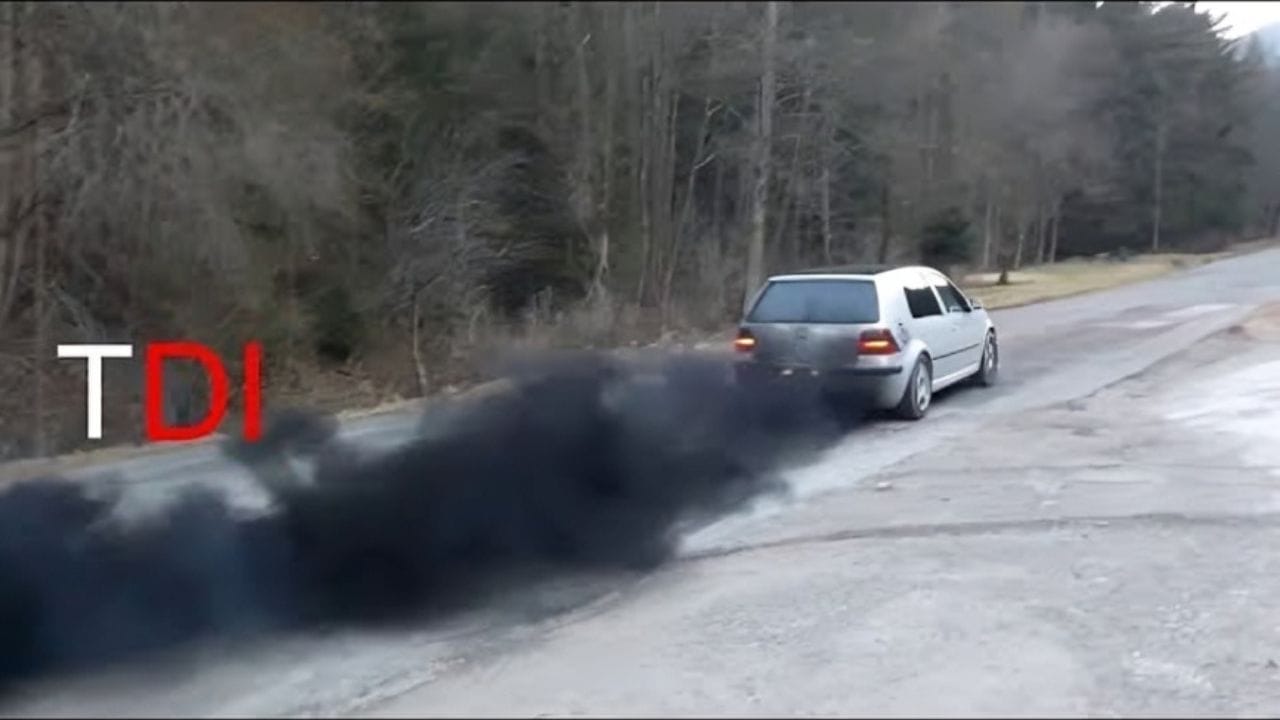
The Dieselgate Scandal, Centered on Volkswagen’s Turbo Diesel Engines, Represents One of the Biggest Scandals in the Automotive Industry. This Episode Not Only Stained the Reputation of the German Corporation, but Also Caused a Colossal Financial Loss Due to the Use of Software to Bypass Emission Regulations.
Founded in 1937 by the German government, Volkswagen, after World War II, under the leadership of Major Ivan Hirst, had a significant resurgence. The Kdf-Wagen model, later known as Volkswagen, especially the iconic Beetle, achieved global success. During the 1960s, Volkswagen expanded its portfolio by acquiring other manufacturers, such as Auto Union, and developing vehicles with front-mounted liquid-cooled engines.
Volkswagen introduced its first diesel engine, the EA827, in the Golf in 1976. This indirect injection, naturally aspirated engine was a response to the oil crisis, focusing on energy efficiency. In 1982, the company launched the turbo diesel version of the Golf GTD. With the arrival of the 1990s, Volkswagen continued to innovate with the TDI (Turbocharged Direct Injection) engine series, starting with the Audi 100 2.5 TDI.
The Turning Point at Volkswagen: Dieselgate


The Dieselgate scandal came to light in 2015 when the Environmental Protection Agency (EPA) of the United States discovered that Volkswagen was using software to manipulate emissions tests. This software detected when the vehicle was being tested and altered parameters to reduce emissions. Under normal conditions, the controls were disabled, increasing pollution.
-
The Ford Ranger plug-in hybrid, the same rugged pickup that handles 800 mm of water, becomes a plug-in pickup with a flex-fuel ethanol engine and is chosen as the International Pickup of 2026.

-
New 0km electric car costs less than R$ 50,000 with an 18 hp engine, carries up to 6 people, travels over 100 km per charge, recharges in a regular outlet, and surprises by dispensing with airbags and limiting speed to 50 km/h in Mexico.
-
Pressure from residents forces a U.S. energy utility to suspend negotiations with a data center that could require 500 megawatts by 2032 and demand new lines, reinforcements in the power grid, and large infrastructure investments.

-
New Honda HooRide 125 scooter debuts in China with ADV styling, 17-inch wheels, TFT panel, Smart Key, and fuel consumption of up to 47.17 km/l, aiming to resemble an urban X-ADV with a 125 engine, CVT transmission, and an economical proposal for cities.


The consequences of Dieselgate were severe. Volkswagen faced formal charges from the U.S. government, resulting in a recall of over 8 million vehicles and multibillion-dollar financial losses. Executives from the company were detained in several countries, and Volkswagen was forced to replace the EA189 engine line with the EA288, which complied with emission standards without the use of fraudulent software.
Impact on the Automotive Industry
The scandal had a profound impact on the global automotive industry. It led to stricter emission standards and prompted investigations into other automakers for similar irregularities. As a result, there was a significant increase in the development of hybrid and electric vehicles, with Volkswagen itself entering this market to try to repair its image.
The case of the Volkswagen TDI engine and the Dieselgate scandal highlights the importance of integrity and transparency in the automotive industry. While Volkswagen continues to face legal and financial repercussions from its actions, the episode served as a catalyst for significant changes in the industry, with a renewed focus on sustainable transportation technologies.


Be the first to react!