Portuguese
  Spanish


New Austrian Method Melts Automotive Scrap Without Separating Alloys And Creates Stronger Aluminum, With Potential To Save Energy And Reduce Emissions
The transition to electric cars has brought important advancements, but has also opened new problems. One of them is hidden in junkyards: tons of aluminum that have lost their purpose. Previously, combustion engine scraps were directly reused, creating a predictable cycle.
With the decline of these engines, this process has been disrupted. The result is worrisome because millions of tons of aluminum are at risk of becoming low-quality materials, in a process known as downcycling. Meanwhile, primary aluminum continues to be extracted, with high environmental and energy costs.
In Europe, it is estimated that between 7 and 9 million tons of automotive aluminum accumulate every year. If nothing changes, this volume could become an obstacle to the continent’s climate goals.
-
Farmer Revives Arid, Abandoned Land in Brazil’s Bahia into Thriving Forest, Demonstrates How ‘Syntropic Agriculture’ Can Transform Rural Futures

-
Study Reveals 40% of Brazilians Unaware of Circular Economy, Highlighting Challenges in Sustainable Transition and Recycling Expansion
-
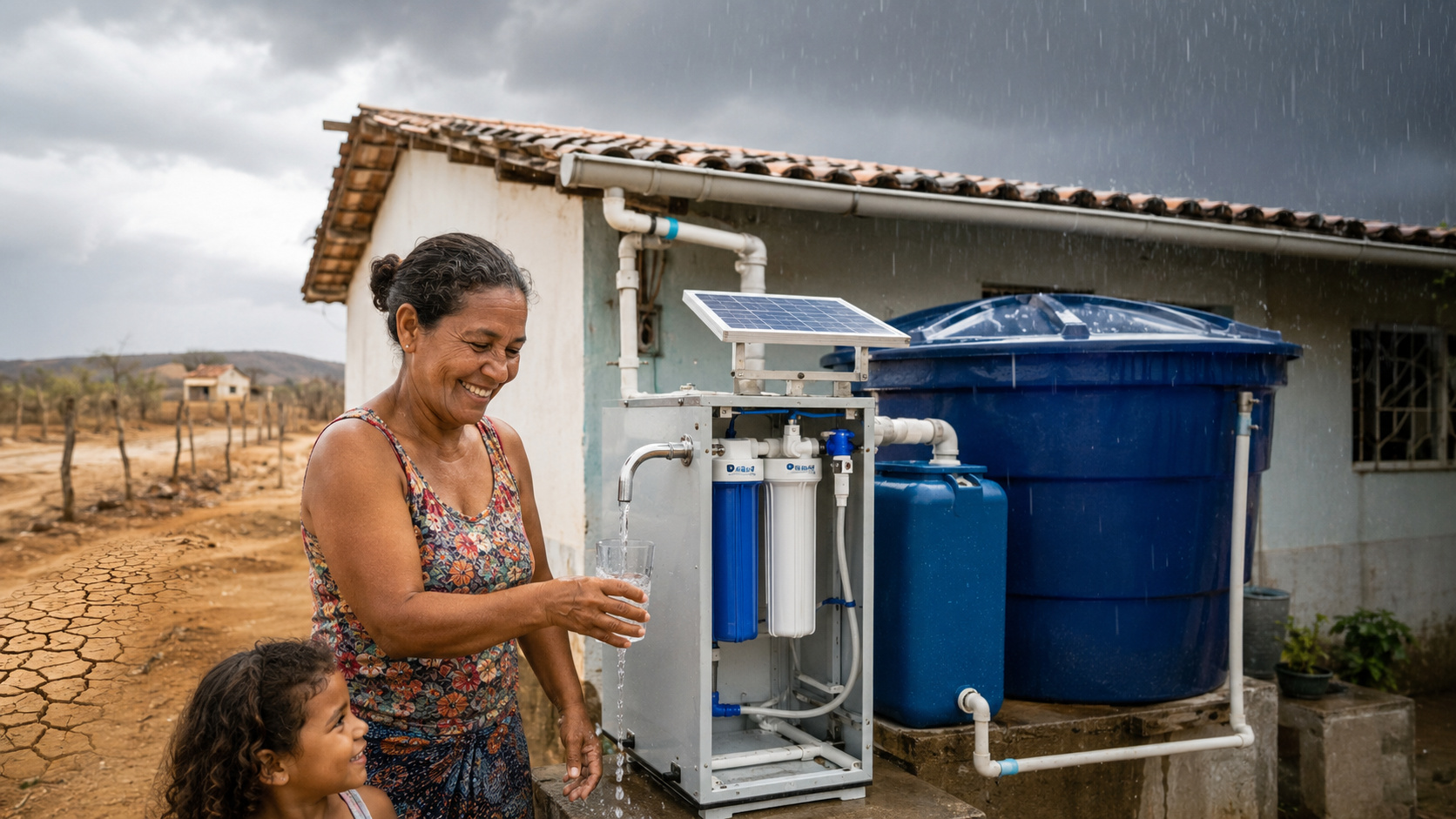
Brazilian Startup Converts Rain into Potable Water Without Chemicals, Surpasses 10 Million Liters, Joins $1.2 Million Project to Bring Simple Technology to Drought-Stricken Areas in Northeast Brazil
-
Brazilian Company Innovates with Treated Water Billing Model, Surpassing 10 Billion Liters and Offering Up to 40% Savings for Large Industries


An Unprecedented Approach
It was in this context that researchers from the University of Leoben, led by Stefan Pogatscher, developed a new path. The proposal is simple in concept, but bold in practice: to melt all automotive aluminum scrap without separating the different alloys. This breaks a principle that has dominated recycling for decades.
Until today, separating each alloy was seen as essential to maintain reliable mechanical properties. However, modern cars can have up to 40 different types of alloys, which makes sorting almost unfeasible.
With the new method, all the aluminum from a vehicle is melted into a single block. The initial material, fragile and brittle, undergoes a thermal treatment at 500 °C for 24 hours.
This process alters its internal structure and transforms it into a strong, ductile alloy ready for demanding applications.
A Superior Material
What surprised even the researchers themselves was the result. In some cases, the new recycled alloys demonstrated even greater strength than virgin aluminum.
This means they could be used in high-demand parts, such as chassis and frames, which were previously restricted to primary materials. Moreover, the entire process is compatible with the foundries and equipment already used by the industry, making implementation easier.
This compatibility is essential because it reduces cost and infrastructure barriers. In conservative sectors like automotive, this quick adaptation can accelerate acceptance.
Resistances And Questions
Despite the promise, there are obstacles to face. Geoffrey Scamans from Brunel University warns that vehicle parts need to meet very strict safety standards.
Therefore, each recycled batch must demonstrate consistent results. The problem is that not every car has the same combination of alloys, which can lead to unpredictable variations.
Mark Schlesinger from the University of Science and Technology of Missouri reinforces the concern. He reminds that chemistry cannot be left to chance. Knowing the composition of each melt is essential for reliability. This may require additional costs for monitoring and large-scale standardization.
The Environmental Impact
Even with challenges, the potential gains for the environment are immense. The primary production of aluminum is among the most energy-intensive industrial processes on the planet. In addition to electrical consumption, it emits large quantities of CO₂ and generates waste.
Recycling, on the other hand, can consume up to 95% less energy. Turning millions of tons of scrap into noble material would avoid massive emissions and reduce pressure on bauxite mines, many of which are located in fragile areas.
Additionally, the solution strengthens the circular economy. Instead of exporting worthless waste, countries can create local jobs in advanced recycling, building cleaner and more sustainable production chains.
Testing And Next Steps
The idea has already left the paper and is starting to be tested. Countries like Germany, Sweden, and France are investing in pilot lines to validate recycling technologies.
In Austria, Pogatscher’s team is negotiating with manufacturers to conduct tests in real environments, assessing whether recycled aluminum can be integrated into large-scale vehicle production.
The next steps involve standardizing processes, increasing quality control, and convincing the industry that the solution is viable. Trust will be crucial for the method to become part of global production.
More Than Just A Technical Innovation
What is at stake is not just a scientific discovery, but a paradigm shift. If adopted on a large scale, the process could be replicated in other sectors, such as aerospace, construction, and electronics, all major consumers of aluminum. The innovation also offers additional benefits:
- Reduces energy costs of manufacturing.
- Protects natural habitats by decreasing mining.
- Improves energy efficiency of end products.
- Encourages cleaner and lighter materials.
Therefore, the impact goes beyond electric cars. It affects the way societies produce and reuse the resources that sustain modern life.
A Silent Revolution
The method developed in Austria shows that recycling does not have to be synonymous with quality loss. On the contrary, it can produce stronger, useful, and valuable materials. What seemed to be a problem without a solution can become a competitive advantage for the European industry. Moreover, it paves the way for reducing emissions and saving energy on a global scale.
Because, in the end, this innovation is not just about scrap. It is about redesigning our relationship with resources and giving a new meaning to what we call recycling.