Portuguese
  Spanish



Whirlpool, Owner of Consul and Brastemp, Received Certification for 100% Renewable Energy Usage in Its Units. The Company Aims to Reduce Emissions by 6,500 Tons of CO2 This Year
Whirlpool, owner of brands such as Brastemp and Consul, is on track to meet its sustainability goals. The company now has another international certification, which confirms 100% of the use of renewable energy, such as wind, hydroelectric, and solar in two of its three manufacturing units in Brazil, significantly reducing CO2 emissions, in which it aims to be neutral by the next decade. As such, the company will avoid the emission of 6,500 tons of CO2 this year alone, which equates to a reduction of over 30% compared to last year.
Owner of the Brands Consul and Brastemp Comments on Its Achievement
The initiative is part of the company’s global goal to achieve CO2 emissions neutrality by 2030. The new certification came into effect at the beginning of the year for the units in Rio Claro (SP) and Manaus (AM) after investments in renewable energy. The unit in Joinville (SC) is expected to achieve 100% renewable energy by 2024. Currently, the rate is 85% at the office of the owner of Brastemp and Consul in São Paulo, which had already been certified in November of last year.
According to Cristiano Félix, Senior Manager of Environment, Occupational Safety, and Health for Latin America, the company in Joinville already has agreements in place for the use of renewable energy. Meanwhile, the Vice President of Legal Affairs, Understanding and Corporate Affairs for Whirlpool in Latin America, Bernardo Gallina, states that the decision to purchase energy only from renewable sources is more a matter of value for the company than merely cost reduction and savings, to the point that the company has started spending 10% more with the change.
-
Fired during apartheid and with a little borrowed money, an electrician started with a borrowed truck and transformed electrical services into a group connected to energy, real estate, and infrastructure in South Africa.

-
Wood has ceased to be just a construction material in Yale research and has become insulation for electrical transformers that face intense heat, aging, and increasing pressure from the renewable energy-powered grid.
-
More than 1,000 residents of a remote island in Kiribati now have clean water and electricity with solar systems operated by the community itself.
-
Ceará brings together 7 giants and R$ 66 billion to transform Pecém into the largest green hydrogen hub in Brazil, with final decisions expected by the end of 2026.


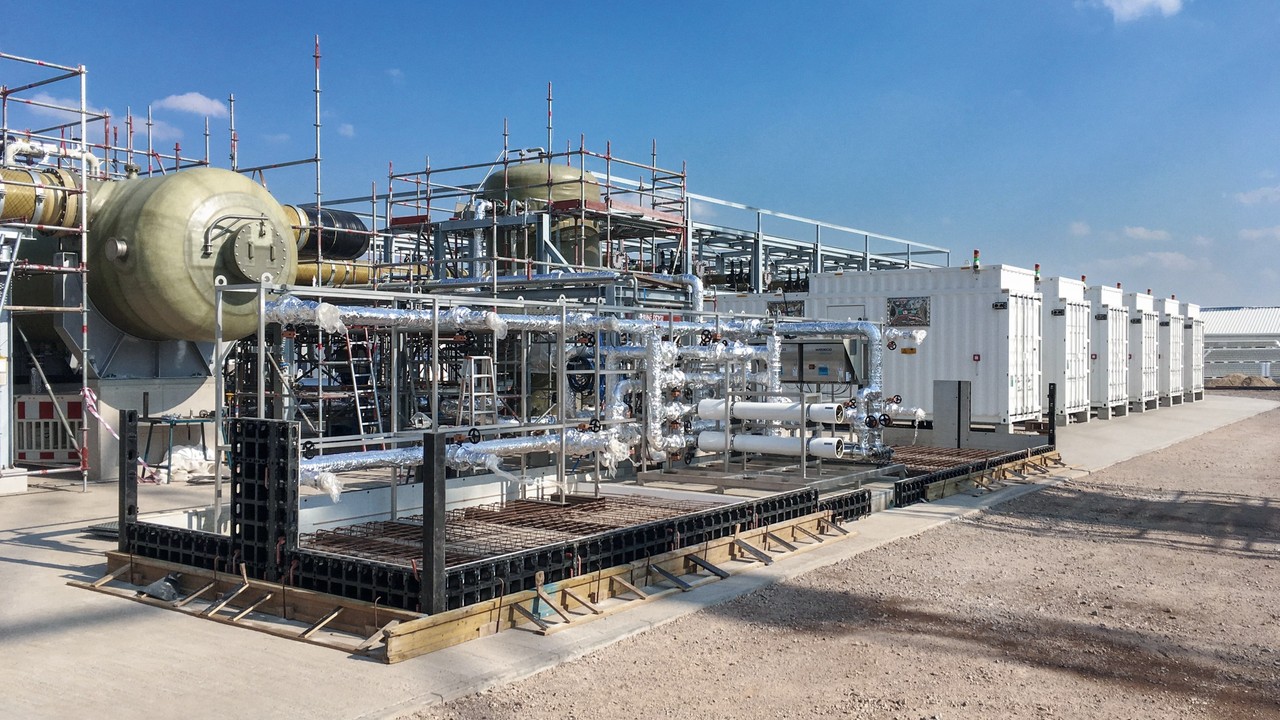
The idea is to consume less electricity and reuse resources within the company to make it more sustainable. The reduction of 31% in CO2 emissions is equivalent to planting about 43,000 trees.
Whirlpool Products Focus on Energy Efficiency
Alongside the international certification for renewable energy acquisition to reduce CO2 emissions, the owner of Consul and Brastemp also invests in the energy efficiency of its products, and according to the company, about 90% of its products are classified as “A,” according to the Procel energy-saving label.
According to Douglas Reis, Director of ESG and Regulatory Affairs for Latin America, few products still hold a “B” classification, and there are no products with a “C” classification. Additionally, the owner of Brastemp and Consul also provides a bonus for executives based on goals in the three spheres of the acronym: environmental, social, and governance.
Performance in these areas is regularly evaluated, with bimonthly meetings involving senior executives. These meetings occur within the ESG committee framework, which covers the Latin American region. It is worth noting that other regions also have their own committees.
Get to Know Whirlpool
Whirlpool Corporation in Brazil is a leading company in the production of household appliances for laundry and kitchens, present in the country with well-known brands such as Brastemp, KitchenAid, Consul, B.blend, and Compra Certa, among others.
In Brazil, the company has four units, three factories located in Joinville, Manaus, and Rio Claro, and an administrative center located in São Paulo. Additionally, there are four technology centers, three distribution centers, and 23 laboratories where more than 11,000 employees work, dedicated to translating consumer needs into innovative and unique sustainable products and services.