Portuguese
  Spanish


After Successive Droughts And A Historic Flood, Farmers Face Increasing Debts And Uncertainties. The Mobilization For Securitization Seeks A Solution, While The Field Deals With Economic Losses And Deep Social Impacts.
After four consecutive droughts and a flood considered the most devastating in the recent history of Rio Grande do Sul, rural producers in the state face a critical scenario of indebtedness and uncertainties.
In the last five years, about 220 thousand farmers in Rio Grande do Sul have seen their properties impacted by extreme weather events, resulting in crop losses, compromised production, and difficulty in financial recovery.
The drama, which affects entire families, worsened with the flood in May 2024, hitting everything from small properties to large producers and putting the future of the regional agribusiness at risk. The information was originally published by Revista Oeste.
-
Study of Brazil’s Tietê River Finds 25 Pesticides in Water, Including Cancer-Linked Substance Near Source

-
Young Entrepreneur Expands from 50 to 1,400 Chickens, Proving “Happy Hens” Can Be a Viable Business
-
Small Farm in Brazil’s Minas Gerais Produces 403 Liters of Milk Daily, Sets Benchmark for Rural Producers
-
Man Revives 1930s Abandoned Trout Farm, Learns from Scratch, and Earns $1.1 Million Annually Selling Fish to Michelin-Starred Restaurants


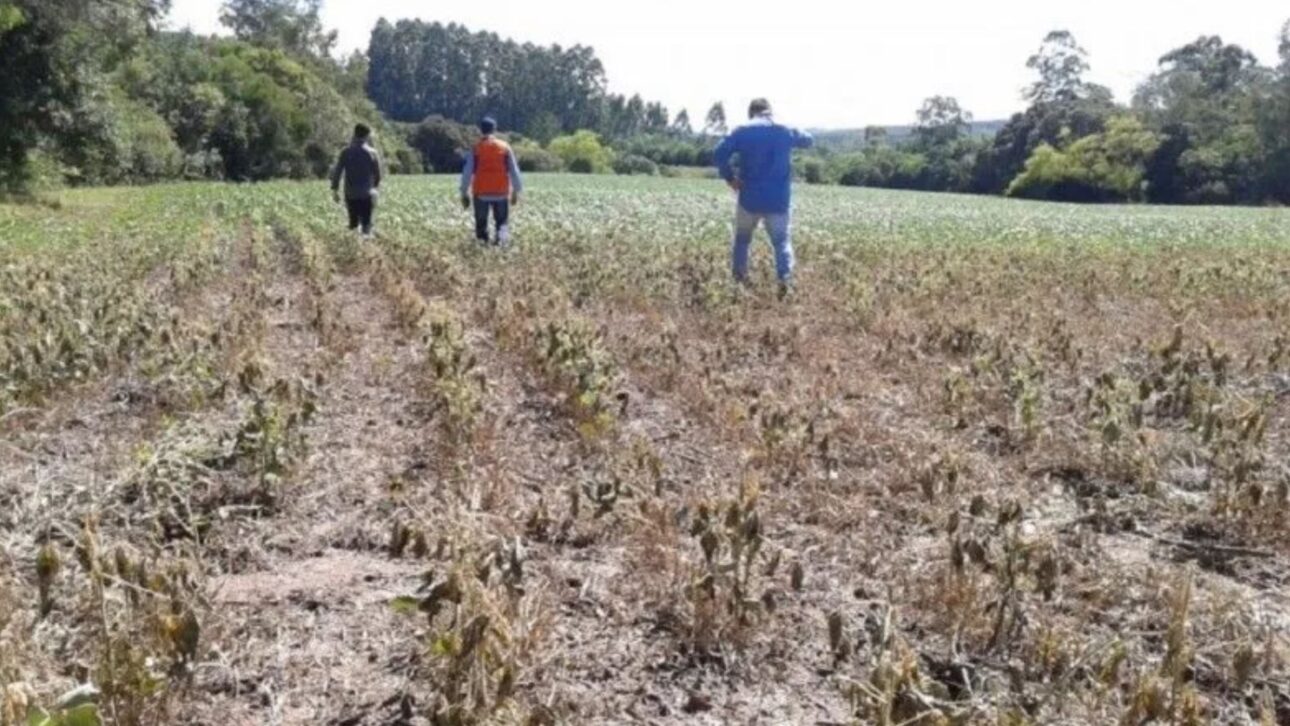
Impact Of Losses And Increase In Indebtedness Among Rural Producers
The daily work routine on the properties, such as that of Rafael Herrmann, 43, a rural producer in Boa Vista do Cadeado, in the northwest of the state, has transformed into a daily challenge to maintain milk production and support his family.
He and his wife, Indiara Cristiane Paez, manage 29 dairy cows, in addition to heifers and calves, but the effort has not been enough to ensure financial stability.
Herrmann’s situation represents thousands of other families in the countryside who, despite hard work, accumulate debts and face obstacles to renegotiate overdue amounts.
According to the Federation of Agriculture of Rio Grande do Sul (Farsul), the debts of farmers in Rio Grande do Sul already total R$ 72 billion only in the formal financial system.
In addition to the banking system, producers need to deal with financial commitments to machinery dealers, input retailers, and cooperatives, further increasing pressure on family budgets.
According to research by Revista Oeste, the accumulation of debts has been worsened by the difficulty of accessing rural credit under suitable conditions.
Difficulties With Rural Credit And The Role Of Cooperatives
Access to rural credit, a fundamental instrument for the functioning of properties, has become an additional challenge due to the requirements imposed by cooperatives and financial institutions.
Farmers report difficulties in negotiating debts even when they present technical reports proving losses caused by weather-related adversities, as provided for in the Rural Credit Manual (MCR) and Summary 298 of the Superior Court of Justice (STJ).
In practice, as Rafael Herrmann reported in an interview with Revista Oeste, many institutions do not follow MCR standards and offer commercial credit alternatives, with interest rates ranging from 1.5% to 3% per month, well above the conditions of traditional rural credit.
For many farmers, accepting these conditions ends up being the only way to maintain production and preserve a clean name, which is essential for purchasing inputs and continuing operations.
The consequence, according to producers, is the formation of a “snowball” of debt that compromises the sustainability of the sector and weakens the local economy.
Protests And Pressure For The Securitization Of Farm Debts
In light of the state of calamity, rural producers from different cities in Rio Grande do Sul have organized protests since May 13, 2024, demanding attention from authorities and pressuring lawmakers for the approval of emergency measures.
The main focus of the movements is the debt securitization project currently under consideration in the National Congress.
Securitization consists of converting debts into securities guaranteed by the National Treasury, enabling special financing conditions and extended payment terms.
The experience of similar measures in the 1990s, which allowed the installment of debts of farmers in Rio Grande do Sul over up to 25 years, is often cited as a viable and already implemented solution in the country.
According to details provided by Revista Oeste, the approval of such a project is viewed by sector entities as fundamental to avoid the financial collapse of Rio Grande do Sul’s agribusiness.
Arlei Romeiro, financial director of the Association of Rural Producers and Entrepreneurs (Aper), emphasizes that securitization would give producers a new lease on life, allowing them to reorganize their finances without sacrificing their assets, as currently happens with the execution of properties and guarantees.

Social And Family Consequences In The Rural Area Of Rio Grande Do Sul
The effects of the crisis go beyond economic barriers and have a direct impact on the daily lives of rural families.
While some producers join the protests in search of answers, others report cases of depression, illness, and even suicides, exacerbated by financial pressure and a lack of immediate prospects for improvement.
Many resort to selling assets, animals, and equipment to ensure planting and harvesting for the next crop, hoping that the cycle of losses will be interrupted.
The newspaper also pointed out that this scenario of social vulnerability challenges public policies and mobilizes entities to seek effective solutions.