Portuguese
  Spanish


Left lane requires attention, temporary use, and safe release to keep highway flow without unnecessary blockages
A very common traffic rule on Brazilian roads still raises doubts among drivers and can result in penalties. The left lane, generally associated with faster vehicles, should not be occupied as a permanent space for circulation. The Brazilian Traffic Code provides for punishment for those who fail to give way on the left when requested, even when the driver believes they are traveling within the permitted speed of the road.
The conduct is provided for in Article 198 of the CTB, instituted by Law No. 9,503, of September 23, 1997. The infraction is medium, results in a fine of R$ 130.16, and adds four points to the driver’s license. The rule reinforces that the left lane functions to organize the flow, allow overtaking, and avoid disputes between drivers traveling at different speeds.
Technical rule reveals why blocking the left can result in a fine
The left lane should be used as a passing space, not as a possession lane. When a vehicle remains in it for long stretches unnecessarily, the highway flow can be hindered, and other drivers may find it difficult to continue their journey. This situation becomes even more delicate when there is deliberate blocking of those coming from behind.
-
São Paulo to Revamp 174 Roundabouts on State Highways with $7.7 Million Investment to Improve Safety

-
New Helmet Rule in Brazil Requires Inmetro Digital Seal and QR Code from July 1, 2026, But Existing Helmets Are Exempt — Here’s What Changes and How to Verify Authenticity

-
Bus Strike in Rio Disrupts Public Transport, but Court Ruling Ensures 50% of Fleet Remains Operational
-
São Paulo Government puts R$ 343 million on the table and releases 31 km of duplication, 9.84 km of third lanes, 4 reinforced viaducts, and 8 grade-separated returns.


The driver who notices another vehicle approaching in the rearview mirror should clear the lane as soon as it is safe. This guidance applies even when they are at the speed limit of the road. The rule does not authorize speeding by others, but it prevents the highway from becoming an environment of conflict, pressure, and dangerous maneuvers.
Correct lane use helps avoid conflicts in traffic
The logic is simple: whoever overtook should assess if they can return to the right lane. On a highway with a limit of 110 km/h, for example, a driver might encounter a truck at 80 km/h and need to use the left to complete the maneuver. After overtaking, the return should occur when there is a safe distance from the overtaken vehicle.
Driving long stretches on the left unnecessarily increases the chance of irritation, risky approaches, and unexpected braking. The lane should also not be used to block another driver’s passage or to try to correct the conduct of those coming from behind. The driver’s role is to drive safely, not to turn the road into a dispute.
Request for passage should be made without aggression
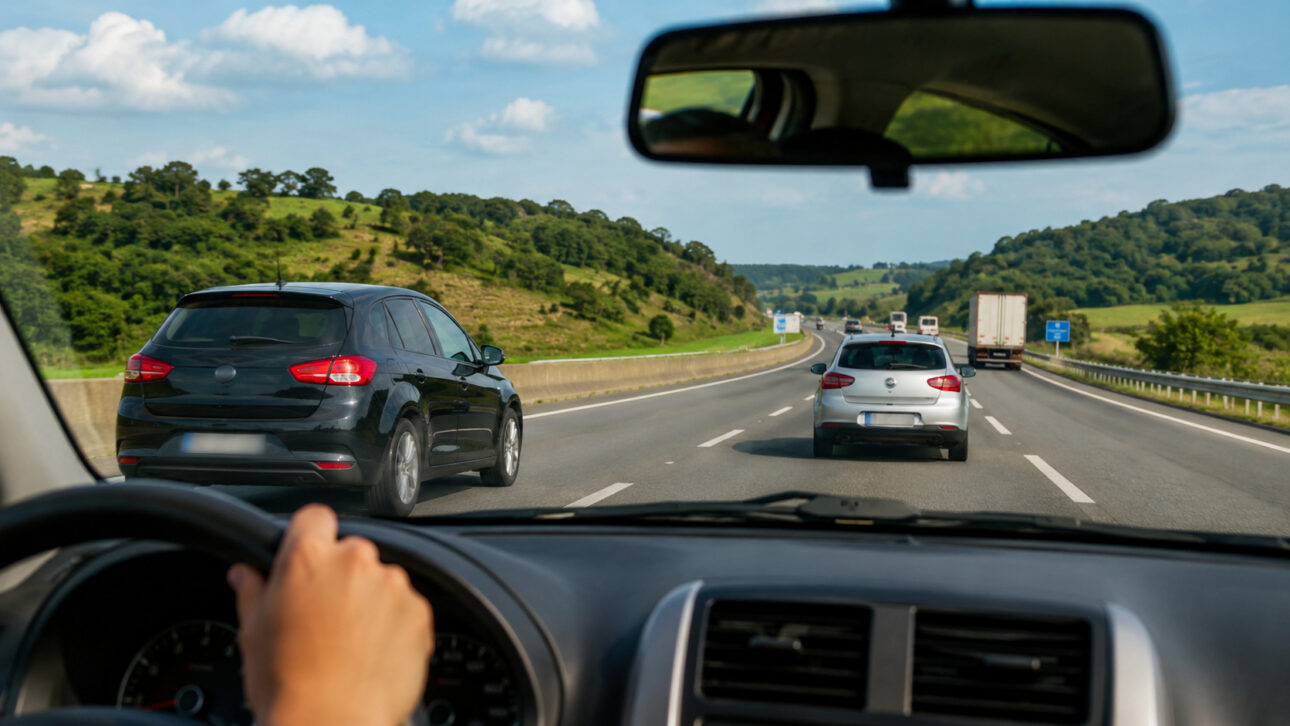
Requesting passage on the left requires clear communication and safe behavior. The first precaution involves maintaining an adequate distance from the vehicle ahead, so the driver can notice the approach in the rearview mirror without feeling pressured. If they do not notice the car’s presence, a brief flash of high beams can indicate the intention to overtake.
The signaling needs to be discreet and without insistence. The driver should avoid tailgating the vehicle in front, as this practice increases the risk of serious collisions. When there is no space to clear the lane immediately, the safest option is to wait until the other driver can move out safely.
Safe overtaking depends on attention before the maneuver
Overtaking requires observation of the surrounding traffic, checking mirrors, and attention to the blind spot. Another vehicle may have already started the same maneuver, making lane changes more dangerous. The driver should signal in advance to indicate the intention and reduce doubts among nearby drivers.
It is also important to assess distance and speed before leaving the lane. It is not enough to have free space; the driver needs to confirm there is enough time to overtake without causing abrupt braking. Curves, bridges, tunnels, inclines, and sections with low visibility require even more caution, as they increase the risk of accidents during the maneuver.
Left lane exists to keep traffic flowing
The left lane does not belong to the most powerful car, the fastest driver, or those who believe they are teaching a lesson in traffic. It organizes the flow, facilitates overtaking, and reduces risky situations on highways. Correct use depends on attention, respect for the rules, and constant reading of the road’s movement.
Traffic becomes safer when each driver understands their role. Those who need to overtake should act carefully, signal, and return to the right at the appropriate time. Those in front should allow passage when it is safe. This combination avoids blockages, reduces conflicts, and helps preserve the safety of everyone on the road.
Do you believe that the biggest problem on highways is the lack of knowledge about the rule or the resistance of drivers to clear the left lane?