Portuguese
  Spanish


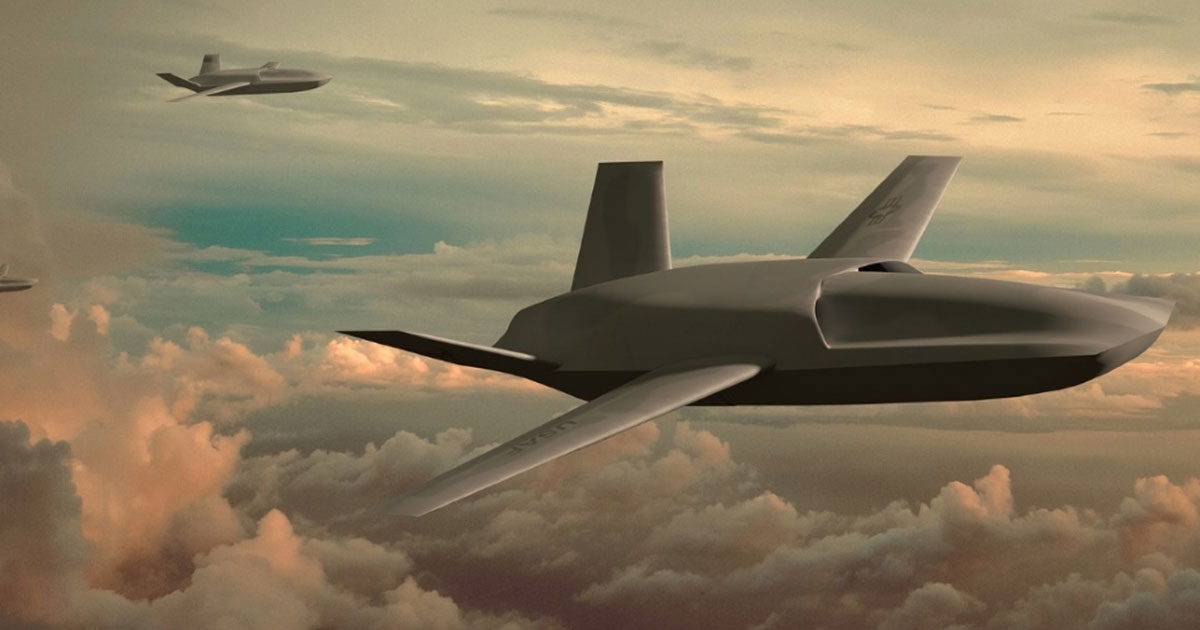


US$ 99 Million Contract Provides for Drone with Hybrid Propulsion and Ability to Fly for Days on Stealth Missions.
The United States Air Force (AFRL) has entered into a new contract with General Atomics to develop the GHOST, a next-generation stealth drone.
The aircraft is described as an unmanned aerial system with hybrid electric propulsion and ducted fan. The goal is to carry out intelligence, surveillance, reconnaissance, and strike missions in challenging environments.
Nearly US$ 100 Million Contract
The contract was announced in a Pentagon notice dated May 27. General Atomics will receive US$ 99,292,613 to advance the project.
-
China Tests Giant 582-Ton Magnets to Contain Plasma Hotter Than the Sun’s Core, Aiming to Cut Superconductor Costs and Generate First Electricity from “Artificial Sun” by 2030

-
Seventh Grader Builds Nuclear Fusion Machine at Home, Aiming for Guinness World Record

-
Ancient Ritual Circle, Hidden for 5,000 Years, Discovered in Scotland’s Machrie Moor Using Sensors, Revealing a “Phantom Stonehenge”

-
Engineers Develop Fridge-Sized Machine to Produce 95-Octane Synthetic Fuel from Air and Water, Aiming to Sustain Combustion Engines Without Oil



The contract is a cost-plus-fixed-fee, and the work will be performed in Poway, California. The final delivery is expected to occur in the summer of 2028.
According to the notice, the drone system is designed to provide capabilities in “a spectrum of contested environments.” General Atomics already has a history of developing unmanned aerial vehicles with long flight durations, being a reference in the field.
Missions Lasting Up to 60 Hours
General Atomics claims that its hybrid-electric technology allows for flights of up to 60 hours. These systems are known for providing silent operations and high efficiency. The same technological base is used in the company’s Gambit drone series.
With this operational time, the GHOST drone can conduct autonomous missions for several days before executing any offensive action. This expands strategic reach and reduces the need for immediate logistical support, as well as allowing for greater discretion.
Specifications Still Kept Secret
Despite the contract announcement, General Atomics and AFRL have not disclosed specific technical details about the GHOST. The company’s spokesperson, C. Mark Brinkley, only highlighted General Atomics’ long experience in the sector.
“For over 30 years, General Atomics has been developing unmanned aerial systems in ways never before achieved and often poorly replicated,” said Brinkley. He also stated that he could not reveal anything more about the GHOST: “contrary to what you see in the news, the revolution will not be televised.”
An Increasingly Drone-Dependent War Scenario
The use of drones has gained traction in modern conflicts. In May of last year, Ukrainian military officials stated that drones were the leading cause of deaths on both sides of the war.
The European Union Institute for Security Studies reported that Russia acquires about 100,000 low-cost drones every month.
The AFRL contract with General Atomics reinforces the importance of technology on the current battlefield.