Portuguese
  Spanish


In Norway, a hiker poked the ground with a stick under a fallen tree and unearthed a gold sword ornament about 1,500 years old. Extremely rare, the piece is one of only about 17 known examples in Northern Europe, a discovery that excited the country’s archaeology.
An ordinary walk through the forest ended in a rare stroke of luck. In Norway, a hiker poked the soil with a stick under a fallen tree and brought to light a gold ornament from a sword’s sheath about 1,500 years old. The case was reported by the scientific site Science Norway.
What seemed like just a glint in the earth was an archaeological treasure. The small gold piece, richly decorated, is one of the rarest objects ever found from the period, with only about 17 similar examples known throughout Northern Europe. Unsurprisingly, the discovery mobilized Norwegian researchers.
More than just an ornament, the object tells a story of power and faith. Experts believe the gold ornament belonged to the ceremonial sword of a chief or elite warrior and was deliberately buried as an offering to the gods. Next, understand how the piece was found and why it is so special for archaeology.
-
Brazil’s Largest Grain Port Faces Delays in the Hinterlands, Missing Rail Link Costs Agribusiness Billions

-
Astronomers Detect Excess Alcohol on Interstellar Comet 3I/ATLAS, Revealing Unique Chemical Signature from Another Star System
-
13-Year-Old Californian Girl Wins $25,000 Prize for Creating Low-Cost Water Filter from Discarded Animal Bones

-
Entrepreneur Secures $15 Million to Transform Steel Mill Waste into Concrete Material, Builds Demo Plant in the U.S. with a Goal of 10,000 Tons Annually




How the gold ornament was found in Norway
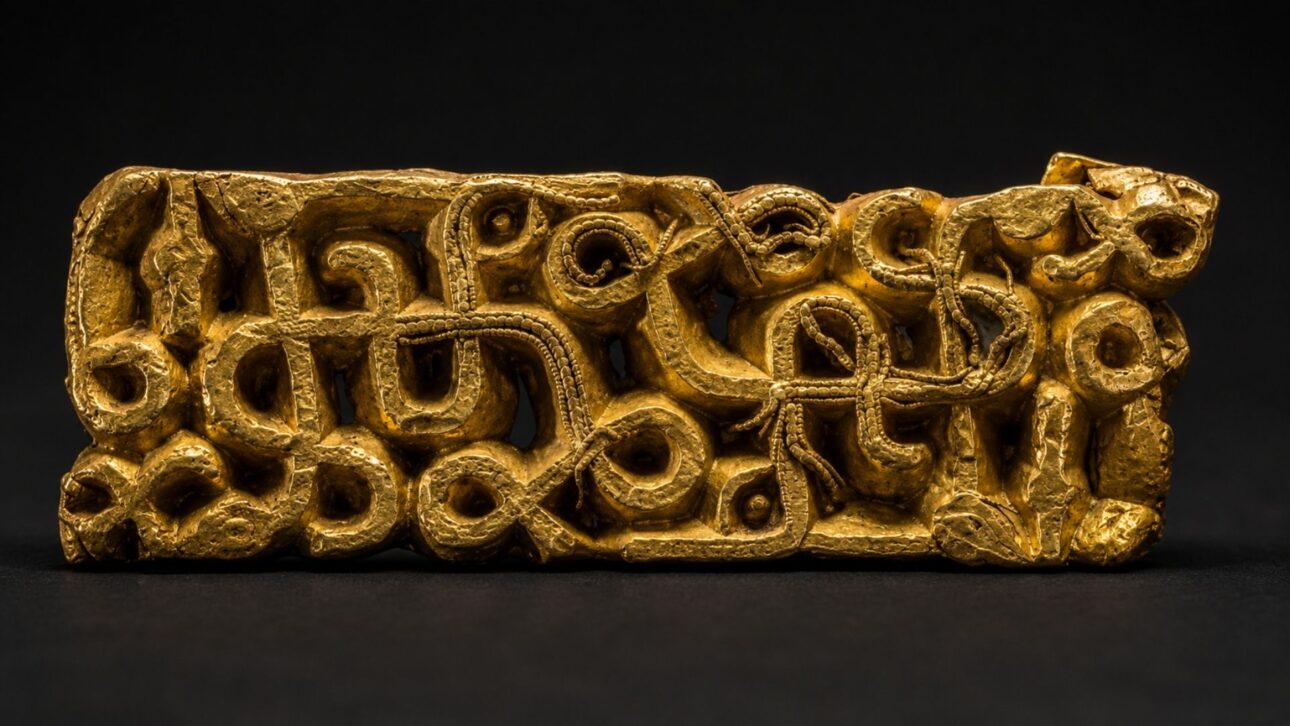
The story began with a tree that fell years before. In an area now frequently used for hiking, in the district of Austrått, in Sandnes, in southwestern Norway, a resident noticed a tree that had fallen in an old storm. Under the roots, a section of raised earth caught his attention.
Curiosity led to the gold ornament. According to the Norwegian press, the hiker poked the elevated ground with a stick and saw something shining in the soil. What appeared to be a small shiny object turned out to be an ancient and elaborate gold piece, hidden there for about 1,500 years.
The next step was decisive for archaeology. Instead of keeping the find, the resident contacted the authorities responsible for heritage, allowing archaeologists to study the site and the context of the piece. This care is what turns a lucky find into true historical knowledge.
The researchers’ enthusiasm was immediate. Archaeologist Håkon Reiersen, who is studying the object, classified the piece as “magnificent” and said that the chances of someone finding something like this are “minimal.” For Norwegian archaeology, the discovery entered the list of the country’s great gold finds.
What is this gold sword ornament
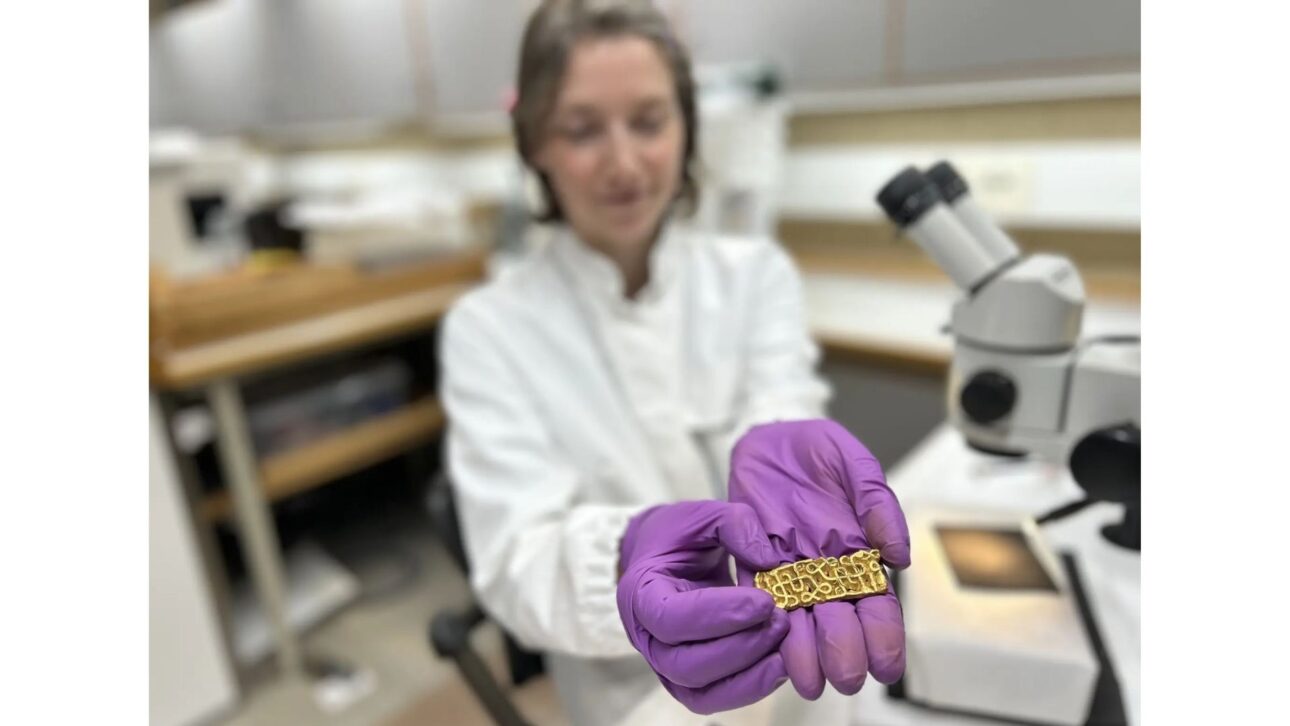
(Photo: Terje Tveit/Museum of Archaeology/University of Stavanger)
The object is a piece of a sword sheath. It is an accessory that decorated the sheath, that is, the case that protects the blade, of a ceremonial sword. Although small, the gold ornament measures about 6 centimeters and weighs around 33 grams, all crafted in precious metal.
It’s worth understanding where the piece was located. The sheath is the case, generally made of wood and leather, that holds the sword blade when it is not in use. The gold ornament decorated a part of this sheath, probably the mouth or the tip, precisely the most visible sections when the weapon was displayed at its owner’s waist.
The level of detail of the piece is impressive. Its surface is covered by filigree, a refined technique made with braided gold wires and filled with tiny beads, arranged along the lines of the design. This meticulous finish reveals the work of highly skilled goldsmiths, at a time when each piece was handmade.
The decoration hides symbolic figures. Among the ornaments, specialists identify motifs of stylized and symmetrical animals, in a style typical of early 6th-century Scandinavian art. There is even the possibility that the piece shows a hybrid figure, with a human head and animal body, common in the symbolism of the time.
The wear of the piece also tells a story. According to researchers, the surface of the gold ornament appears noticeably worn and heavily used, indicating that the sword it belonged to was not just a decorative item for a vault, but an object truly carried and displayed in important ceremonies.
Why the piece is so rare
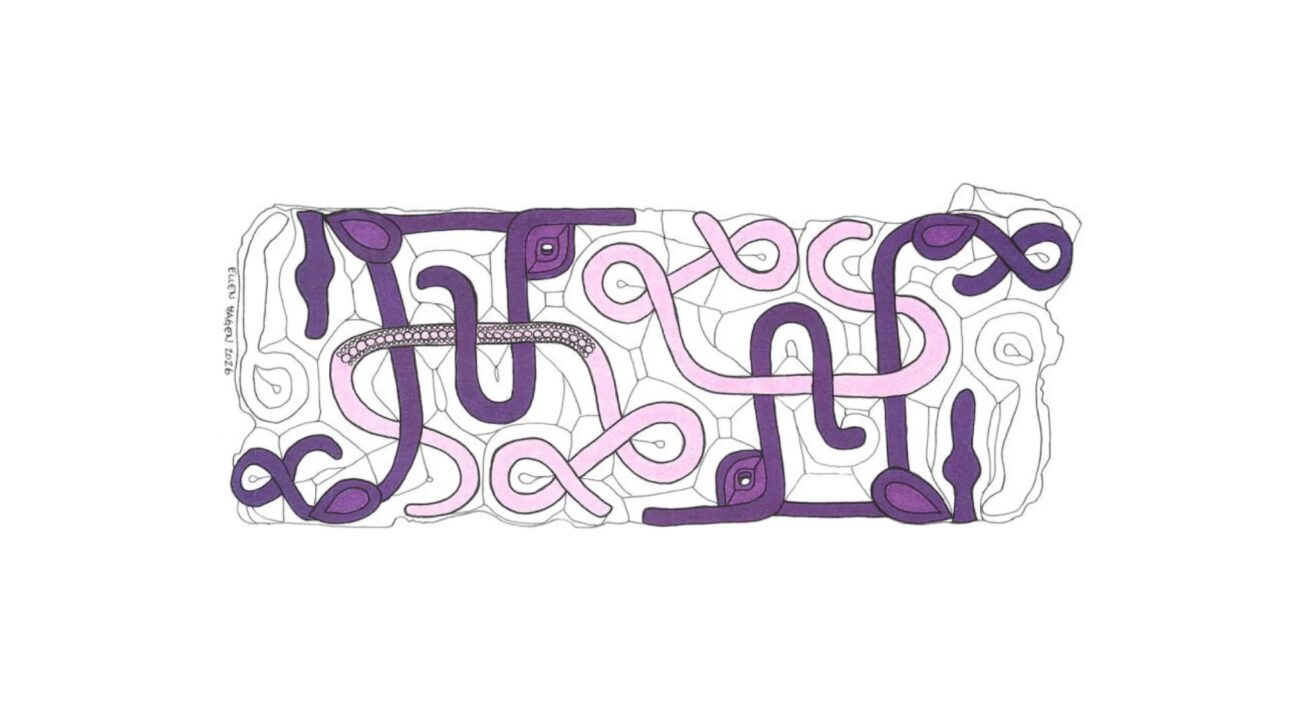
(Image: Ellen Hagen / Museum of Archaeology / University of Stavanger)
The rarity is what puts the discovery in the spotlight. Pieces like this, gold decorations for sword sheaths from that period, have hardly survived over time. According to Science Norway, there are only about 17 similar known examples throughout northern Europe, making each new find an extraordinary event.
The historical value goes beyond the weight in gold. Because they are so scarce, these pieces help researchers understand how the elites of Scandinavia lived, dressed, and displayed power 1,500 years ago. Each example is a rare source of information about an era from which very little material remains.
The quality of the craftsmanship reinforces the importance of the object. According to the Live Science website, the piece is among the finest works of the period, showcasing the high technical skill of the artisans who produced it. It’s not just gold: it’s top-tier art made fifteen centuries ago.
For archaeology, finds like these are almost like winning the lottery. As archaeologist Håkon Reiersen noted, the probability of someone stumbling upon such a gold ornament during a walk is minimal. This is exactly what happened in Norway, in an unlikely intersection of luck and curiosity. Among thousands of ordinary walks, one ended in front of a fifteen-century-old gold piece.
Whose was the gold sword?
An object like this did not belong to just anyone. For the researchers, only someone at the top of society could wield a sword decorated with such an elaborate gold ornament. The precious metal and refined craftsmanship were clear symbols of wealth, status, and power in Migration Era Scandinavia.
The responsible archaeologist has a straightforward hypothesis. “The person who carried the sword to which this belonged was likely the ruler of this area during the first half of the 6th century,” stated Håkon Reiersen to Science Norway. In other words, the owner of the piece would be a local chief, a sort of lord of the region.
The function of the object was also ceremonial. A sword like this was not only used for combat but also to impress, seal alliances, and demonstrate authority in rituals and important gatherings. The gold ornament was the most visible part of this power, shining for all to see.
The location reinforces this interpretation. The area of the discovery is near an ancient center of power in the region, which aligns with the idea that important families lived there. For archaeology, the find helps to map where the centers of command in Norway were even before the Viking era.
An offering to the gods, not a lost treasure
A detail completely changes the interpretation of the find. The gold ornament was not simply lost: it was deliberately inserted into a crack in the rock. For archaeologists, this indicates that the piece was placed there on purpose, not accidentally dropped.
The most accepted explanation is religious. Researchers believe the object was deposited as an offering to the gods, sometime in the 6th century. Sacrificing gold, burying it in the ground or in stones, was a way to seek protection, luck, or divine favors among the people of the time.
This event was so significant that it may have become a myth. Historians link the climate crisis of the 6th century to the Norse legend of Fimbulwinter, the terrible winter that, in the sagas, would announce the end of the world. Faced with a weakened sun and lost harvests, offering gold to the gods was a desperate attempt to reverse the catastrophe and ensure survival.
There is a possible link to a climate catastrophe. According to Science Norway, the offering may have occurred around the year 536, when a massive volcanic eruption covered the sky with dust and caused a brutal cooling in the northern hemisphere. It was a period of hunger and fear, during which many buried treasures seeking help from the gods.
This context gives dramatic weight to the discovery. The gold ornament of the sword ceases to be just a luxury item and becomes a testimony of belief and despair in the face of dark times. Archaeology sees in these sacrifices a window into the minds of the people who lived through that crisis.
The Migration Period: the world before the Vikings
It is important to place the piece in the correct time. About 1,500 years old, the gold ornament is from the so-called Migration Period, which spans approximately from the year 400 to 550 in Europe. This places it about 250 years before the start of the Viking era, with which it is often confused.
This was a time of great changes and disputes. With the weakening of the Roman Empire, entire peoples moved across Europe, and much Roman gold ended up in the hands of northern elites. In Scandinavia, this metal became jewelry, medallions, and ornaments like the one found in Norway.
Gold was the trademark of this period in Scandinavia. It was the time of bracteates, fine gold medallions used as amulets and status symbols, and large deposits of the metal buried in the ground. The gold ornament found in Norway is exactly part of this universe of wealth, faith, and power.
The society of the time was already stratified. There were powerful chiefs, elite warriors, and a network of alliances sustained by gifts and displays of wealth, in which gold played a central role. The sword decorated from the find fits exactly into this world of hierarchy and prestige.
Understanding this avoids a common mistake. Although the word Viking is used for almost everything ancient Nordic, the piece predates this period. For archaeology, marking this difference is essential because the Migration Period has its own characteristics and helps explain how, centuries later, the famous Viking culture emerged.
What happens now with the find
The fate of the gold ornament follows clear rules. In Norway, ancient finds of precious metals belong to the State, and whoever finds something like this must hand it over to the heritage authorities. Generally, the country provides a reward to the discoverer and the landowner, which encourages people to report what they find.
Before any exhibition, scientific work comes first. Experts will analyze the piece in detail, study its composition, its manufacturing technique, and the exact location of the discovery, in search of clues about the region’s past. This process is what transforms a single object into broad historical knowledge.
The next step is museum custody. The piece should be under the care of the Museum of Archaeology at the University of Stavanger, a reference institution for the heritage of southwestern Norway. There, the gold ornament can be preserved and, in the future, shown to the public.
This path shows the value of notifying the authorities. Because of the walker’s attitude, the sword and its gold adornment will cease to be a buried secret and become a heritage for all. It is the kind of happy ending that archaeology always hopes to happen.
What this has to do with Brazil
Brazil does not have gold from the Migration Period, but it has its own ancient treasures. Instead of Nordic jewels, Brazilian archaeological heritage holds the rock art of Serra da Capivara in Piauí, the sambaquis of the coast, and the refined Marajoara ceramics of Marajó Island, remnants of peoples who lived here long before the arrival of Europeans.
The country even holds some of the oldest human remains in the Americas. The skull named Luzia, found in Lagoa Santa, Minas Gerais, is about 11,000 years old and is one of the most studied on the continent. Just like the Norwegian gold ornament, it shows how ancient pieces depend on serious research and good conservation to continue telling their story.
The logic of protection is similar to that of Norway. Here, archaeological sites and objects are considered national heritage, and any discovery of this kind must be reported to Iphan, the federal institute that handles the matter. Just like in Europe, whoever finds an ancient piece cannot simply keep it or sell it.
The difference lies in some details of the incentive. While countries like Norway usually reward those who hand over a find, the Brazilian model focuses on monitoring and preservation. Learning from foreign cases helps to fuel the debate on how to encourage the population to report what they find, instead of hiding it.
Finally, there is a lesson in citizenship and memory. Brazil has also experienced severe losses, such as the fire that hit the National Museum in 2018, reminding us how fragile heritage is. Stories like the gold ornament in Norway reinforce that taking care of ancient objects, with the help of those who find them, is taking care of our own history.
And you, would you hand over such a treasure?
The discovery in Norway shows how history can be just beneath our feet. A walker poked the ground with a stick under a fallen tree and revealed a gold ornament of a sword 1,500 years old, one of only about 17 known in Northern Europe, which was even offered to the gods in a time of crisis. All thanks to a curious eye and the right attitude.
And you, if you stumbled upon such a treasure, would you hand it over to the authorities? Tell us here in the comments what you would do in the walker’s place and what impresses you most about this rare archaeological find in Norway.