Portuguese
  Spanish


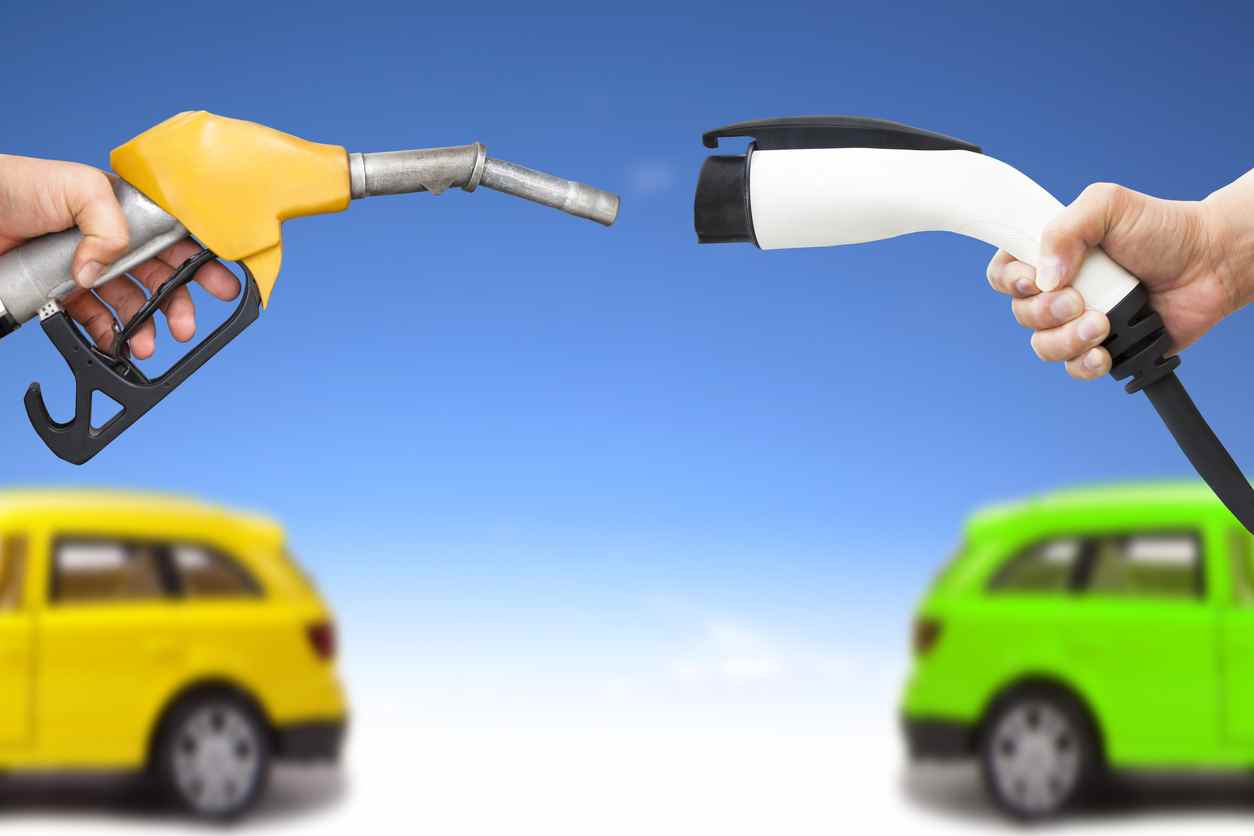

European Parliament Approved The End Of New Car Sales With Gasoline And Diesel Combustion Engines By 2035
The European Parliament approved on Wednesday (08) the measure proposing the end of the sale of vehicles with gasoline and diesel combustion engines by 2035. After voting on specific amendments within the proposal for the automotive sector, it moved forward. According to the rapporteur of the proposal, the parliament reached a consensus, with 339 votes in favor, 24 abstentions, and 249 against.
Gasoline And Diesel Engines Will Not Be Marketed
The proposal from the European Commission for the automotive sector aims to eliminate all CO2 emissions from passenger cars or large commercial vehicles powered by gasoline and diesel combustion engines, that is, fossil fuels.
In practice, this means that starting in 2035, it will no longer be possible to put these types of vehicles on the market in the European Union. Although the approval of the law is not yet final, the vote on Wednesday (08) confirms the Parliament’s position for the next stages of negotiations occurring between the Council of the European Union, the European Parliament, and the European Commission.
-
End of an era in Brazil: beloved sedan by Brazilians is discontinued despite having a 2.0 engine with 151 hp, CVT transmission, 466-liter trunk, and up to 650 km of range.

-
New Law Proposal in Brazil Could Heavily Penalize Drivers: Dangerous Overtaking May Become a Serious Offense with Fines Increased Tenfold and a 12-Month License Suspension; Update on 2026 Progress

-
Electric Revolution: Watts W125 Motorcycle Offers 160 km Range, 90 km/h Speed, and Affordable Price Starting at $3,000
-
General Motors Replaces Over a Thousand Workers with 50 Cobots at Electric Vehicle Plant, UAW Union Criticizes Move Amid Industry’s Automation Push



The final approval is always up to the council, that is, the 27 member states. According to Helder Pedro, Secretary-General of the Automobile Association of Portugal (ACAP), on the sidelines of the Electric Summit, the targets that were discussed are very narrow, stating also that the goals of eliminating gasoline and diesel combustion engines by 2035 are premature.
In Helder’s observation, these should be discussed not now, but around 2028, when there would be only 7 years left until the deadline.
Automakers Are Concerned About The End Of Combustion Engines
For now, Helder Pedro sees it as essential to reinforce incentives for more sustainable mobility and states that, for example, support for the acquisition of electric vehicles in Portugal is still lower than in other countries, which have double the support.
In addition, he also sees a 10-year plan for the electric vehicle charging network as essential. The European Automobile Manufacturers Association (ACEA) welcomed the Parliament’s decision on Thursday (09), and vehicle manufacturers are concerned about the end of combustion engines by gasoline and diesel in 2035.
For the association, the reduction of 15% in CO2 emissions emitted by cars by 2025 and 55% by the next decade is viewed as extremely challenging and can only be achieved with massive increases in investment in electric vehicle charging infrastructure, which serves as an alternative to gasoline and diesel cars.
ACEA Also Deems Decision As Premature
ACEA warns that the vehicle sector is preparing for a major industrial transformation and that the uncertainties of the current situation must be taken into account.
The association also states that given the volatility and uncertainty that everyone is experiencing globally, with rising inflation and the war in Ukraine, any long-term regulation extending beyond this decade is premature at this early stage.
Instead, a transparent review is necessary so that post-2030 targets can be defined. The association of manufacturers also warns that rising raw material prices for production are expected to lead to an increase in the production and sale costs of electric cars, which could undermine the intention to ban the sale of cars with gasoline and diesel combustion engines by 2035.