






 Portuguese
  Spanish


In New Westminster, Canada, the region will gain its first tiny homes village for the homeless population. There will be 30 container homes, with a central kitchen, three meals a day, bathrooms, and laundry, as well as 24-hour support, in a transitional housing model.
Faced with the housing crisis, a Canadian city has bet on transforming containers into homes. In New Westminster, in the metropolitan region of Vancouver, Canada, the first tiny homes village in the Lower Mainland aimed at the homeless population will be built. The project was detailed by the portal Daily Hive.
The idea is to give dignity to those who currently sleep outdoors. There will be 30 small homes made of containers, each with its own door, forming a village with a central kitchen, daily meals, shared bathrooms, showers, and laundry. More than just a roof, the location will offer 24-hour support for those who need to start over.
The model bets on speed and reuse. The containers were reused from a tiny homes village that operated in Victoria and was closed, which reduces costs and speeds up construction. The housing is transitional, designed to take people off the streets while they seek a more permanent solution. See how it will work.
-
Brazil’s Santa Catarina Port Drives 770 Tons of Steel Piles into the Sea, Reaches Midpoint of $100 Million Project to Dock Two Ships Simultaneously by October

-
Expanded Polystyrene Gains Ground as a Lightweight Alternative to Traditional Masonry in Construction
-
Abandoned Brazilian Coastal Stadium, Once Hosting Major Soccer Matches, to Be Demolished for $10 Million NASCAR-Inspired Racetrack

-
Brazil’s First Immersed Tunnel to Connect Santos and Guarujá in 2 Minutes at a Cost of $1.2 Billion


How the tiny homes village in New Westminster will work
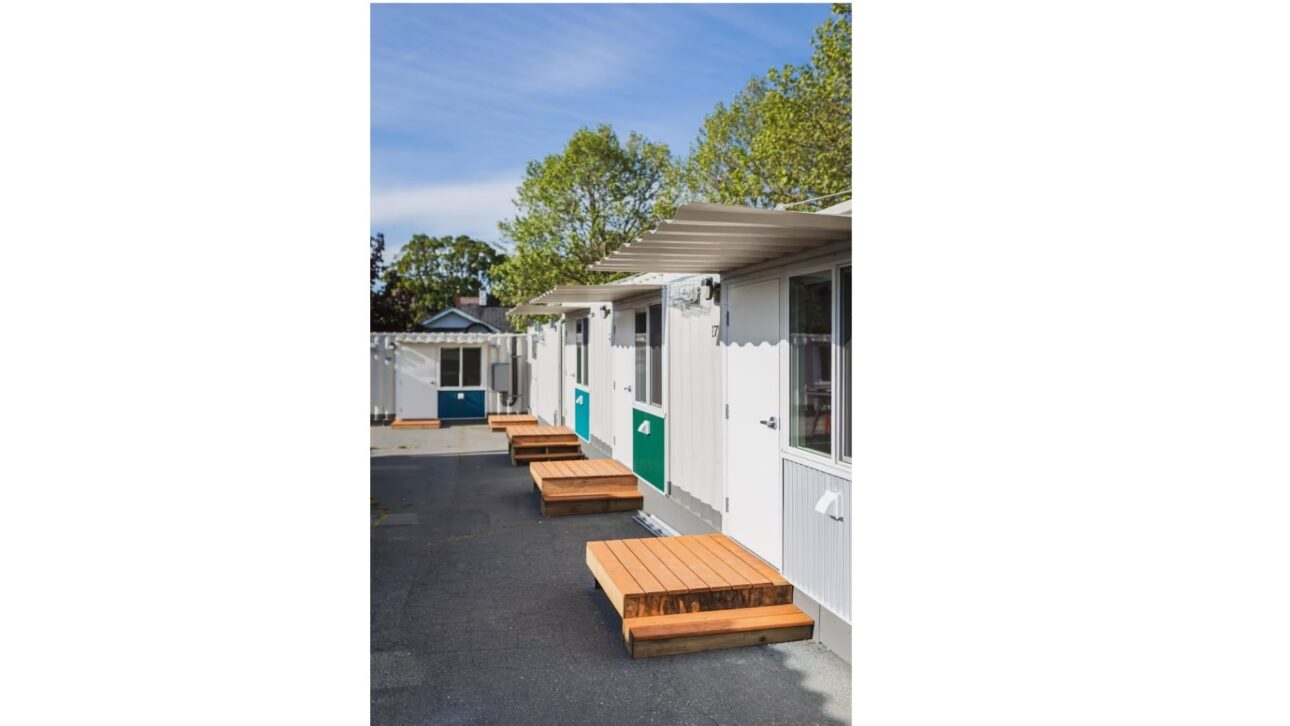
The project has a defined address and deadline. The tiny homes village will be built on a plot at 502 20th Street, near the 22nd Street urban train station, in New Westminster, Canada. The forecast is that construction will begin in the coming months and that the site will open its doors by the end of 2026.
There will be 30 units to accommodate people experiencing homelessness. Each of the tiny homes will function as a small individual residence, with an independent entrance, providing privacy for those who will live there. This is an important difference compared to traditional collective shelters, where everyone shares the same hall.
The project is presented as a pioneer in the region. According to the Daily Hive, it will be the first tiny homes village in the Lower Mainland, the metropolitan area that includes Vancouver and neighboring cities. The initiative thus serves as a kind of test for a model that could spread to other parts of Canada.
The nature of the residence is transitional, not permanent. The proposal is to offer a safe place for a period while residents receive support to rebuild their lives and seek a permanent home. The length of stay can reach a few years, with an initial three-year operation contract.
The project responds to a crisis that has worsened in Canada. Like other cities, New Westminster has seen an increase in the number of homeless people, pressured by high rents and the lack of affordable housing. The tiny homes village emerges as a quick response to this emergency scenario.
30 container homes with their own door
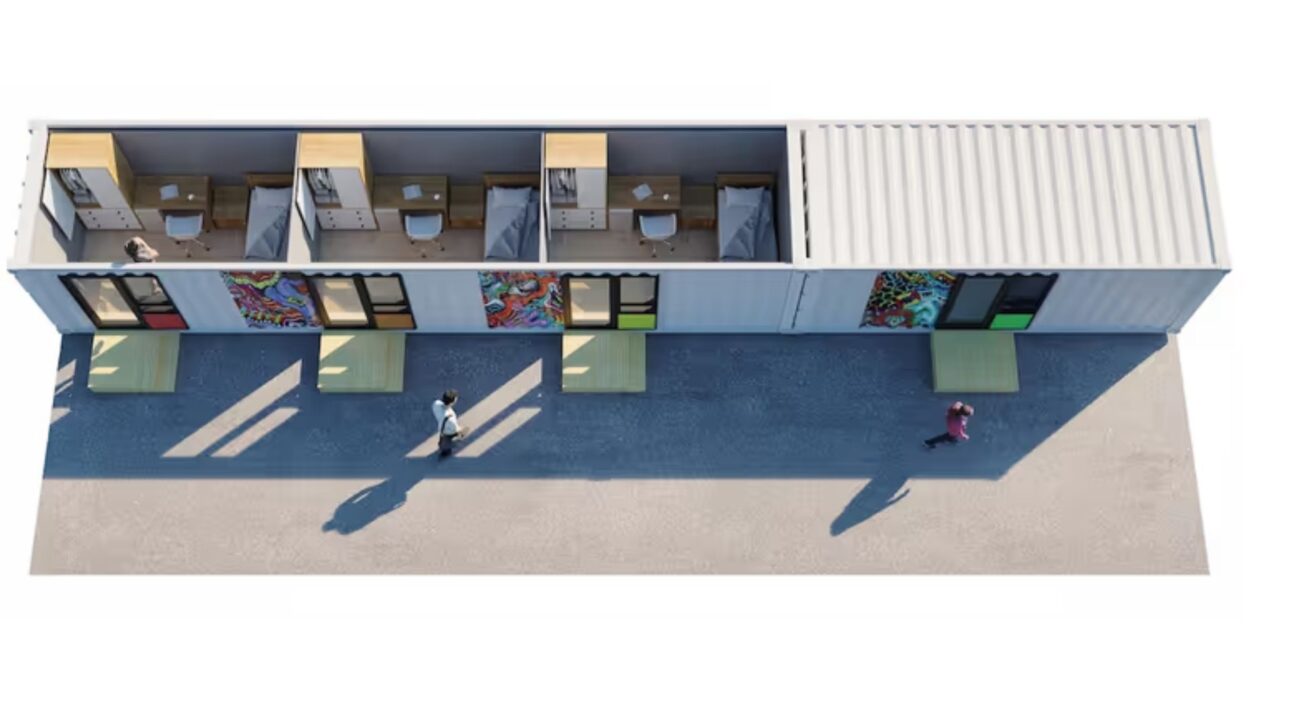
The heart of the project is the repurposed containers. Each of the 30 tiny homes is made from an adapted cargo container, about 100 square feet, equivalent to approximately 9 square meters. It may seem small, but it is enough space for a dignified individual residence.
The units have been prepared for the cold climate of Canada. According to the Daily Hive, each container is thermally insulated and ventilated, ensuring comfort in the region’s harsh winter. Insulation is essential to transform a metal box into a habitable home throughout the year.
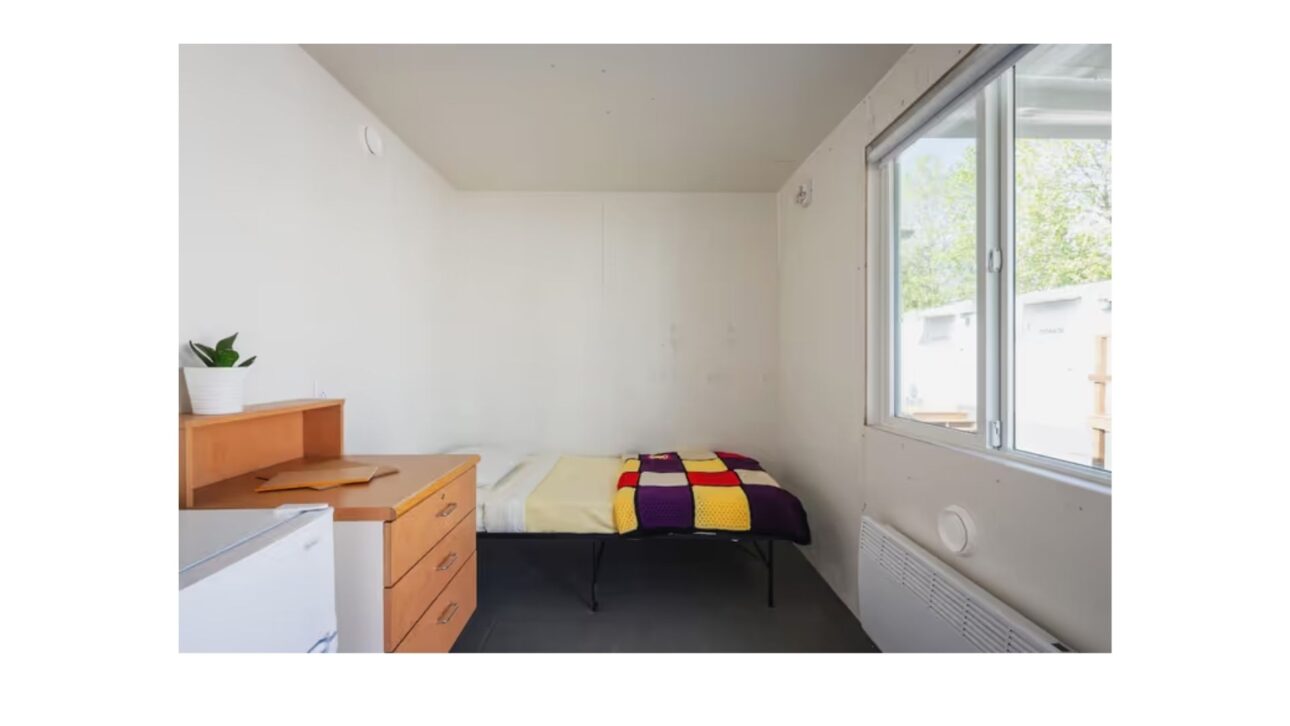
The detail of having one’s own door carries symbolic weight. Having an independent entrance restores to a person the feeling of having an address and a space of their own, something that those living on the street completely lose. For the homeless population, this privacy is an important part of the process of regaining self-esteem.
Using containers also has practical advantages. Besides being cheap, construction with this type of structure is quick, as the units arrive ready and only need to be installed and connected. That’s why tiny homes made from containers have become a swift response to the housing crisis in various cities.
Central kitchen, three meals, and laundry
The village was designed as a small community, not just a collection of houses. In addition to the 30 tiny homes, the site will have internal and external common areas, a central kitchen with a dining hall, and social spaces, all around the container homes. It is there that much of the collective life will take place.
Food is one of the pillars of the project. Residents will have daily meals, with three meals a day planned, prepared in the central kitchen. Ensuring food on the plate is a basic step to stabilize the lives of those who have been starving or relying on donations on the streets.
The hygiene structure completes the set. The village will offer shared bathrooms and showers, as well as a communal laundry, essential items that are missing for those living on the street. Being able to bathe and wash clothes regularly makes a huge difference in the health and dignity of the residents.
These collective spaces have a function that goes beyond practical use. The kitchen, dining hall, and common areas encourage social interaction and help combat isolation, common among the homeless population. Eating together and socializing becomes part of rebuilding social ties.
Having these routines guaranteed changes a person’s relationship with time. Those living on the street spend the entire day just trying to eat, clean themselves, and stay safe. With meals, baths, and laundry available, the resident gains energy to take care of health, documents, and work, stepping out of the survival mode that marks the homeless population.
24-hour support: the “housing first” model
The village will not just be a place to sleep. A non-profit operator will manage the space 24 hours a day, offering constant support to residents. This continuous support is what differentiates the tiny homes village from a simple emergency shelter.
The services range from meals to employment. According to the Daily Hive, in addition to meals, residents will have access to skills training and job preparation, health care, and support for dealing with substance abuse. The idea is to treat the person as a whole, not just the lack of a roof.
The mayor summarized the project’s philosophy. “It’s innovative, it’s a quick solution, and it’s a housing-first model that works,” said Patrick Johnstone, mayor of New Westminster, to the Daily Hive. The “housing first” concept argues that having a stable home is the starting point for solving other problems.
Residents also have responsibilities in the model. To enter the village, one must register, sign a coexistence agreement, and pay rent, with priority given to people from the region who are homeless. This reinforces the transitional housing character, rather than a donation without reciprocation.
The model is backed by studies. “Housing first” programs applied in Canada and other countries show that providing a stable home, with support, reduces hospitalizations, imprisonments, and returns to the streets, besides being cheaper for the State than the cost of abandonment. It is not charity, but rather efficient public policy.
Repurposed containers from a closed village in Victoria
One of the most interesting points of the project is the origin of the houses. The containers used in New Westminster are not new: they come from a tiny homes village that operated in Victoria, also in Canada, and was deactivated. Instead of discarding them, the authorities decided to transport and reuse them.
This repurposing brings clear advantages. Reusing containers that were already used as housing reduces costs and speeds up the assembly of the new village, avoiding building everything from scratch. It’s a way to extend the lifespan of structures that would otherwise become scrap.
There is also an environmental gain in this choice. Using existing material reduces waste and the impact of a new construction, aligning the project with a sustainability logic. Thus, the same structure that housed people in one city returns to fulfill that role in another.
The case shows how emergency housing can be flexible. Being modular, the container tiny homes can be dismantled, transported, and reinstalled as needed. This mobility is an advantage for quickly responding to housing crises in different places.
Who pays: BC Housing and the HEART & HEARTH program
The project is primarily funded by the provincial government. Leading the initiative is BC Housing, the housing agency of British Columbia, which spearheads the construction of the tiny homes village. The funding comes from a state program specifically aimed at combating homelessness.
This program has a defined name and focus. Called HEART & HEARTH, it gathers resources to quickly create transitional housing and support for the homeless population in the province. The New Westminster village is one of the practical outcomes of this public policy in Canada.
The city also plays its part. In addition to provincial money, the New Westminster city hall contributes its own resources to make the project feasible, according to the Daily Hive. This joint effort between state and municipal governments is common in this type of social work.
The arrangement shows a difference compared to makeshift solutions. Instead of leaving the task in the hands of volunteers, the public authority takes on the creation of housing, with funding, professional management, and planning. It is this official support that provides more security and scale to the tiny homes model.
The bet on tiny homes is growing in Canada. Given the urgency, governments have been resorting to modular villages like this to deliver housing in a few months, not years. New Westminster joins cities like Vancouver and others that have already tested the format against the housing crisis.
The opposition of neighbors to the project
Not everyone, however, welcomed the idea with open arms. According to the CBC network, some neighbors in New Westminster expressed opposition to the installation of the tiny homes village for the homeless population near their homes. This is a common reaction to this type of project.
The concerns usually revolve around safety and coexistence. Surrounding residents fear impacts on the neighborhood, changes in the area’s routine, and issues related to the presence of people with a history of homelessness or dependency. This debate accompanies almost every attempt to open shelters and social housing.
To reduce resistance, such projects usually come with rules and dialogue. Meetings with the neighborhood, coexistence agreements for residents, and the presence of a 24-hour team help to calm tensions. Showing that the tiny homes village is organized, and not an improvised camp, is part of the negotiation.
On the other hand, project advocates counter the criticisms. For them, leaving people on the street is worse for everyone, and projects like the tiny homes village, with support and clear rules, help organize care and reduce problems. The “housing first” model usually reduces street recidivism.
This clash is an important part of the story. Ignoring it would paint an unrealistic picture, as if every social project were approved without resistance. The case of New Westminster shows that bringing housing to the homeless population also involves overcoming prejudice and negotiating with the surrounding community.
What this has to do with Brazil
The Canadian model directly relates to Brazilian challenges. Brazil faces a homeless population crisis in large cities, with millions of people without adequate housing and a growing number of people sleeping on sidewalks, squares, and underpasses. Quick and low-cost solutions arouse interest here.
Construction with containers is already known in the country. In Brazil, houses, shops, and offices made from containers have become a trend in recent years, valued for their quick assembly and lower cost. Adapting this idea for social housing, as done by the tiny homes in New Westminster, is a possible path here as well.
Some Brazilian projects are already flirting with the idea. City halls and NGOs have tested shelters and emergency housing with modules and containers, and the debate about transitional housing is advancing in major centers. The bottleneck, in general, is the lack of continuous funding and professional support to sustain these projects over time.
The concept of “housing first” is also gaining ground in Brazil. Called Housing First, it has already inspired pilot projects in some cities, with the logic of providing stable shelter before demanding any other changes. The Canadian experience reinforces that this model can work on a larger scale.
Finally, the lesson about planning and support remains. More than just installing houses, the example of New Westminster shows the importance of combining housing, food, health, and work, with public funding and serious management. For Brazil, it is a reminder that getting someone off the street requires a complete package, not just a shelter.
And you, would you support a tiny homes village in your neighborhood?
The village of New Westminster shows a creative way to tackle the housing crisis. With 30 container homes, a central kitchen, three meals, laundry, and 24-hour support, Canada is betting on getting the homeless population out of the cold with dignity, in a transitional tiny homes model designed to last. All this by repurposing structures from a deactivated village.
And you, would you support the installation of a tiny homes village for homeless people near your home? Share your thoughts in the comments about the Canadian project and whether you believe ideas like this could help address the homeless population issue in Brazilian cities.


