Portuguese
  Spanish



Discover How Many Solar Panels You Need to Charge Your Electric Car and Save on Your Electricity Bill
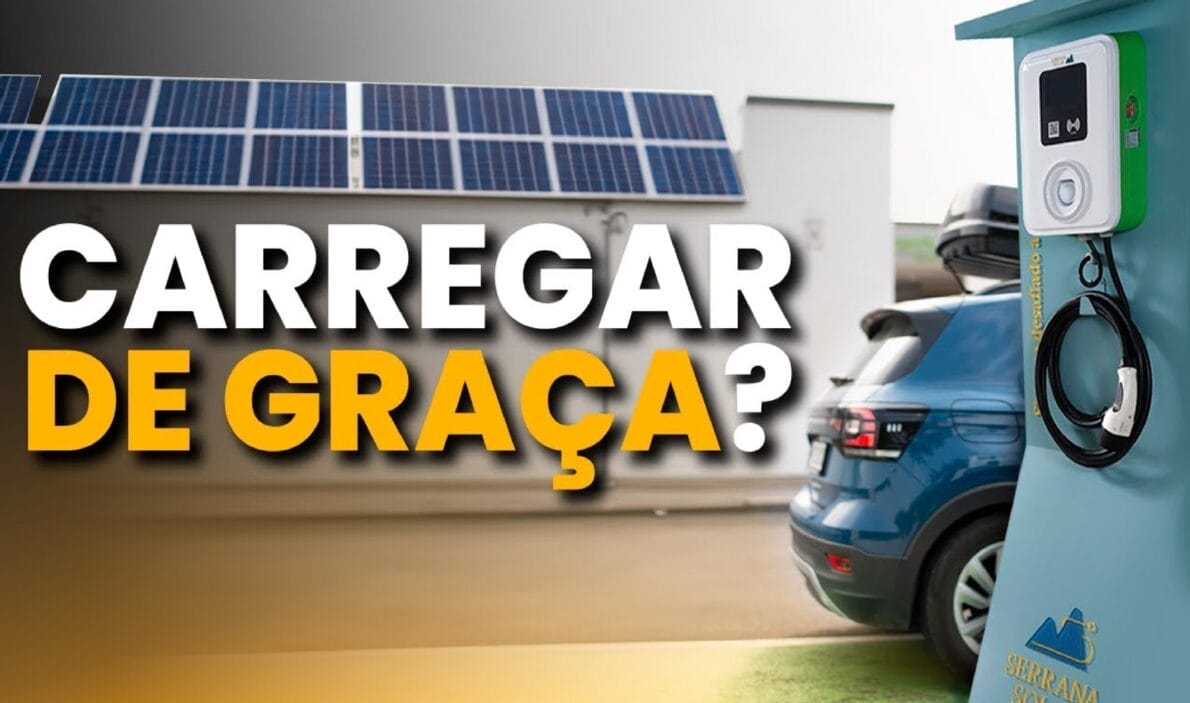
Electric cars are becoming increasingly popular, and for good reason: in addition to being eco-friendly, they offer long-term savings. But have you ever wondered how many solar panels are needed to charge an electric car for free? Let’s explore this question with a practical example, as shown in the video from the E4 Renewable Energies channel.
How Electric Cars Work and Energy Consumption
Unlike traditional vehicles that use fossil fuels like gasoline and diesel, electric cars are powered by electricity, stored in batteries. This energy can be obtained from the grid or, in a more sustainable way, from a photovoltaic system.
Practical Example: Jack EJS1
Let’s consider the Jack EJS1 model, an electric car available in Brazil. It has lithium iron phosphate batteries with a capacity of 30 kWh and consumes about 10 kWh for every 100 km driven.
-
Fired during apartheid and with a little borrowed money, an electrician started with a borrowed truck and transformed electrical services into a group connected to energy, real estate, and infrastructure in South Africa.

-
Wood has ceased to be just a construction material in Yale research and has become insulation for electrical transformers that face intense heat, aging, and increasing pressure from the renewable energy-powered grid.
-
More than 1,000 residents of a remote island in Kiribati now have clean water and electricity with solar systems operated by the community itself.
-
Ceará brings together 7 giants and R$ 66 billion to transform Pecém into the largest green hydrogen hub in Brazil, with final decisions expected by the end of 2026.




If you use your vehicle to travel 30 km per day, it consumes approximately 3 kWh per day. Thus, in a month (30 days), the total consumption will be 90 kWh.
To calculate the number of solar panels needed, we need to consider the solar radiation in the area and the efficiency of the photovoltaic system. We will use Brasília as an example, with an average solar irradiation of 5.47 kWh/m² per day and a system efficiency of 75%.
The formula to calculate the total power of the solar panel system is:

Substituting the values:

Converting to watts-peak (Wp), we have 730 Wp. Choosing a solar panel with 560 Wp of power, we need:

Since it is not possible to use fractions of solar panels, we round up. Therefore, two solar panels are needed to charge the Jack EJS1 for free, considering the stated values and conditions.
Other Necessary Components
In addition to solar panels, you will need other components such as inverters and support structures. The initial investment in a photovoltaic system may seem high, but the long-term savings, especially on your energy bill, makes it worthwhile. After the payback period of the investment, the energy generated is practically free.
This practical example demonstrates that it is feasible to charge an electric car using energy from solar panels, reducing costs and contributing to a more sustainable future. Evaluating your vehicle’s consumption and the solar radiation conditions in your area are essential steps to properly size the necessary photovoltaic system.
Benefits of Using Solar Energy
- Long-Term Savings: After the return on the initial investment, the energy generated is free.
- Sustainability: Reduces dependence on fossil fuels and the emission of polluting gases.
- Energy Self-Sufficiency: Lesser dependence on the electric grid, especially in areas with good solar irradiation.
Charging an electric car for free using solar energy is an accessible and sustainable reality. With the example of the Jack EJS1, we saw that it is possible with just two solar panels. If you are considering investing in an electric vehicle and solar energy, this is the right time. Evaluate your needs, do the calculations, and start saving while contributing to a greener world.