Portuguese
  Spanish


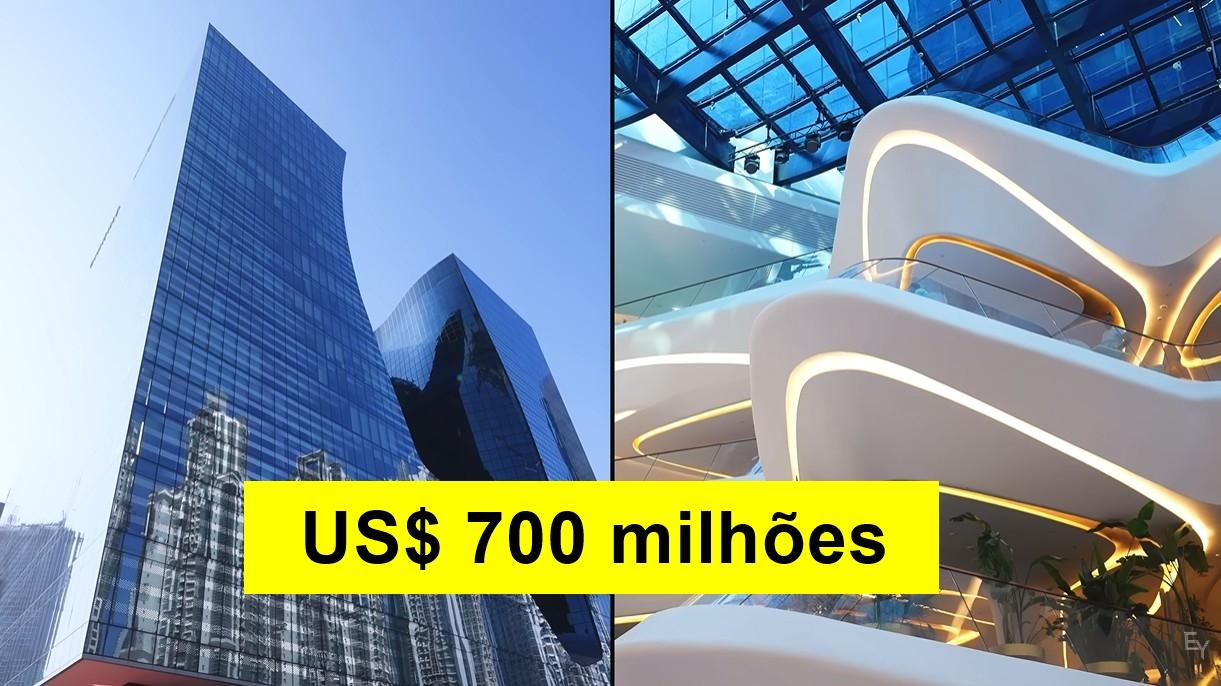

Created by the legendary architect Zaha Hadid, The Opus blends glass, curves, and lights in a work that symbolizes the creative power and innovation of Dubai in the 21st century
In the futuristic landscape of Dubai, The Opus stands out as a visionary creation by architect Zaha Hadid. Conceived in 2007, the project was announced by the developer Omniyat with great anticipation: it would be the first building designed by Hadid in the city, marking the debut of her bold architecture in the Emirates.
Construction began in 2008, and it was initially expected that the building would be completed by the end of 2009.
Costs and Delays
Despite the initial enthusiasm, The Opus faced considerable setbacks. The global financial crisis of 2008 hit the Dubai real estate market hard, forcing Omniyat to suspend construction between 2009 and 2011.
-
Tourist Discovers Forgotten Joaquín Sorolla Painting Worth Up to 60,000 Euros While Strolling in Seville

-
Brazil’s Fernando de Noronha Boasts World’s Most Beautiful Beach, Accessible Only by Descending 208 Cliffside Steps and With No Food Vendors Allowed

-
Wave Rock: Australia’s Giant Granite Wave Stands 15 Meters Tall, Spans 110 Meters, and Showcases 2.7 Billion Years of Erosion in the Australian Desert
-
How to Unclog Showerhead Holes Blocked by Limescale and Hard Water Without Replacing or Hiring a Technician


During this pause, the stakeholders took the opportunity to rethink and restructure the project. The visual essence of the design was maintained, but its internal use and configuration were profoundly revised.
One of the crucial changes was the building’s purpose. The Opus was originally to be an office building (with retail on the ground floor) but ended up being converted into a mixed-use complex centered around a high-end hotel.
“We converted an office building (shell and core) with some retail at the base into a lifestyle hotel, the first of its kind in Dubai, something very unique that we are proud of,” explained Amjad about the reimagining of the project.
This decision aligned with Dubai’s focus on tourism and leisure developments, giving The Opus a more multifunctional profile than the original plan.
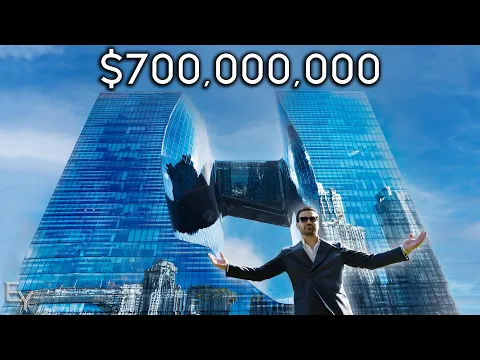
The financial impact of this reformulation was also significant. Estimated at Dh 2.5 billion (dirhams) – approximately US$ 700 million – the investment in The Opus reflected the grandeur and technical complexity of the work.
In addition to the increase in costs, the timelines were extended by over a decade. The projected opening went from 2009 to successive delays, until the building was finally completed posthumously in 2020.
After such challenges, the delivery of The Opus represented not only the overcoming of delays but also the realization of a unique architectural vision.
Prominent Architectural Features
Visually, The Opus immediately catches attention with its singular form: a “sculpted” glass cube with an organic central void.
In practice, the structure consists of two connected vertical towers that merge into a single cubic volume, within which an eight-story void has been “sculpted.”
This internal cavity with fluid contours contrasts with the precise orthogonal geometry of the exterior of the cube.
The dialogue between straight lines and curves, solid and void, is the central concept of the design. “The design conveys the remarkable inventive quality of Hadid’s work, expressing a sculptural sensibility that reinvents the balance between full and empty, opaque and transparent, interior and exterior,” described Mahdi Amjad, CEO of Omniyat, at the project launch.
Indeed, few buildings so effectively materialize this interplay of complementary opposites as The Opus.
The engineering of the building is as impressive as its aesthetics. To connect the two halves of the cube, Hadid designed a remarkable aerial bridge between the towers.
At the base, they are united by a four-story glass atrium; at the upper levels, an asymmetric three-story bridge spans 38 meters, linking the volumes to a height of 71 meters.
This suspended structure, weighing about 1,000 tons, posed an engineering challenge and now hovers over the central void like a habitable sculptural piece.
The presence of the bridge and the atrium ensures internal circulation while framing the organic opening that characterizes The Opus.
Another distinctive aspect is the fully glass facade. The exterior of the cube uses mirrored glass that reflects the sky and the city during the day, while the interior of the void is clad in translucent dark blue glass.
About 4,500 custom glass panels were installed to cover the undulating void. Due to the double curvature of many of these pieces, each panel is unique in shape and size, manufactured individually – the largest weigh approximately 800 kg.
This level of customization required advanced production and assembly techniques. To control the internal climate, the glass received a pixelated pattern of reflective material, reducing solar heat gain without compromising the futuristic aesthetics.
The lighting of The Opus also deserves attention for its innovation. Instead of external projectors, the decision was made to integrate thousands of LEDs into the internal facade of the void. Approximately 5,000 RGBW LED points were discreetly embedded between the glass panels, forming a digitally controlled matrix.
Thus, at nightfall, the central void comes to life with a dynamic glow – it can adopt different colors and light scenarios – while the external structure remains dark and reflective.
As a result, by day the mirrored cube appears solid, and at night it “dematerializes” as light floods the void, outlining the sinuous silhouette of The Opus in the Dubai skyline. This integrated lighting solution was developed to ensure it does not interfere with the clarity of the design (the equipment is hidden, also facilitating maintenance).
The fusion of architecture and technology makes the visual experience of The Opus shift according to the time of day: a solid block under the sun and a sculptural lantern after twilight.
Functions and Spaces of the Building
Behind its futuristic facade, The Opus houses an equally impressive program of uses. With 20 floors and approximately 84,300 m² of constructed area, the building was designed as a mixed-use complex.
The central element is a luxury hotel, complemented by exclusive residences, corporate offices, and a variety of dining and entertainment spaces.
The hotel is the ME Dubai, from the Spanish hotel chain Meliá, positioned as a boutique five-star. There are 93 uniquely designed rooms and about 96 upscale residential apartments integrated into the complex.
In addition to accommodation, The Opus dedicates floors to class A corporate offices, totaling about 5,200 m² of commercial spaces.
Companies located in The Opus operate in an address that is itself an architectural postcard. The mix is completed with a generous area dedicated to dining and leisure: there are 12 restaurants, cafes, and bars distributed throughout the building, including a panoramic terrace bar with a view of the city.
In the basement, there is also an exclusive nightclub for nighttime events. It is estimated that around 90,000 square feet (8,400 m²) of The Opus is dedicated to restaurants, lounges, and entertainment spaces – including branches of renowned international establishments.
Curiosities and Posthumous Legacy of Zaha Hadid
The Opus carries special significance in Zaha Hadid’s portfolio as it has become part of her posthumous legacy.
The renowned Anglo-Iraqi architect, nicknamed the “queen of curves,” passed away suddenly in March 2016 at the age of 65 when The Opus was nearing completion.
The completion and inauguration of the building, which took place only in 2020, were carried out by her office’s team, following her original vision closely.
Thus, Dubai gained not only an iconic building but also a living memorial to Hadid’s creative genius, which she did not live to see completed.
The YouTuber Enes Yilmazer showcased what the building looks like inside.