






 Portuguese
  Spanish


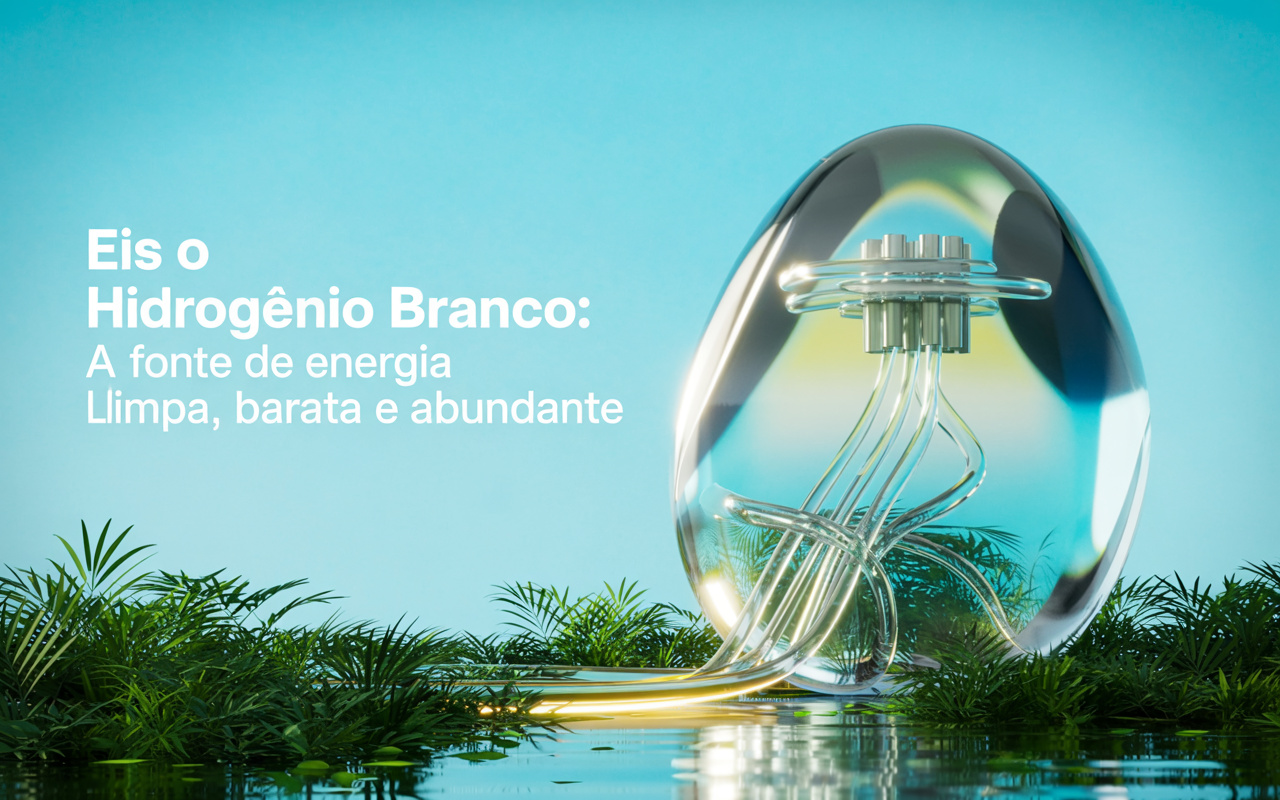

Scientists Highlight White Hydrogen As A Clean, Cheap, And Abundant Energy Source. Understand How It Is Formed, Where It Was Found, And Why It Could Revolutionize The Energy Future.
The world is urgently seeking solutions to reduce dependence on fossil fuels, curb the climate crisis, and ensure energy security for the coming decades. Amid this scenario, a discovery is stirring scientists and energy companies: white hydrogen. Unlike the more well-known forms of the element – gray, blue, and green hydrogen – this variant occurs naturally underground and, according to experts, can be a clean, cheap, and abundant source of energy, potentially capable of powering the planet for centuries.
Today, hydrogen is already considered the “fuel of the future“, because when burned, it only releases heat and water vapor, without carbon emissions. However, almost all global production still relies on polluting processes, such as the use of natural gas or coal, responsible for large amounts of CO₂. It is at this point that white hydrogen stands out: it is generated by nature itself and does not emit carbon in the formation process.
White Hydrogen: The Clean Energy That Is Beneath Our Feet
-
Brazilian scientists are simultaneously advancing two research projects on clean hydrogen and driving solutions that could transform the energy matrix, enhance industrial competitiveness, and accelerate large-scale emission reduction targets.

-
Advancement in renewable energy: A R$ 150 million project launched by Petrobras and Finep aims to create state-of-the-art electrolyzers for green hydrogen, strengthening national research and preparing Brazil to compete in a billion-dollar energy market.
-
Illiterate or semi-literate grandmothers were trained to repair solar systems, open rural workshops, and light up homes that still depended on kerosene.
-
The world has bet on green hydrogen as the fuel of the future, but now faces the side effect: producing 1 kilogram requires about 9 liters of ultrapure water, and the largest projects on the planet are precisely in the driest regions of the Earth, where water is already scarce for people.




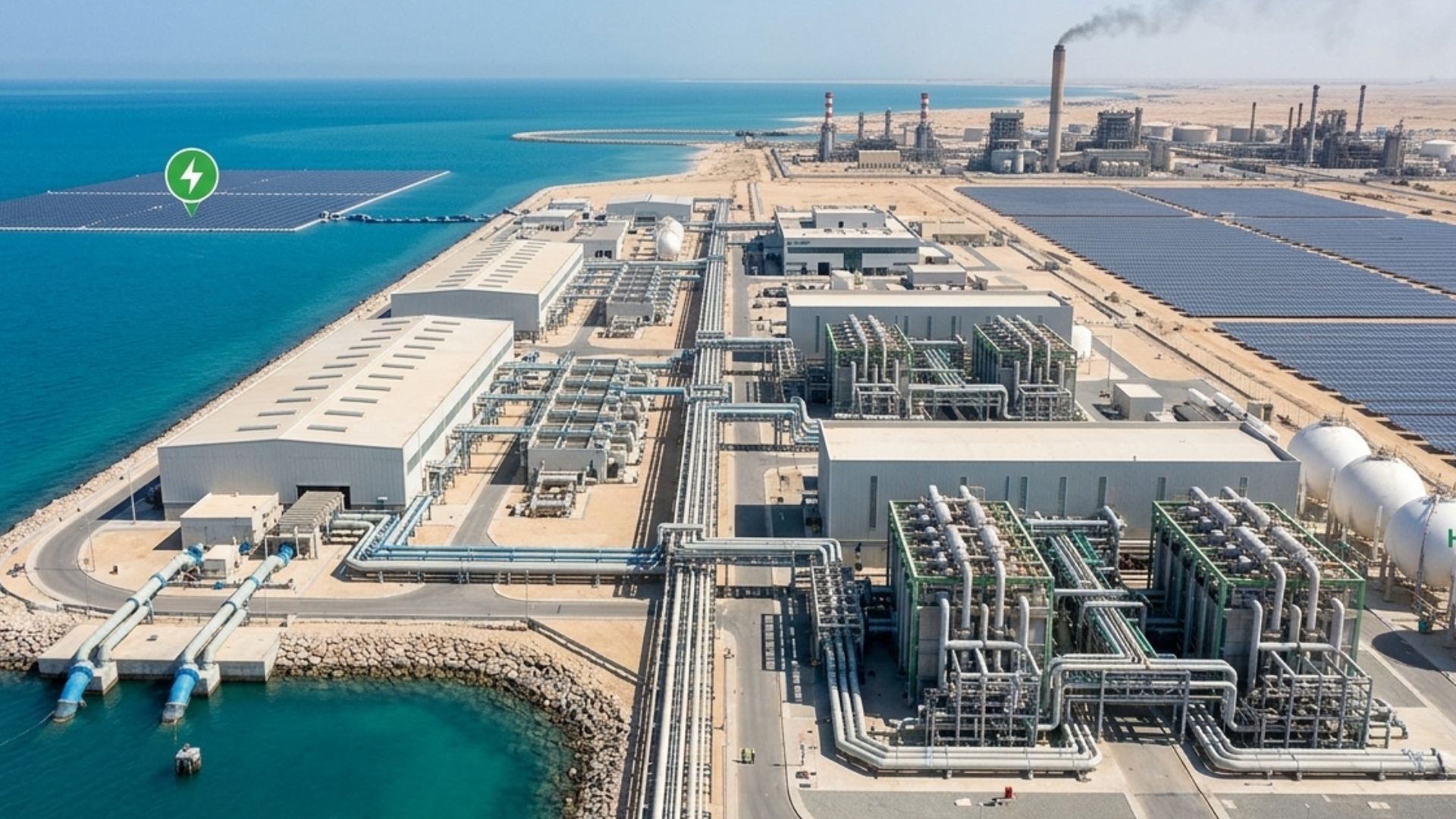
Also known as “natural hydrogen,” white hydrogen is formed underground by a geological process known as serpentinization. In this process, groundwater interacts with iron-rich rocks, releasing hydrogen molecules.
This gas, being extremely light, usually escapes into the atmosphere or is consumed by microorganisms. But under certain geological conditions, it gets trapped beneath impermeable layers of salt or shale, forming subterranean reservoirs similar to those of oil and natural gas.


These underground reservoirs are the target of the exploratory race that is beginning to form. The potential is so great that the United States Geological Survey (USGS) estimated in a 2024 study that there may be between 1 billion and 10 million billion tons of white hydrogen underground globally – and about 5.6 million billion tons trapped in geological formations.
According to the most conservative estimates, if only 2% of this volume were recoverable, it would be enough to meet global energy demand for more than 200 years.
Clean And Cheap Energy: The Promise Of White Hydrogen
In addition to being a zero-carbon energy source, white hydrogen has another attraction: it does not require expensive industrial processes to be produced.
Unlike green hydrogen, which relies on electrolysis (a process that consumes a lot of electrical energy), or blue hydrogen, which uses fossil fuels and carbon capture, white hydrogen is already “ready” underground.

This advantage means that, in theory, the production cost can be much lower than alternatives.
It is estimated that if extraction is viable, white hydrogen could be one of the cheapest energy sources in the world, helping to accelerate the energy transition and the decarbonization of sectors such as transportation, industry, and electricity generation.
Where Is White Hydrogen? The Discoveries That Stirred The Race
In recent years, deposits of natural hydrogen have been identified in countries such as Australia, France, Oman, Spain, the U.S., and Mali. In 2025, a team of geologists announced a significant breakthrough: tectonic simulations revealed that mountain ranges formed by uplifted rocks could be critical accumulation points for white hydrogen.
Regions extending from the Alps to the Himalayas were cited as promising areas for future explorations. Interest grew after an impressive discovery in France, where a large reservoir was found earlier this year, raising expectations that large-scale extraction could be feasible.
Bourakébougou: The Only Place Where White Hydrogen Is Already Generating Energy
For now, only one location in the world commercially explores white hydrogen: the small village of Bourakébougou, in Mali. In 1987, an accident changed the community’s fate. While digging a well, a worker lit a cigarette, causing an explosion. Later, geologists discovered that the released gas was almost pure hydrogen.
Since then, the local reservoir has been used to generate electricity for the village, making Bourakébougou a pioneering example of the potential of natural hydrogen.
Despite the enthusiasm, white hydrogen still faces significant barriers. The International Energy Agency (IEA) rated the production technology for this gas with a score of 5 out of 9 on its readiness scale, indicating that much development is still needed before exploration becomes commercially viable on a large scale.
The main challenges are:
- Finding viable reservoirs: most hydrogen pockets are located in hard-to-reach places.
- Ensuring continuous flow: it is still unclear if hydrogen is generated in sufficient quantities to replenish what is extracted.
- High initial investment: companies need specialized drilling and capturing technologies, similar to those used in the oil industry.
Still, interest is growing rapidly. At least 60 companies around the world have already announced investments in the exploration of white hydrogen, with contributions totaling over US$ 1 billion.
Future Of Hydrogen: Can White Hydrogen Change The Energy Game?
For many scientists and investors, white hydrogen could be the missing piece in the energy transition. It combines the potential of hydrogen as a clean fuel with the possibility of cheap extraction, something that green hydrogen has not yet managed to deliver due to high costs.
If studies confirm the abundance and accessibility of these reservoirs, white hydrogen could usher in a new energy era — just as oil did in the early 20th century.
On the other hand, caution is necessary. As geologists and energy experts remind us, there is still no evidence that white hydrogen is renewable at a sufficient rate to replace what is extracted. The promise is immense, but large-scale exploration is still in its embryonic phase.
White hydrogen emerges as one of the most intriguing discoveries in the energy sector in recent decades. Odorless, colorless, tasteless — and until recently practically “invisible” to market eyes — it now sparks a race for knowledge and exploration.
If technological advances confirm its potential, this clean, cheap, and abundant source could play a decisive role in the future of global energy, helping the world to finally abandon fossil fuels. But until then, the promise of white hydrogen will remain a delicate balance between enthusiasm and scientific uncertainty.









