






 Portuguese
  Spanish


Animals will be gradually removed in Concórdia, will undergo quarantine, veterinary care, castration, and then can be placed for responsible adoption
The rescue of more than 400 cats found in an apartment in Concórdia, in the West of Santa Catarina, is expected to cost up to R$ 500,000 to public coffers and exposed an extreme case of animal hoarding, health risk, and possible mistreatment.
The felines lived in a property of approximately 200 square meters, under the responsibility of a 73-year-old woman. The removal of the animals was authorized by the court after previous agreements were not fulfilled.
According to information from UOL, the Concórdia City Hall estimates that the amount will be used to cover temporary shelter, veterinary care, castration, quarantine, and care until adoption. The operation is expected to start this Friday, June 12, 2026, and will be carried out gradually.
-
Antarctic Volcano Emits Microscopic Gold Particles That Travel Up to 1,000 Kilometers Across the Continent

-
Little-known Japanese factory is the world’s largest zipper manufacturer, producing 7 billion pieces annually and closing half the world’s pants.

-
Brazilian Factory Recycles One-Third of the Country’s Styrofoam Waste, Matching European Levels with 51,000 Tons Reused Since 2007
-
Brazilian Navy Conducts Major Military Exercise with 2,000 Troops, Amphibious Vehicles, and Drones on Lake Furnas in Minas Gerais


The case gained national attention because it involves not only animal protection but also public health, the responsibility of the guardian, and the cost that private situations can generate for the municipality when they reach a critical point.
Cat rescue expected to cost half a million reais to the municipality
The city hall informed that it will initially assume the costs to remove, treat, and keep the animals safe. Later, the municipal management intends to seek reimbursement of the invested amounts in court, as the guardian is pointed out as responsible for the situation.
The estimated cost of R$ 500,000 includes the screening of the cats, transportation, care in accredited clinics, medication, exams, castration, and maintenance in a temporary location. As many animals may present health problems, the final amount may still depend on the clinical condition found during the operation.
The removal is not expected to happen all at once. The cats need to undergo individual evaluation, quarantine, and separation according to their health condition, to reduce contamination risks and allow each animal to receive appropriate treatment.
Apartment became overcrowded after uncontrolled reproduction
The case began, according to official reports, with a pair of cats that reproduced uncontrollably over about ten years. Without castration and proper management, the number of animals grew until it turned the property into an overcrowded environment.
According to information released by the Public Prosecutor’s Office of Santa Catarina, a technical inspection carried out on May 21 and 22, 2026, found felines in a situation of overcrowding and unsanitary conditions, with signs of clinical deterioration and mistreatment. The estimate used in the process was about 400 animals on site.
Technical reports from the city hall also pointed out that the cats occupied various areas of the apartment, including furniture, corridors, and windows. The situation required joint action from the municipality, the Public Prosecutor’s Office, the Justice, and veterinary teams.
The case draws attention because it shows how the lack of neutering, veterinary follow-up, and population control can escalate from a domestic issue to a collective problem. In such situations, animal suffering adds to the sanitary risk and pressure on public services.
Justice ordered gradual removal and supervision of the guardian
The Justice authorized the complete removal of the animals and determined that the operation should be carried out gradually, respecting clinical priorities. The decision also stipulates that the property undergo cleaning and disinfection after the removal of the felines.
Before the judicial decision, a Conduct Adjustment Term had been signed in April 2026. The agreement provided for gradual removal, neutering, microchipping, and the referral of healthy cats for responsible adoption, but the obligations were not fulfilled.
The guardian should also receive psychological support and social assistance. This point is important because cases of animal hoarding often involve personal vulnerability, isolation, and difficulty recognizing the severity of the problem.
Even so, the existence of vulnerability does not eliminate the need to protect the animals. The Civil Police are investigating the woman for suspected mistreatment, and her name has not been officially released.
Animals will undergo screening, quarantine, and neutering before adoption
The operation will have several stages. First, the cats will be removed from the apartment and taken to accredited veterinary clinics, where they will undergo clinical evaluation and quarantine.
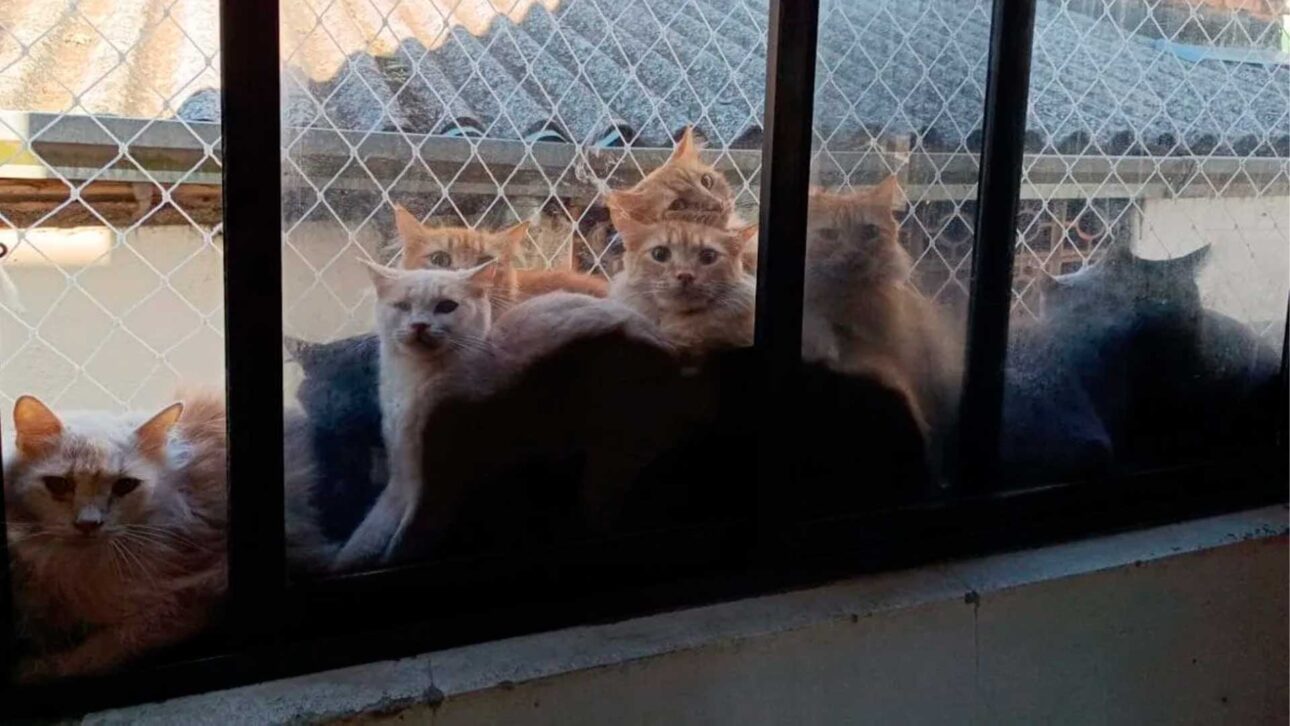
After the screening, the animals should be referred for neutering at the Federal Institute of Santa Catarina. Only after this process will they be sent to a temporary shelter, where they will be available for responsible adoption.
According to local information released by WH3 based on a city hall press conference, the removal will be carried out according to the capacity of the clinics and the health condition of the felines. Therefore, there is still no set deadline for the completion of the entire operation.
Adoption will also require care. Animals removed from overcrowded environments may need monitoring, adaptation, and guardians prepared to provide space, food, vaccination, and veterinary attention.
Case reignites debate on mistreatment and responsible guardianship
In Brazil, mistreatment of animals is a crime. The Ministry of the Environment and Climate Change states that, in the case of dogs and cats, Law No. 14.064/2020 increased the penalty to imprisonment from two to five years, in addition to fines and prohibition of guardianship.
The legislation does not only address physical aggression. Keeping animals in inadequate spaces, without hygiene, without veterinary care, and in conditions incompatible with their well-being can also characterize a situation of mistreatment, depending on the authorities’ assessment.
The Concórdia episode highlights a larger discussion about responsible guardianship. Having a pet requires planning, reproductive control, vaccination, adequate feeding, and financial capacity for basic care.
It also shows the importance of reporting and oversight before the problem reaches extreme levels. When the situation worsens, the cost is not only financial but also involves animal suffering, environmental risk, and overload of municipal structures.
Lack of infrastructure in municipalities exacerbates the problem
The case occurs in a country where the population control of dogs and cats is still a challenge. The Ministry of the Environment points out that many Brazilian municipalities do not have a specific agency, own allocation, or adequate structure to deal with abandonment, mistreatment, and animal sheltering.
Data cited by the government itself indicates that Brazil had, in 2019, at least 54 million dogs and 24 million cats. Updated projections by Abinpet for 2023 pointed to 68 million dogs and 34 million cats in Brazilian homes.
This growth reinforces the need for permanent public policies, not just emergency actions. Spaying, identification, educational campaigns, oversight, and support for low-income guardians can prevent cases of animal overpopulation from recurring.
In Concórdia, the rescue of hundreds of cats became a complex and expensive operation. Beyond the financial impact, the case poses a difficult question for other Brazilian cities about who should bear the cost when private omission turns into a public emergency.


