






 Portuguese
  Spanish


Tokyo and Jakarta have opened technical talks on the possible transfer of Asagiri-class ships, but no agreement has been reached and no schedule has been defined yet
Japan and Indonesia have taken a new step in defense cooperation in the Indo-Pacific by initiating technical discussions on the possible transfer of used Asagiri-class destroyers, currently linked to Japan’s Maritime Self-Defense Force, known by the acronym JMSDF. The negotiation is still in its initial phase but draws attention because it involves larger ships and occurs amid the expansion of Japan’s military equipment transfer policy.
According to Japan’s Ministry of Defense, the decision to open talks was made during a meeting in Tokyo on June 5, 2026, between Japan’s Defense Minister, Shinjiro Koizumi, and Indonesia’s Defense Minister, Sjafrie Sjamsoeddin. The central point now will be to assess whether the ships can be adapted to the needs of the Indonesian Navy without creating excessive logistical costs.
The possible transfer of the Asagiri does not mean, for now, an already approved sale or donation. What exists is a work-level discussion process, in which technicians from both countries must analyze crew training, maintenance, sustainability, costs, operation, and integration of the ships into Indonesia’s naval structure.
-
Kenyan Company Recycles Over 10 Million Flip-Flops from Indian Ocean Beaches into Elephant and Giraffe Sculptures Sold for Up to $1,200

-
Kenyan Brothers Recycle Old Newspapers Into 100,000 Pencils Daily, Aiming to Donate to 1 Million Children in Underprivileged Schools
-
China’s Water Project in Southern Chad Delivers Over 500 Wells and 57 Stations, Aiding Over 600,000 Residents

-
Frustrated by Floods Damaging His Power System, Brazilian Man Builds His Own Dam and Micro-Hydroelectric Plant to Live Off-Grid



Negotiation on Asagiri destroyers marks a new phase of military cooperation between Japan and Indonesia
The Asagiri class comprises multi-mission escort ships that began entering service in Japan in the late 1980s. These are vessels designed to operate in patrol, escort, maritime surveillance, and strategic area defense missions, with the capability to operate an onboard helicopter and accompany naval groups over long distances.
According to the Naval Power portal, the class ships are about 137 meters long, with a beam of approximately 14.6 meters and a loaded displacement of around 4,900 tons. These data show that they are not small patrol vessels but naval means capable of extending a navy’s presence in oceanic areas.
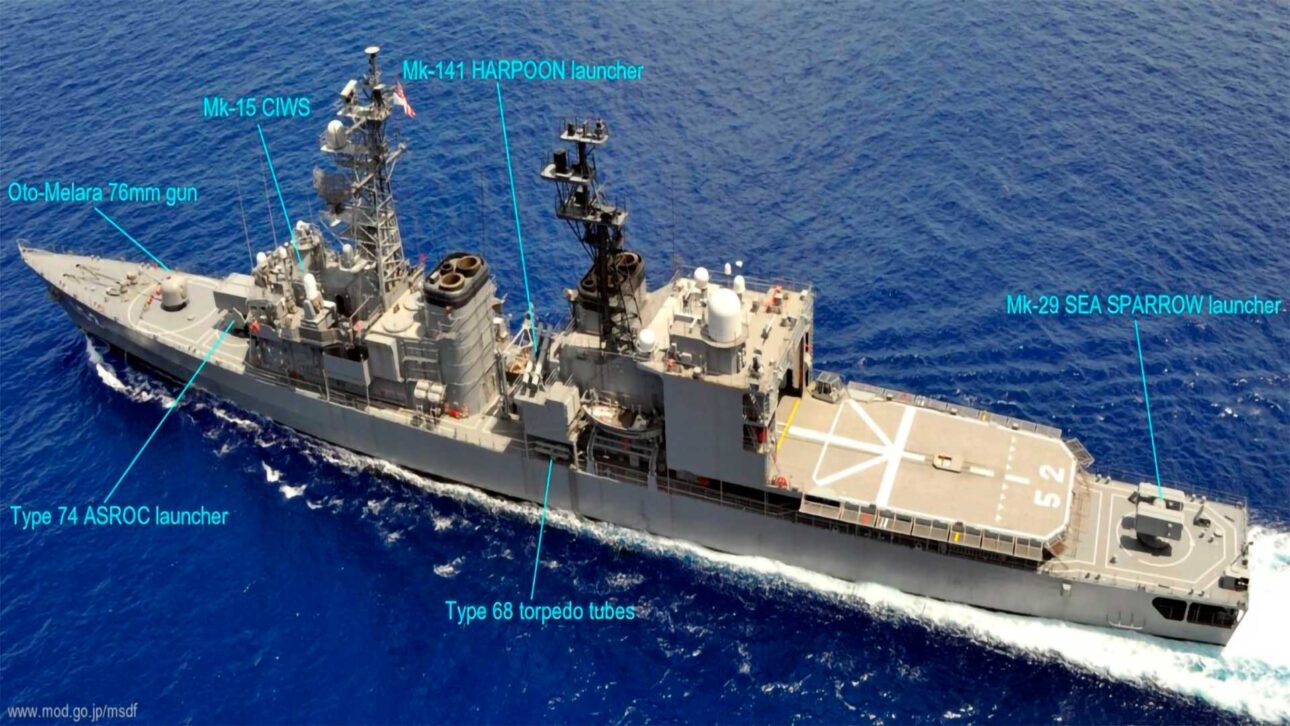
For Indonesia, the interest is directly related to its geography. The country is made up of thousands of islands, occupies a strategic position between the Indian and Pacific Oceans, and needs to monitor essential maritime routes for regional trade. Therefore, strengthening maritime security is a permanent priority for Jakarta.
On the Japanese side, the possible transfer represents another move by Tokyo to strengthen partnerships in Southeast Asia. The Japanese Ministry of Defense stated that Indonesia is located in an area considered strategic for Japanese maritime routes, which helps explain the political importance of the rapprochement.
Japan relaxed rules and seeks to expand its strategic presence in the Indo-Pacific
The discussion about the Asagiri occurs at a time of gradual change in the Japanese stance on the export of defense equipment. For decades, Japan maintained strict limitations on transferring military material abroad, reflecting its pacifist policy after World War II.
This stance began to change in 2014, when the Japanese government adopted the so-called Three Principles on Transfer of Defense Equipment and Technology. According to the Japan Acquisition, Technology and Logistics Agency, linked to the Ministry of Defense, these rules replaced old restrictions and allowed transfers in cases deemed compatible with Japanese security and international cooperation.
The process advanced again in recent years. According to official Japanese statements, the guidelines were revised in 2023 and 2024, opening more space for cooperation in technology, equipment, and international defense projects. In this scenario, Indonesia appears as a relevant partner due to its geographical position and its weight within the Association of Southeast Asian Nations, ASEAN.
Reuters reported that Japan and Indonesia signed a defense cooperation agreement in May 2026, which includes military industry, personnel development, and disaster mitigation measures. On the occasion, Koizumi classified the agreement as a milestone to guide bilateral cooperation, while Sjafrie stated that the countries intend to promote collaboration considering their national interests.
Japanese program had already included patrol boats for the Indonesian Navy
The potential negotiation of the Asagiri did not arise in isolation. In January 2026, the Ministry of Foreign Affairs of Japan announced the signing of a Official Security Assistance project, known by the acronym OSA, valued at 1.9 billion yen for Indonesia.
This program provides for the supply of high-speed patrol boats to the Indonesian Navy, with the aim of improving monitoring and surveillance capabilities. According to the Japanese government, Indonesia plays a significant role in the stability of the Indo-Pacific due to its position along important maritime routes.
The difference is that patrol boats and used destroyers belong to very different categories. While the former are intended for missions closer to the coast and rapid surveillance, the Asagiri would represent a scale expansion, with greater demand for personnel, maintenance, training, and infrastructure.
This is precisely the point that should weigh in the discussions. A larger ship can enhance naval presence, but it also requires a stable budget, supply chain, technical training, and long-term planning. Therefore, defense experts often note that the transfer of used ships is only advantageous when accompanied by a robust support package.
Veteran ships can enhance naval presence, but bring maintenance challenges
The Asagiri are veteran ships, with decades of service. This does not mean they are useless, but it indicates that any transfer needs to consider the condition of the units, the remaining lifespan of the systems, the cost of upgrades, and the availability of parts.
According to specialized publications like Naval News and Poder Naval, the discussion should involve not only the delivery of the hulls but also topics such as crew training, turbine maintenance, operational integration, and adaptation to the needs of the Indonesian Navy. This set of factors can determine whether the proposal will be viable or remain merely political.
Another challenge is the diversity of the Indonesian fleet. Indonesia has been seeking to modernize its Navy with suppliers from different countries, which increases negotiation capacity but also complicates logistical standardization. Each new class of ship may require specific training, unique parts, and separate maintenance contracts.
Even so, the negotiation has strategic value for both sides. For Jakarta, the ships could accelerate the reinforcement of maritime presence in sensitive areas. For Tokyo, the transfer would help consolidate Japan as a supplier and defense partner in a region where naval security has become increasingly important.
Agreement still depends on technical analysis and political decision by both governments
Despite the repercussions, the case is still far from a conclusion. The Ministry of Defense of Japan reported that the two countries agreed to start discussions within a working group, including education and training, maintenance, sustainment, and operational aspects. No numbers of ships, values, deadlines, or final format of the transfer were disclosed.
In a press conference on June 9, 2026, Minister Shinjiro Koizumi stated that the opening of discussions represents an important step for peace and stability in the Indo-Pacific. He also avoided presenting a timeline, indicating that the Japanese government does not yet intend to anticipate dates or conditions.
The caution is explained by the political weight of the decision. Transferring used military ships involves Japanese internal rules, strategic evaluation, costs for Indonesia, and possible regional reactions. In an area marked by maritime disputes and increased military spending, any such movement is closely monitored.
At the moment, the main news is that Japan and Indonesia have moved from a generic conversation to a more concrete evaluation phase. If the process advances, the Asagiri destroyers could become one of the most visible symbols of the new stage of naval cooperation between Tokyo and Jakarta.
Possible transfer shows how maritime security has gained weight in the region
The case also reveals a broader trend in the Indo-Pacific. Countries in the region are investing in surveillance, patrol, and naval capability in the face of busy trade routes, territorial disputes, and the need for a quick response to crises at sea.
In this context, Indonesia is trying to balance military modernization, maritime sovereignty, and operational cost. Receiving used ships may be a quicker solution than building new vessels, but it only makes sense if there is planning to keep them active for a sufficient time.
For Japan, the rapprochement with Indonesia reinforces a strategy of cooperation with partners who share concerns about regional stability, freedom of navigation, and the security of maritime routes. The possible transfer of the Asagiri, therefore, goes beyond the ships: it signals a change in how Tokyo uses technology, equipment, and defense diplomacy to expand influence.
The progress of the talks still needs to be monitored with caution, as no contract has been signed. Even so, the movement already shows that military cooperation between Japan and Indonesia has entered a more practical phase, with potential impact on maritime security in Southeast Asia.


