Portuguese
  Spanish


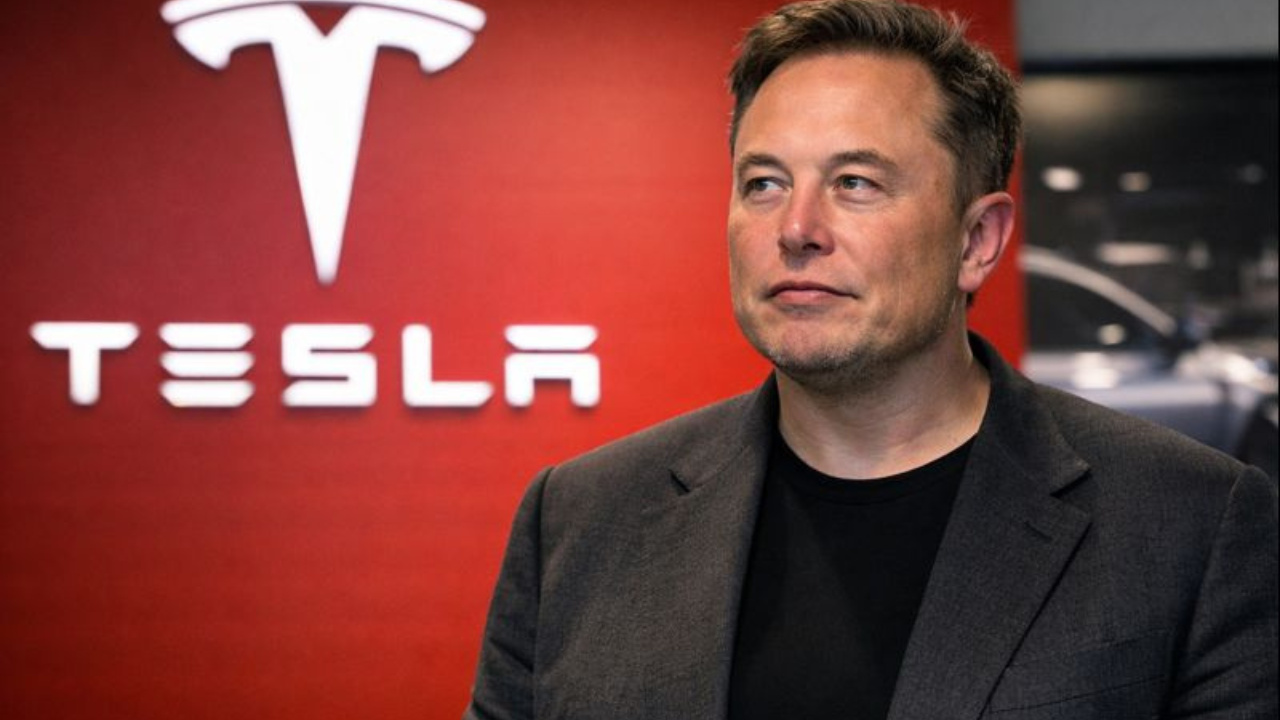

Elon Musk’s Statement About Tesla’s Mission Reignites Discussions About Sustainable Abundance, Innovation, and Artificial Intelligence.
The possible reformulation of the mission of Tesla, suggested by Elon Musk, has stirred the debate about the future of the company
The long-term strategy and the role of artificial intelligence in economic growth.
The statement occurred on Christmas Eve when the executive stated in a post on social media platform X
-
Statkraft Brazil Earns Pro-Ethics Certification from CGU, Highlighting Commitment to Compliance, Governance, and Sustainable Renewable Energy

-
Despite Perceived Delays, Rio de Janeiro’s New Stock Exchange on Track for Launch by Early Next Year

-
Constellation Earns 2025–2026 Pro-Ethics Seal from Brazil’s CGU, Stands Out as Only Offshore Drilling Company Recognized

-
Brazilian Soft Drink Company Dolly Faces Billion-Dollar Bankruptcy Battle Over $3 Billion Debt Accumulated Over Two Decades


To consider the term “incredible abundance” more appropriate and “more cheerful” than the phrase “sustainable abundance.”
The comment was made in the United States, amid the recent release of the company’s new strategic plan, and raised questions
About whether the statement represents just a language adjustment or a deeper conceptual change.
Although the suggestion gained immediate attention, Tesla has not announced any formal changes to its official documents so far.
Thus, the institutional mission of the company remains the same: “accelerate the world’s transition to sustainable energy.”
Statement Comes After Release of Master Plan Part IV
The statement by Elon Musk comes shortly after the release of Master Plan Part IV
The most recent long-term strategic plan of Tesla, presented to the market this year.
In the document, the concept of sustainable abundance appears repeatedly as the foundation of the company’s vision for economic growth supported by technology, automation, and new products.
Despite this, the plan has faced criticism for adopting a language considered broad and vague
Especially regarding goals, timelines, and means of execution.
At the time of the presentation, Musk publicly acknowledged these criticisms and stated that the document could gain more technical details over time.
In this context, the suggestion to change the term used to define Tesla’s mission has been interpreted
As a possible sign of adjustment in strategic communication, even without official confirmation.
Change of Tone or Sign of New Strategy?
It is still unclear whether Elon Musk’s proposal indicates just a more informal and optimistic tone change or if it points to a broader reorientation of the company’s narrative.
The executive is known for using social media for spontaneous and often informal comments about his businesses.
On the other hand, the timing of the statement is noteworthy. In recent months, Musk has increasingly highlighted themes such as artificial intelligence, robotics, and automation as central pillars of Tesla’s future.
These areas appear to be increasingly connected to the company’s vision of growth, going beyond the traditional automotive sector.
Meanwhile, the company continues to invest simultaneously in electric vehicles, energy storage systems, solar generation, and autonomous transportation projects, maintaining a diversified strategy.
Sustainability Remains the Foundation of Tesla’s Mission
Despite the debate over language, Tesla’s trajectory remains strongly associated with sustainability.
In 2017, Elon Musk stepped down from his role as an advisor to the U.S. government after the country’s decision to withdraw from the Paris Agreement. At that time, he stated that climate change was real and that leaving the treaty would bring global harm.
In the same year, he told Rolling Stone magazine that he considered global warming the greatest threat faced by humanity in the century, second only to artificial intelligence.
In 2018, he reaffirmed this position by stating that the fundamental reason for Tesla’s existence was to accelerate the transition to sustainable transportation and energy systems.
These statements help contextualize why the term sustainable abundance has always played a central role in the company’s communication.
Environmental Impact and Technological Expansion
According to Tesla’s 2024 impact report, the company’s products helped avoid about 32 million metric tons of CO₂ just in 2024.
The document also highlights significant advances in battery recycling, renewable energy use in factories, and greenhouse gas emissions neutrality goals.
Besides electric vehicles, the company has expanded its operations in energy storage, smart electrical grids, and solar generation.
Large-scale battery plant projects and virtual power plants have begun to contribute to the stability of electrical grids in different countries.
So far, these pillars continue to be presented officially as a central part of Tesla’s mission, regardless of recent statements from its CEO.
Debate Intensifies Amid Ambitious Goals
The discussion about Tesla’s mission occurs alongside a moment of high visibility for Elon Musk, driven by a compensation package linked to aggressive growth targets.
The plan aims for an increase in vehicle, robot, and mobility service production, as well as a significant increase in the company’s market value over the next decade.
With the approval of this bonus, Musk could become the world’s first trillionaire, which adds even more attention to his public statements and how he communicates Tesla’s future.
Thus, while the official mission remains unchanged, the suggestion to replace “sustainable abundance” with “incredible abundance” continues to fuel debates about strategy, corporate narrative, and the balance between sustainability and technological innovation.