Portuguese
  Spanish


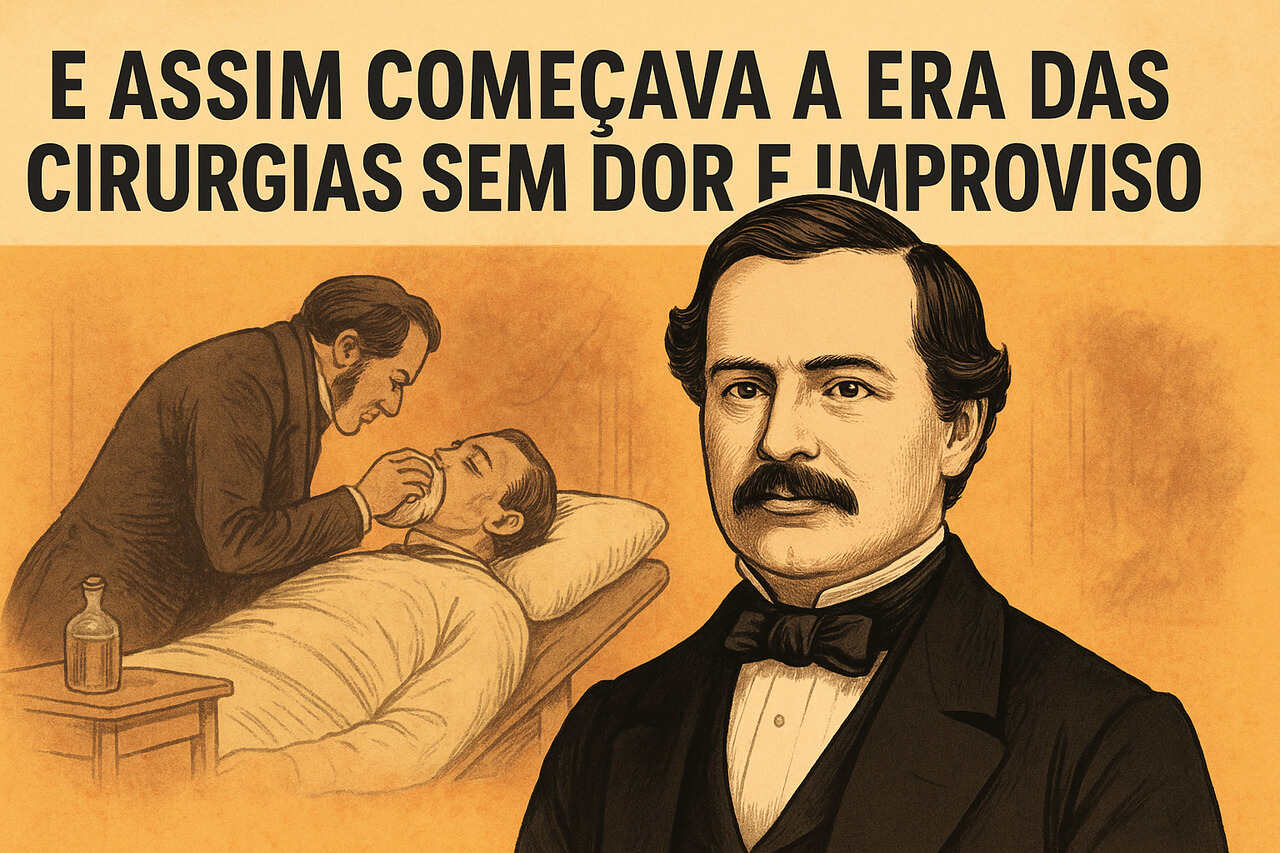

The Invention of Ether as an Anesthetic Revolutionized Medicine and Ended the Era of Painful Improvised Surgeries
Until the early 19th century, surgery was synonymous with pain. Without effective anesthesia, doctors and dentists relied on opium, alcohol, and “laughing gas,” nitrous oxide. The latter, synthesized in 1772, helped alleviate pain but was not sufficient for complete sedation.
It was only in September 1846 that something different happened. American dentist William T. G. Morton performed the first painless tooth extraction.
The news spread, and soon he was invited by a famous surgeon from Boston to repeat the feat in a larger surgery.
-
Brazilian Researchers Develop Cassava Starch and Grape Peel Packaging That Changes Color to Indicate Spoilage of Meat and Fish

-
Revolutionary Air Fryers: New Models Offer Up to 12 Liters Capacity, 10 Functions, and 90% Less Fat Starting at $80
-
New Helmet Rule in Brazil Requires Inmetro Digital Seal and QR Code from July 1, 2026, But Existing Helmets Are Exempt — Here’s What Changes and How to Verify Authenticity

-
Son of a traveling salesman, John D. Rockefeller used the 1873 financial crisis to acquire competitors, build an empire with 100,000 employees, and become the world’s first billionaire.


Morton used a cloth soaked with a substance he called Letheon. The patient inhaled it and fell asleep.
The mysterious substance, however, was not new. It was ethyl ether, known until then for its recreational use.
The name Letheon was merely a marketing gimmick, inspired by the river Lethe from Greek mythology, which would make souls forget the past.
But Morton was not the first to use ether as an anesthetic. In 1842, American physician Crawford W. Long had already performed surgeries under the influence of the substance.
He realized that his patients did not remember the pain. However, he only published his experiments in 1849, when Morton had already gained prominence in the newspapers and even crossed the Atlantic.
Morton tried to patent Letheon and profit from his discovery. The scientific community did not approve. Ether already existed, and the patent attempt seemed opportunistic.
The fight for credit became even more heated with the entry of other names: Horace Wells, Morton’s assistant, and Charles Jackson, a chemistry professor who taught Morton to use ether.
The end of Morton’s story was tragic. He died in poverty in 1868, with his reputation tarnished. Still, he achieved a merit recognized later: he created the first device to control ether inhalation during surgeries. It was simple, with glass vials and wooden mouthpieces, but it helped prevent overdoses.
The popularization of ether paved the way for other substances. Chloroform, for example, was used by Queen Victoria during the birth of her eighth child in 1853.
The monarch’s approval boosted widespread use. It was the end of the era of surgeries without anesthesia.
With information from Super Interessante.