






 Portuguese
  Spanish


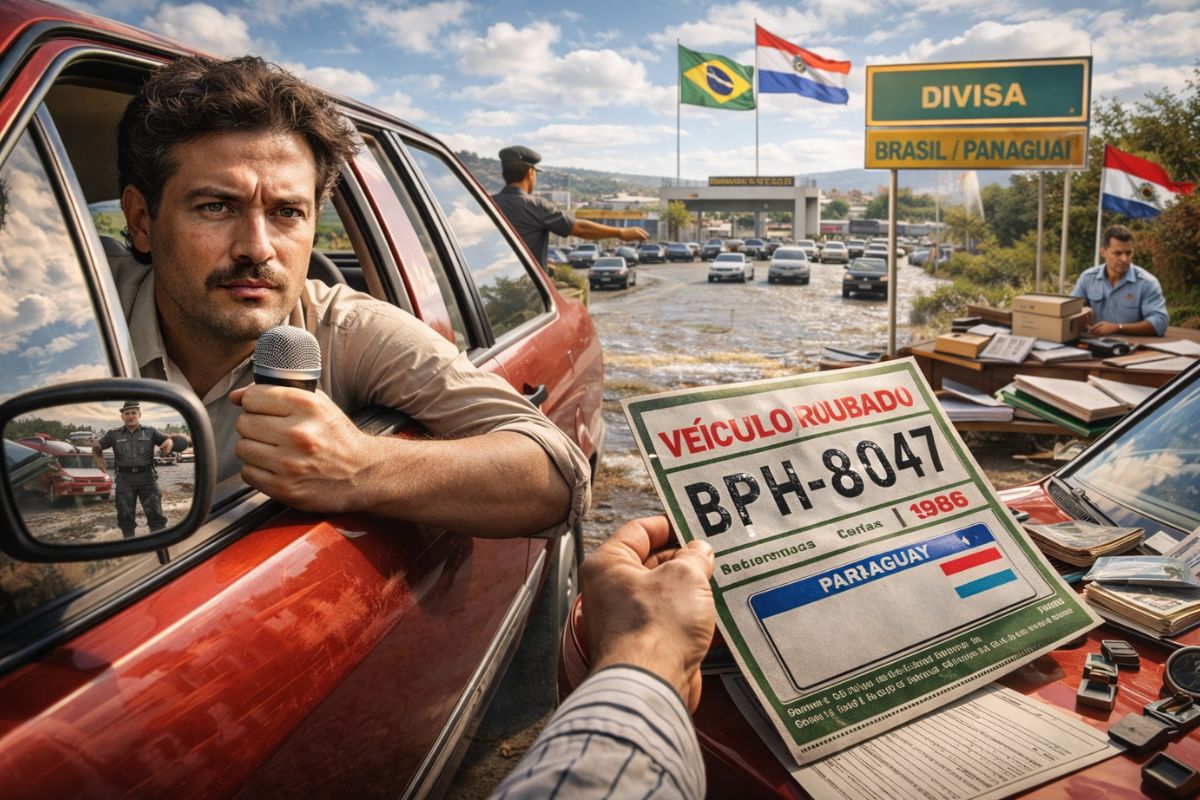

In 1986, A Legalized Stolen Car in Paraguay Reveals Car Theft and the Destiny of Stolen Cars in Brazil, Exposes the Brazil Paraguay Border and the Law of Blanqueio.
In 1986, a historic report placed a legalized stolen car in Paraguay at the center of the narrative, crossing roads between São Paulo and the border and exposing how failures in inspection, complicity, and gaps in the law allowed Brazilian vehicles to disappear from the map and reappear with Paraguayan documents as if nothing had happened.
At that moment, the car was already the second most desired asset by Brazilians, right after home ownership, while about 300 vehicles were stolen per day in the country and 1 in every 5 cars that left the factories ended up in the hands of thieves, fueling an industry that started at street pullers and ended at the counter of an office on the other side of the border. It was in this scenario that journalist Hermano Henningen decided to take a stolen Santana from São Paulo, recovered by the police but still with an active complaint, and drive towards Paraguay to show, step by step, how the path of the legalized stolen car in Paraguay was much simpler than the owner could imagine.
The Fear of Losing the Car and the Scope of the Problem In The 80s
Having a car in the 80s was a symbol of achievement and the dream of consumption for most families. At the same time, those who had a car lived with the constant fear of seeing their vehicle disappear overnight.
-
Crab Trapped in Plastic Bottle for 62 Days Near Okinawa Highlights Little-Known Impact of Marine Pollution on Small Animals

-
Esperanza’s Bamboo Barrier in Oaxaca Redirects River and Reduces Erosion by 85% in Five Years

-
Family Builds Homemade Wind Turbine to Power Off-Grid Home, Video Reaches 555,000 Views on Ngô Thị Huyền’s Channel
-
Indian Brand Creates Sneakers from Recycled PET Bottles and Discarded Tires, Repurposing Over 1 Million Bottles and Raising $4 Million for Expansion





The numbers showed why: 300 cars stolen per day, one in every five vehicles stolen at some point in its lifespan, and an estimated annual loss of 1 billion dollars, equivalent to 1 percent of Brazil’s external debt.
A part of this universe reappeared on the streets with different plates. Another part went straight to the junkyard, turning into scrap, cabritagem, or a source of parts.
And a significant portion was precisely the flow of legalized stolen cars in Paraguay, feeding a gray market that took advantage of the poor integration between registration systems and the sluggishness of authorities in updating complaints and cancellations.
For most owners, the outcome was simple and cruel: to never see the car again or to find it years later, destroyed, abandoned, or renamed with a different identity.
The Journey with a Stolen Santana from São Paulo to the Border

The heart of the 1986 report is the journey led by Hermano Henningen at the wheel of a silver Santana, model CS, stolen in São Paulo at the beginning of that year.
The car had been recovered by the police after the owner had already been compensated by the insurance company, which removed the owner’s rights to the vehicle, but the theft complaint remained active in the records. In practice, for all legal purposes, that was still a stolen car.
The team left São Paulo via the Castelo Branco highway, one of the busiest and most policed in the state, heading toward the interior.
They passed police posts, crossed the border between São Paulo and Paraná, traveled hundreds of kilometers, always with the expectation of being stopped by a system that, in theory, should halt a stolen car on its way to the border.
In practice, what was seen was a scenario of limited inspection, guards occupied with other vehicles and a constant feeling that the Santana could reach its final destination without major obstacles.
Border Monitored in Theory, Permissive in Practice
The most tense stretch of the journey was, naturally, the arrival at Foz do Iguaçu and the Friendship Bridge, at the border between Brazil and Paraguay.
There, the formal control is with the Federal Police, responsible for authorizing or blocking the vehicle’s exit. It was at this point that the experience with the legalized stolen car in Paraguay showed the fragility of the system in detail.
At the bridge entrance, an agent stopped the car, asked for personal and vehicle documents, noticed that the car was not in the name of the driver and requested a power of attorney from the owner. The authorization existed, but it was not with the team.
Meanwhile, another police officer checked the seal on the plate, grew suspicious of the situation, and, combining the absence of the power of attorney with the inconsistent documentation, concluded that there were indications of a stolen car.
That day, by coincidence, there was little traffic on the bridge, and the inspection decided to stop practically all vehicles. Even so, the report showed that, under normal conditions of heavier flow, many cases would go unnoticed.
In the same operation, the police ended up stopping another silver Santana, also a CS, also stolen, driven by a broker hired for 2,000 cruzados just to take the vehicle to the other side of the border. This was the human link of the scheme that turned legalized stolen cars in Paraguay into something almost banal.
How A Stolen Car Became Legal in Paraguay
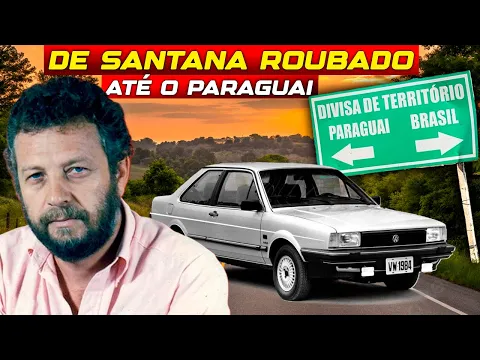

The big revelation of the report is the existence of a Paraguayan law known as blanqueio. This rule allowed anyone to go to a government office with a car, declare that the car was theirs, and if no one claimed it, leave there with the vehicle nationalized and with official documents.
This explained why so many streets in Paraguay were filled with Brazilian vehicles, with models, years, and characteristics that had never been officially exported by manufacturers.
At that time, there was no formal import line for Brazilian cars to Paraguay, but Paraguayan cities were filled with national models with local plates and seemingly perfect documentation.
The path was simple and perverse. The car was stolen in Brazil, transported by land or even water, crossing areas like the Itaipu reservoir, and reached the other side of the border.
Once there, just resorting to blanqueio made that legalized stolen car in Paraguay gain a new identity, new owner, and disappear, in the eyes of Brazilian systems, as if it had never existed.
Pullers, Theft in Carelessness, and Chassi Cabritagem

The report also opened up the backstage of the operation on the Brazilian side. The figure of the puller, like the famous Ligeirinho, showed a profile of a criminal who preferred theft to direct robbery, acting in carelessness, without violence, using simple tools like a type of wire or a screwdriver.
Locked cars were opened in seconds, and older vehicles, the so-called squared ones, were especially vulnerable both in the lock and in the ignition.
After the theft, the paths divided: the car could be sent to dismantling, head towards the border as a potential legalized stolen car in Paraguay, or feed another common practice of the time, cabritagem.
Cabritagem consisted of transplanting the chassis number from a car with valid documentation, often totaled or with a total loss, to a stolen car. This explained inconsistencies like a yellow Brasília painted blue on the outside but with documentation of another vehicle, or a Passat with clear welding marks around the chassis plate.
Inspection, when it acted, still depended on manual checking, radio, low-capacity computers, and partial information.
Ground teams followed directions from helicopters, found carcasses in vacant lots, noted chassis numbers, and called centers that confirmed theft. For the owner, often, the reunion with the vehicle meant just seeing what was left, not recovering the asset.
When The State Itself Takes Advantage of The Stolen Car
One of the most shocking cases recalled in the narrative is that of a woman who had her Escort stolen and, after much searching, discovered that the vehicle had already been recovered by the police in a neighboring city.
Instead of being returned, the car was being used by the very delegate, with a corporation keychain and all. In other words, the stolen car not only did not return to its owner but had also turned into a personal vehicle for someone who should be fighting crime.
This episode exposed not only the fragility of inspection but also the improper appropriation of recovered goods by public agents.
Meanwhile, it showed how, in many cases, the path to becoming a legalized stolen car in Paraguay seemed more organized than the path of returning to the rightful owner within Brazil.
The Security Industry Emerges In Response To Fear
In light of the increase in thefts, a whole industry began to grow around the need for protection. Factories in neighborhoods like Penha in São Paulo began producing thousands of steering locks daily. Alarms emerged that went off at the slightest sign of unauthorized opening, locks that tied the steering wheel to the brake pedal, gasoline blockers that left the car without fuel after a few kilometers.
These devices attempted to address the feeling of widespread vulnerability. The shrill sound of the alarm and the sight of the lock on the steering wheel became part of the daily routine in large cities, alongside the almost mandatory advice of never leaving the car on deserted or poorly lit streets. Meanwhile, inspection technologies evolved, albeit slowly, to reduce the operating space of gangs and the flow of legalized stolen cars in Paraguay.
What This Report from 1986 Still Says About Today’s Brazil
Almost forty years later, that report still stands as a precious document of an analog era, with paper maps in the glove compartment, police officers smoking while on duty and borders much more permeable than today. At the same time, much has changed and much remains recognizable: the symbolic value of the automobile, the creativity of crime, and the race between criminals and control systems.
The integration of databases, the use of cameras, real-time license plate scanning, and international cooperation have reduced the space for the classic scheme of legalized stolen cars in Paraguay, but the logic of transforming diverted goods into seemingly legal assets continues to exist in other forms. Understanding how everything worked in the 80s is a way to realize that, often, technology changes, but the dispute between enforcement and opportunism repeats itself.
This content was based on material aired on the CANAL PL, which rescued and analyzed this historic report in detail.
And you, do you think that if today a reporter tried to repeat this journey with a legalized stolen car in Paraguay, the outcome would be very different or would the story just gain new technologies, but the same old inspection problems?


