





 Portuguese
  English
  Spanish
  3 min of reading
  0 comments


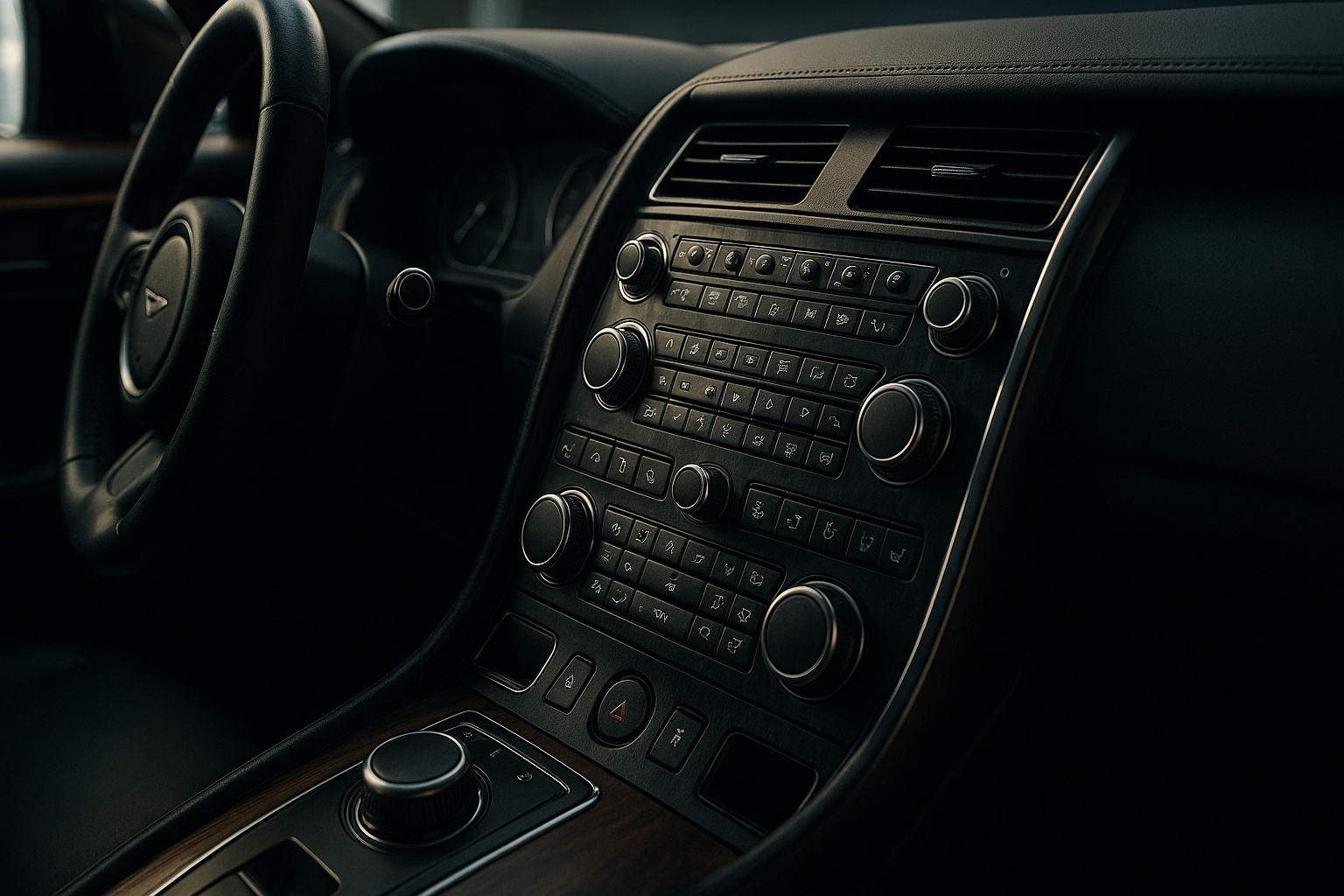
Climate, Ergonomics, and Safety Explain Why British Cars Maintain Physical Buttons Even in the Era of Digital Screens.
While much of the global automotive industry rushes to replace buttons with giant screens, British cars take a curious path: they maintain physical controls for essential functions, even in modern high-end models. For many, this seems like a nostalgic attachment. In practice, the decision involves safety, climate, ergonomics, and engineering philosophy.
What appears to be resistance to technology is, in fact, a conscious choice based on real-world use.
The British Climate Influences More Than It Seems
The United Kingdom is known for its unstable climate: cold, constant rain, fog, and high humidity. In these conditions, interacting with touch screens becomes less precise.
-
Chevrolet launches a “7-seater family SUV” cheaper than Jeep Commander, Toyota SW4, and Chevrolet Trailblazer in Brazil; Captiva 2026 features a 1.5 turbo engine, CVT transmission, 6 airbags, a 10.4″ vertical screen, a trunk of up to 887 liters, and a family package that GM sells in Mexico but does not offer to Brazilians.

-
Hyundai sells a “sporty compact SUV” cheaper than Jeep Renegade, Volkswagen T-Cross, and Honda HR-V in Brazil; for about R$ 56,000 in conversion without taxes, the Venue N Line has a 1.0 turbo engine with 120 PS, manual or DCT transmission, dual exhaust, level 2 ADAS, 6 airbags, and a sports package that Hyundai sells in India but does not offer to Brazilians.

-
How GMC decided to create a cheaper “mini Hummer” after the failure of giant electric vehicles and revealed radical SUVs that promise to take on the Bronco and Wrangler with a brutal look, futuristic technology, and off-road capability in the USA.

-
Chile inaugurates the first electric highway for the trucks that drive its economy, installs high-power chargers over 400 km, and aims to reduce diesel dependency in a logistical shift to Puerto Montt by 2030.


Physical buttons offer:
- immediate tactile feedback,
- operation without taking eyes off the road,
- reliable performance with wet hands or while wearing gloves.
For British brands, predictable control in any weather condition outweighs futuristic aesthetics.
Ergonomics Over Futuristic Aesthetics
Another historical priority of British engineering is functional ergonomics. Instead of concentrating everything in digital menus, cars maintain dedicated controls for frequently used items such as:
- climate control,
- defroster,
- volume,
- driving modes.
This reduces distraction time while driving. Fewer touches on the screen mean more attention on the road.
Safety Has Always Been a Priority in Design
Various studies indicate that sScreens require more visual attention time than physical buttons. Therefore, British brands choose to separate critical functions into physical controls, leaving the screens for navigation and entertainment.
The logic is simple: the driver should feel the control, not search for the control.
Tradition Matters, But Not in the Way You Imagine
It’s not just about nostalgia. The United Kingdom has a strong tradition in:
- touring cars,
- long journeys on secondary roads,
- refined driving instead of aggressive sportiness.
In this context, simple and intuitive interfaces have always been valued. Buttons are part of this heritage, but adapted to modern use, not as blind resistance to innovation.
Clear Examples in British Brands
Models from brands like Land Rover, Jaguar, Bentley, and Mini exemplify this philosophy well. Even with advanced screens, they maintain:
- physical buttons for key functions,
- rotary controls,
- direct shortcuts.
This creates a hybrid interface where technology and physical control coexist.
Why Not Everything Becomes a Screen in British Cars
Turning everything into a screen reduces costs and simplifies production, but creates total dependence on software. British brands avoid this because:
- software failures can render basic functions useless,
- screens age quickly,
- physical controls tend to last longer.
In other words, buttons are more reliable in the long term.
The Market Reaction Validates the Choice
Interestingly, consumers have begun to complain about the excess of screens in modern cars. Many brands are already studying to reintroduce physical buttons after negative feedback. The British, at this point, have been ahead by maintaining a balance from the beginning.
British cars do not reject technology. They simply prioritize what works best in everyday situations, especially in real-world scenarios, away from controlled environments.
The screen impresses in the dealership. The button works better on the road.
In this screen era, British cars are still full of buttons not out of delay, but because of design consistency.
The response is surprising because it reveals that, at times, the most modern solution is not the most digital, but rather the most functional. By betting on physical controls, the British show that driving still matters more than swiping a finger on the screen.






-

1 person reacted to this.