






 Portuguese
  Spanish


While Brazil Invests in Aerial Biocontrol with Wasps and Fungi, the USA Invests in Genetic Engineering to Create Resistant Plants. Discover the Two Fronts of the Battle Against a Devastating Pest.
The corn crop faces a powerful enemy: the hopper Dalbulus maidis. This small insect is a vector for diseases known as “streaks”, capable of causing billion-dollar losses. In response, a technological race has intensified. In the interior of São Paulo, the solution comes from the skies, with drones releasing natural enemies. In the United States, the bet is internal, modifying corn DNA. Both approaches reveal the future of agribusiness, deeply shaped by technology.
Who is the Corn Hopper and Why Does it Worry So Much?
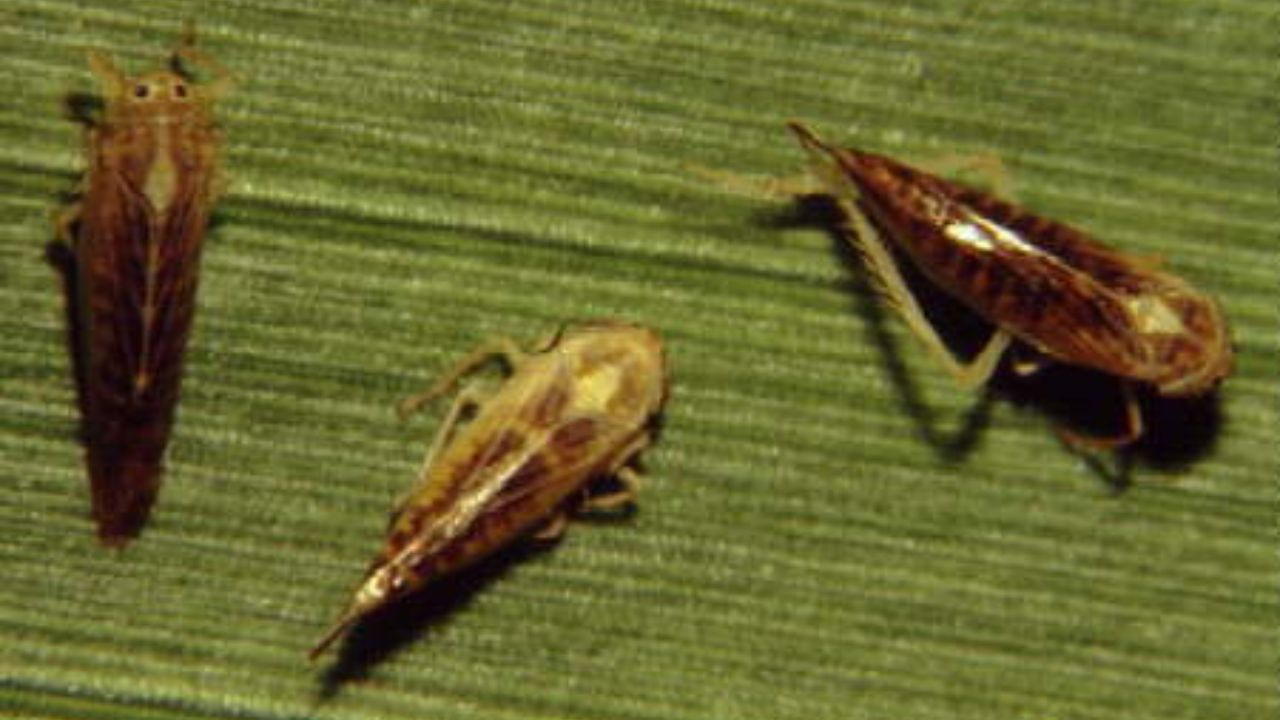
The corn hopper is a small sap-sucking insect. It measures 3 to 4 mm and has two black spots on its head. Its true destructive power lies not in what it eats, but in what it transmits. The Dalbulus maidis is the main transmitter of mollicutes, microorganisms that cause the pale and red streaks in corn.
The transmission mechanism is persistent propagative. This means that once infected, the hopper spreads the disease throughout its life. The pathogen multiplies inside the insect. Therefore, it is not enough to reduce the population; it must be eliminated quickly. Productivity losses are alarming, potentially reaching 100% of the crop. This recent crisis caught the industry by surprise, creating an urgent demand for new control solutions.
-
How Many Outlets Should Each Room Have? Guidelines Suggest 6 to 10 in the Kitchen, One Every 3.5 Meters in Living Rooms, and Specific Recommendations for Bedrooms, Bathrooms, Laundry Rooms, and Outdoor Areas

-
Family Turns Homemade Cheese Bread Recipe into a $17 Million Frozen Foods Business with 200 Tons Monthly Production and Over 1,400 Clients

-
Ancient 4,000-Year-Old City in Brazil Grew Wealthier and Reduced Inequality, Study Finds
-
Lost Page from Archimedes Palimpsest Resurfaces in French Museum After Decades, May Reveal Hidden Mathematical Calculations with X-ray and Multispectral Imaging




Drones Release ‘Armies’ of Wasps and Fungi in the Interior of SP
In Brazil, the response to the crisis combines biotechnology and automation. The strategy is augmented biological control: the planned release of natural enemies via drones. The image of “mercenary wasps” is powerful, but the main tool today is entomopathogenic fungi. Species such as Beauveria bassiana and Isaria fumosorosea are the true “workhorses”. Companies like Corteva and Koppert already offer commercial products. When the fungal spores come into contact with the hopper, they penetrate its body and kill it within a few days. The fungus Isaria fumosorosea has already shown up to 85% control in the field.
The application of this biological technology on a large scale is only feasible thanks to drones. These unmanned aerial vehicles are equipped with precision GPS and special dispensers. The advantages are clear, including agility, as a drone can cover up to 100 hectares per day, and precision, with applications focused on areas of higher infestation. Additionally, aerial application eliminates the “trampling” of plants caused by tractors and promotes drastic water savings. Brazilian companies such as Promip, Dronefy, and BirdView lead this “Drone-as-a-Service” market, making integrated management a logistical and economic reality.
Genetic Editing Technology to Create a ‘Super Corn’


In the United States, the forefront of research focuses on an internal and preventive solution: modifying the corn genome. The main tool is the CRISPR-Cas9 technology, which acts as a “molecular scalpel” of high precision. Unlike traditional transgenics, which insert genes from other species, genetic editing allows for “turning off” or editing existing genes in the plant. The goal is to create hybrids with natural resistance to the hopper or the pathogens it transmits. This technology allows for alterations indistinguishable from those occurring in nature, but at record speed.
Biotechnology giants like Bayer, Corteva, and startups like Inari are leading this front. The development pipeline goes beyond pest control, seeking traits such as drought tolerance, increased productivity, and the development of low-stature corn, which is more resistant to strong winds. The value proposition is a continuous protection that already comes “built-in” to the seed, simplifying management and protecting the crop from the start.
The Advantages and Disadvantages of Each Technology
Both strategies have distinct strengths and weaknesses, shaped by regulatory, environmental, and social factors. In terms of regulation, Brazil, with its Normative Resolution 16, and the USA have a favorable environment for genetic editing, as they consider that products edited without external DNA are not transgenics (non-GMO), speeding up their arrival in the market.
Regarding environmental impact, biological control is seen as “green”, but non-selective fungi can affect beneficial insects. On the other hand, genetic editing raises questions about the evolution of resistant pests. Finally, in public perception, biocontrol enjoys a positive and “natural” image, while genetic engineering still faces the stigma of “transgenics”, especially in Brazil.
The Convergence of Technologies in the Field
The future of the field will not be a choice between one method or another, but rather a strategic integration. The most resilient and profitable model will be hybrid. Imagine a producer planting a genetically edited seed for basic disease tolerance. If, even so, the pest reaches a critical level, they activate a drone for precision application with a selective biological agent.
Large companies are already moving in this direction, offering both biotechnology seeds and biological solutions. The vision for the future is to sell a complete production system. The war against the corn hopper is currently one of the main battlegrounds where 21st-century agriculture, based on the union of genetic, biological, and digital technology, is being forged.





-

-

-

-

-

-

19 people reacted to this.