Portuguese
  Spanish


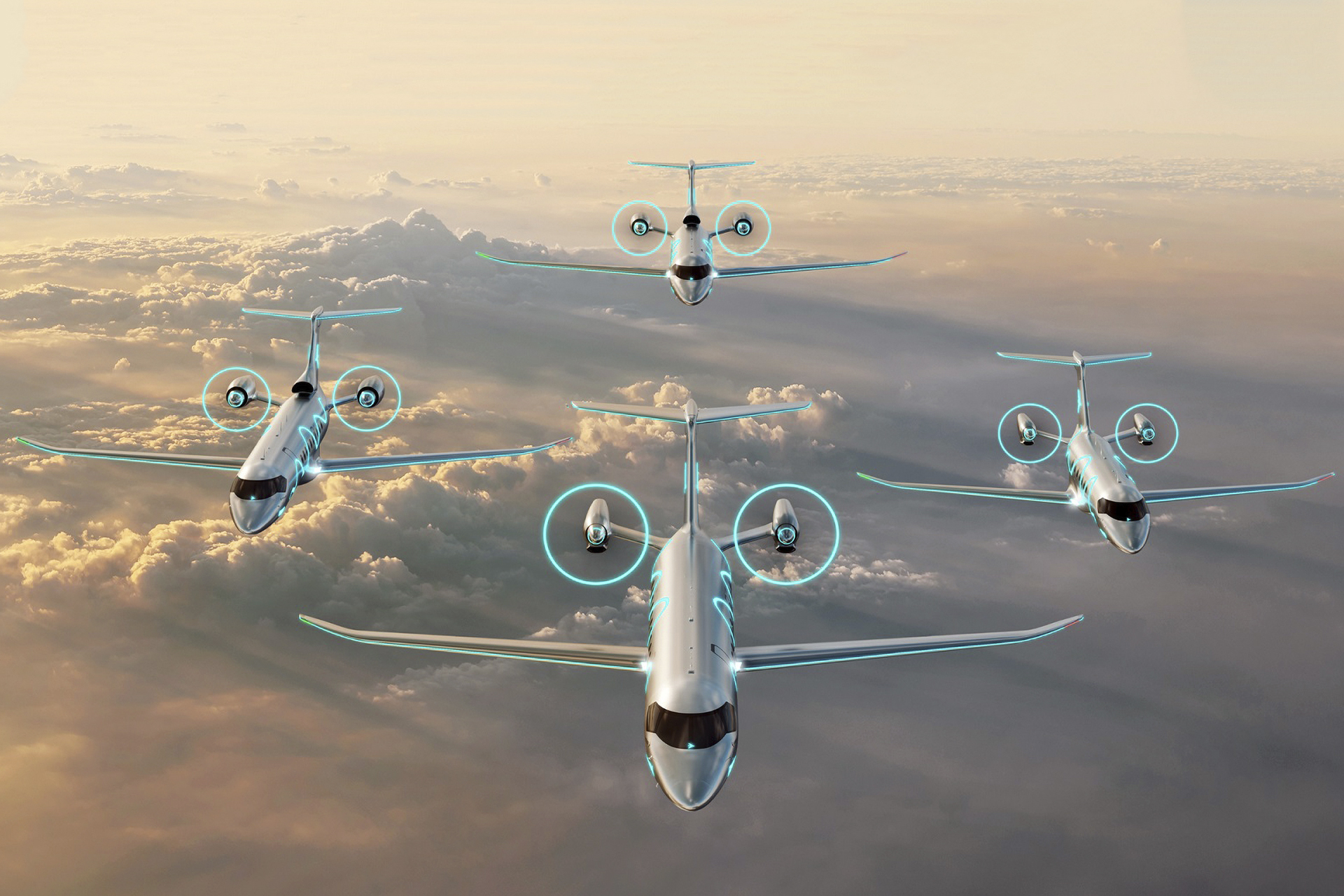

New Futuristic Jet Aircraft, Hybrid Electric and Hydrogen-Powered, Are Being Designed by Embraer and Are Expected to Be Launched by 2035
Embraer, the Brazilian Aircraft Company, made a presentation outlining the stages of what is being called the “Energy Project.” During the event, the company showcased details of four futuristic jet aircraft that are hybrid electric and hydrogen-powered.
According to Embraer, the jets of the future will have a capacity of 19 to 30 passengers and will be powered 100% by renewable energy. However, the models will only be made available to the public when the engine technologies are mature, which is expected to happen around the year 2035.
Major brands like Toyota and Honda have already declared investments in new technologies that use hydrogen as fuel. After Airbus debuted its first hydrogen-powered engine some time ago, it is now time for Embraer to do the same in the aviation industry and present its project for futuristic jet aircraft powered by hydrogen.
-
Berries, Strawberries, and Blueberries Could Transform Agriculture in Northeastern Brazil, New Tests Reveal

-
Danish Resident Discovers Six Viking Gold Bracelets Weighing 762.5 Grams, Third Largest Gold Treasure in Denmark

-
Over 200 Cities in Southern Brazil on Storm Alert as Cyclone Near Uruguay Brings Heavy Rain, Hail, and Winds Up to 100 km/h

-
Archaeologists Discover 2,300-Year-Old Beer in Sealed Bronze Vessel from Ancient Chinese Tomb




Embraer’s strategy to achieve the goal of zero pollutant emissions in the aviation sector by 2050 includes the development of these hydrogen-powered aircraft. According to the company, there is a technically feasible and viable way to achieve carbon neutrality within the stipulated timeframe, using hybrid-electric or hydrogen-electric propulsion programs.
In less than 25 years, aircraft have already significantly reduced emission levels, and Embraer’s Senior Vice President of Engineering, Technology, and Corporate Strategy, Luis Carlos Affonso, reaffirmed the company’s confidence in the success of the project.
According to him, although the challenges are significant, the company is convinced that net-zero is a target that can be achieved. The development of hydrogen-powered futuristic jets will contribute significantly to this.
Embraer’s Futuristic Jets Will Have Their Engines at the Rear and Can Fly at an Altitude of Up to 30,000 Feet
The four aircraft that Embraer intends to produce will all be powered by environmentally friendly energy sources; specifically, two of them will have hybrid-electric engines, while the other two will have hydrogen-electric engines.
No matter the type of engine they use, futuristic jets will need to be constructed to fly at an altitude of 30,000 feet and survive temperatures as low as -60 degrees Celsius.
The E19-HE and E30-HE aircraft will feature parallel hybrid-electric propulsion, allowing them to reduce carbon dioxide emissions by up to 90%. The so-called E19-H2FC and E30-H2FC, both manufactured with hydrogen-powered electric propulsion, do not release any CO2 into the environment during the production process.
All of them will have their engines at the rear, but the hydrogen-powered ones will have larger wings. This way, the propellers and fuel cells can benefit from this type of defense against possible damage.