






 Portuguese
  Spanish


New System from Embrapa and UFC Transforms Fruits and Vegetables into Biogas, Reducing Costs and Emissions in Supply Centers
On September 9, 2025, Embrapa Agroindústria Tropical, in partnership with Federal University of Ceará (UFC), presented a technological innovation that promises to transform organic waste management in Brazil.
The new system, called Integrated Anaerobic Reactor System, was developed to increase biogas production from discarded fruits and vegetables, reducing operational costs and greenhouse gas emissions.
New System from Embrapa: How the Technology Works
The technology was initially applied at the Ceará Supply Center (Ceasa-CE), where between 17 and 25 tons of fruits and vegetables unfit for human consumption are discarded monthly.
-
Brazilian scientists are simultaneously advancing two research projects on clean hydrogen and driving solutions that could transform the energy matrix, enhance industrial competitiveness, and accelerate large-scale emission reduction targets.

-
Advancement in renewable energy: A R$ 150 million project launched by Petrobras and Finep aims to create state-of-the-art electrolyzers for green hydrogen, strengthening national research and preparing Brazil to compete in a billion-dollar energy market.
-
Illiterate or semi-literate grandmothers were trained to repair solar systems, open rural workshops, and light up homes that still depended on kerosene.
-
The world has bet on green hydrogen as the fuel of the future, but now faces the side effect: producing 1 kilogram requires about 9 liters of ultrapure water, and the largest projects on the planet are precisely in the driest regions of the Earth, where water is already scarce for people.





Before the implementation of the new system, this waste was sent to the landfill, generating a cost exceeding R$ 230 thousand per month. Now, they are converted into methane-rich biogas, capable of supplying up to 100% of Ceasa-CE’s energy demand during peak hours, in addition to generating a 20% savings on the electricity bill.
The Integrated Anaerobic Reactor System represents a significant advancement over conventional anaerobic digestion methods. Traditionally, the complete mix reactor (CSTR) model is used, which presents limitations in terms of efficiency and energy recovery. The new system from Embrapa performs a pre-treatment of the fruit and vegetable waste, separating them into two distinct fractions:
- Liquid Fraction: sent to upflow blanket anaerobic reactors (UASB), highly efficient in digesting biodegradable substrates.
- Solid Fraction: intended for composting to produce fertilizers or dry methanization, still in the testing phase.
This approach allows for greater energy recovery, reduced physical space occupation, and significant reductions in operational costs. Furthermore, the system is modular and can be adapted to different scales of operation, facilitating its replication in other supply units.
Biogas Production from Fruits and Vegetables: Environmental and Economic Impact
Biogas production from fruit and vegetable waste is a sustainable alternative for organic waste treatment. According to data from the Food and Agriculture Organization (FAO), about 30% of the world’s fruit and vegetable production is lost or wasted. In Brazil, it is estimated that 42% of the food produced is lost along the supply chain.
This waste generates significant environmental and social impacts. The adoption of the new system from Embrapa contributes to:
- Reduction of greenhouse gas emissions (GHG)
- Decreased costs for transporting and disposing of waste
- Generation of clean and renewable energy
- Promotion of a circular economy
Furthermore, the biogas produced can be used for electricity generation, heating spaces, or as vehicle fuel, broadening the possibilities for use and adding value to the process.

Partnership with the Federal University of Ceará Strengthens Innovation
The Federal University of Ceará (UFC) was a strategic partner in the development of the technology. Professor André dos Santos from the Department of Hydraulic and Environmental Engineering at UFC highlighted that the impact of the innovation could be huge, stating it generates sustainable energy, less waste, employment opportunities, and a circular economy.
UFC will also be a co-organizer of the 15th Latin American Workshop and Symposium on Anaerobic Digestion (XV DAAL), which will take place in Fortaleza from October 14 to 17, 2025. The event will bring together experts from various countries to discuss advances in biogas and biohydrogen production, consolidating Brazil as an international reference in the field.
Potential for Replication of the New System from Embrapa
The model developed for Ceasa-CE has high potential for replication in the other 57 supply centers in Brazil. The largest of them, located in São Paulo (Ceagesp), generates between 150 and 180 tons of waste per day. The application of the new system from Embrapa in these units could represent a revolution in organic waste management in the country.
In addition to supply centers, the system can be adapted for use in agricultural cooperatives, food industries, and even rural properties, expanding the reach of the technology and promoting the decentralization of energy generation.
Research on Biohydrogen Expands Energy Possibilities
In addition to biogas production, researchers also tested the generation of biohydrogen from the liquid fraction of the waste.
Although the results are not yet competitive on a commercial scale, the research paves the way for new routes for clean energy production. The technology used was dark fermentation in structured bed anaerobic reactors (AnStBR).
The continuity of studies may enable its application in industrial and transportation sectors, diversifying Brazil’s energy matrix.
Anaerobic Digestion and Biogas Production: Fundamentals and Applications
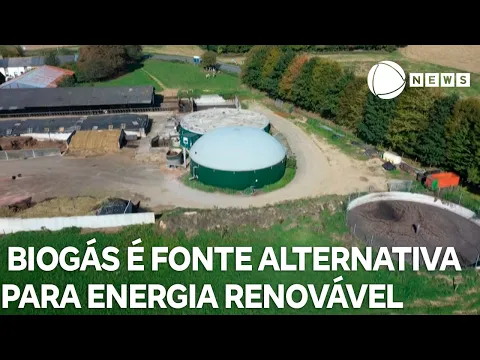
Anaerobic digestion is a microbiological process that transforms organic matter into energy bioproducts in the absence of oxygen. It is widely used in biodigesters for the treatment of liquid, solid, and semi-solid waste. The main benefits include:
- Production of methane-rich biogas
- Recovery of nutrients
- Mitigation of GHG emissions
- Reduction of organic load in effluents
This technique is considered one of the most promising for the energy recovery of organic waste, especially in countries with high agricultural production like Brazil. Integration with composting systems and bio-fertilizer generation enhances environmental and economic gains.
Innovation at Embrapa: Strategic Relevance for Brazil
The launch of the new system by Embrapa, in partnership with the Federal University of Ceará, represents a milestone in the search for sustainable solutions for the treatment of organic waste. The technology not only reduces costs and emissions but also promotes the rational use of resources, contributing to environmental and economic sustainability.
With the potential for replication throughout the national territory, the system represents a strategic solution to face the challenge of food waste and organic waste generation. The initiative reinforces the role of science and innovation as engines of sustainable transformation, positioning Brazil as a reference in clean technologies and the circular economy.








