






 Portuguese
  Spanish


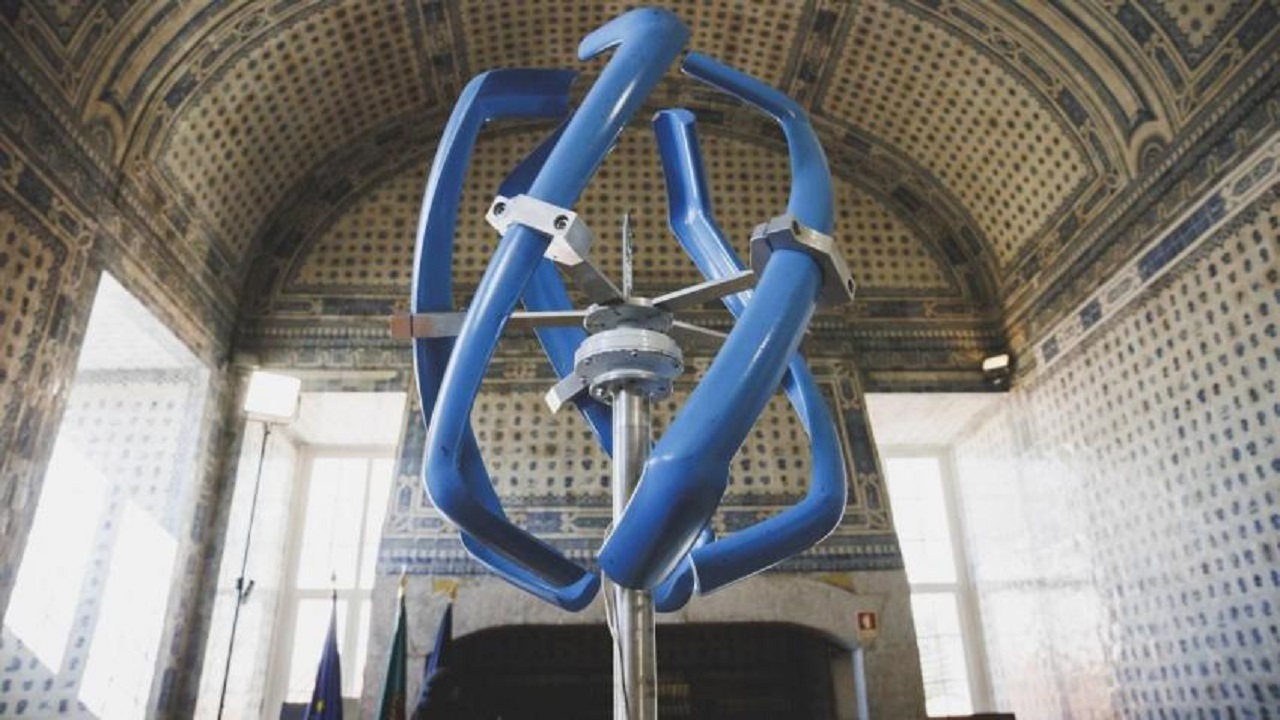

Company Develops New Wind Turbine That Generates Renewable Energy Silently. The Equipment Aims to Make Wind Energy More Accessible to Everyone.
The company from Portugal, called Windcredible, aims to bring wind energy production to a domestic scale. To make this possible, it has set aside the traditional wind turbine and introduced a smaller solution with a different shape. With a patented design, Windcredible’s wind generators have rounded blades instead of straight ones, forming almost a sphere that spins with the kinetic energy of the wind. This way, it has a reduced sweep area and is compatible with urban environments.
New Wind Turbine Generates Renewable Energy Silently
The goal was not to create another solution for large wind energy production parks, but rather to present a structure that could be installed on the roof of a building or in the backyard of a house. Ultimately, the aim is to make wind energy accessible to everyone, just as solar panels are today.
The wind turbines from Windcredible have two features that make them very attractive. They are silent, which is essential since they are installed close to residences, and have low operational costs with minimal maintenance requirements. As a result, they are a cost-effective option for customers.
-
Ceará brings together 7 giants and R$ 66 billion to transform Pecém into the largest green hydrogen hub in Brazil, with final decisions expected by the end of 2026.

-
Scientists Convert Factory Waste Heat into Hydrogen Using Perovskite Catalyst at Significantly Lower Temperatures

-
Airbus and MTU Launch Joint Venture to Advance Hydrogen-Powered Electric Aircraft Engines, Paving the Way for a New Era of Low-Emission Commercial Aviation
-
In a Place Many Doubt Solar Power Works, 360 Panels Operate in the Arctic, Harnessing Reflected Snowlight to Reduce Diesel Use at an Isolated Station



The company’s team is now developing Internet of Things (IoT) connectivity, so that it will be possible to monitor and control these wind turbines via computer or smartphone.
Sustainability is one of the focuses, and thus the wind generators will be built to have the smallest environmental footprint possible, using materials such as recyclable or recycled plastic, wood, and metal. The company is working on three sizes of turbine, each designed for a different environment.
The size of the wind turbine was designed for outdoor activities for vessels and vehicles: standard for buildings and urban spaces, and large for farms and industrial areas.
New Design of Wind Energy Turbines Is Emerging
Wind turbines are a great source of renewable energy, and with that in mind, the company New Wind has manufactured a wind turbine that resembles a tree, which operates with light winds. The trees feature “leaves” made of plastic that silently rotate in the breeze from any direction the wind blows. While larger industrial turbines, commonly found in wind farms, only work with winds greater than 35 km/h, the leaves of this wind turbine capture energy from winds below 8 km/h.
The wind tree stands over 9 meters tall and 7 meters wide, boasting a total of 54 green leaf turbines that can generate up to 5.4 kW of energy at a time and produce about 2,400 kWh annually. New Wind estimates that the trees could meet half of the annual energy needs of an average French family or power a small low-consumption office.
The Future of Wind Energy in the World
Global efforts to slow down global warming point towards carbon neutrality. Environmentalists emphasize that this goal must be achieved by 2050, and to reach this target, investment in renewable energies, such as wind energy, is essential.
Although there are resistances from large economies, like the United States and China, this technology is undoubtedly on the research agenda of both countries.
In Brazil, it is no different, as it has a significantly more renewable energy matrix than the average of industrialized countries, yet it still falls short of the necessary efforts to preserve nature.


