






 Portuguese
  Spanish
  3 min of reading


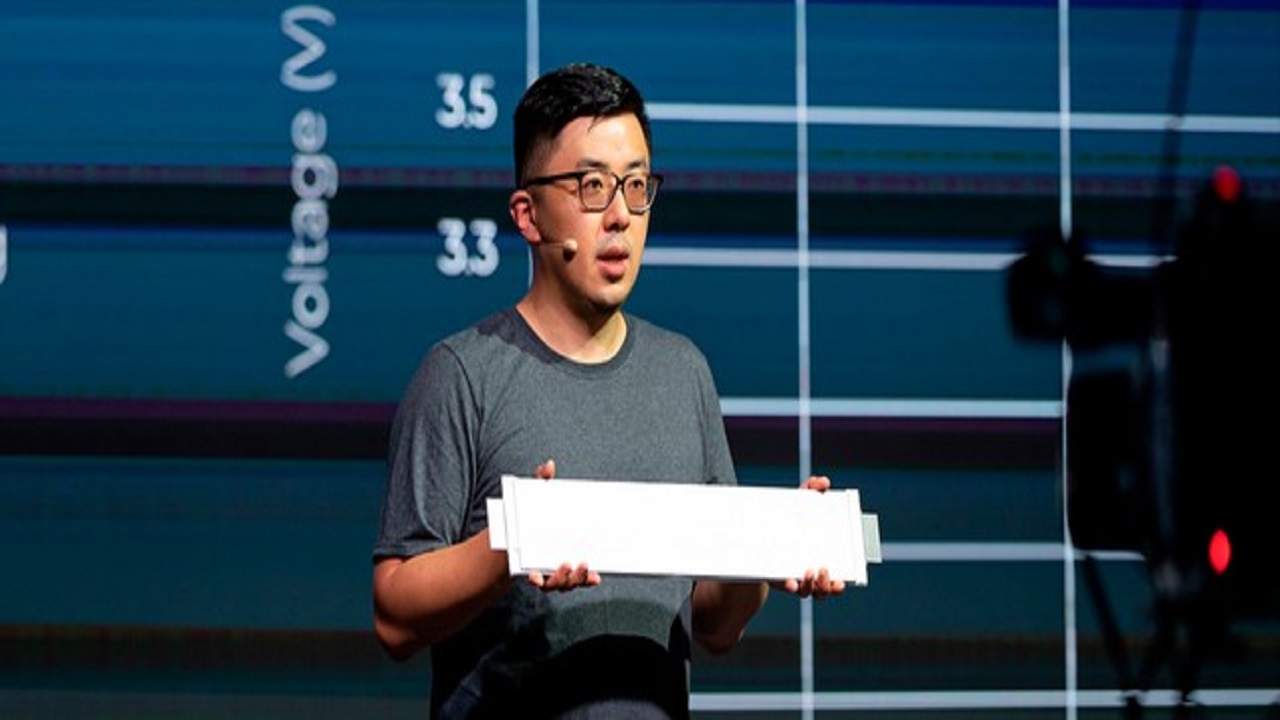
SES Is Developing A New Salt-Based Battery For Electric Cars That Doubles The Range Of Electric Vehicles While Being Safer Than Lithium-Ion Batteries
Electric cars already impress with their incredible ranges, such as the new Tesla Model S Plaid Plus, which can offer 836 km on a single charge. However, SES has announced the creation of an even more promising salt-based battery solution for electric vehicles that promises to deliver up to double the range with a component that has an equal or even smaller volume than traditional ones.
Read Other Related News
How The New Salt-Based Battery For Electric Cars Works


SES’s new technology, which can double the range of electric vehicles, still uses lithium-ion cells; however, it uses a metal lithium anode instead of graphite, which is responsible for capturing lithium ions during the battery charging process.
The graphite has been replaced by a pure metal lithium anode that requires less space and offers better range for electric cars. One of the challenges was to prevent debris formation, so the company used a hybrid approach, coating the anode with a proprietary compound, in addition to a liquid electrolyte saturated with a form of salt to ensure the safety of the electric car battery.
-
Two new 300cc models from QJ Motor are expected to arrive in Brazil as SBM to target the CB 300F and shake up the low-displacement market, with more power and liquid cooling than Honda.

-
Camaro may reappear in 2027, but not as you remember: Chevrolet prepares the return of the icon with four doors, manual transmission, and an extreme performance version to face the new era of sports cars.

-
Is the BYD Song Pro worth it? The Anderson Sincero channel says it doesn’t exceed R$ 140,000, and the price dropped by R$ 47,000, reinforcing the depreciation of the plug-in hybrid in the Fipe table.
-
Caoa Changan CS75 arrives for R$ 199,990 with 4.77 m in length, a trunk of up to 1,620 liters, 8-speed Aisin transmission, 180 hp, 37.2 inches in screens, and Zero Gravity seat with massage.


According to SES’s CEO, Qichao Hu, this new salt-based liquid is very stable with lithium metal, very safe, non-volatile, and non-flammable, as well as being non-organic.
SES Uses AI System To Detect Failures In Electric Car Batteries
To ensure the safety of the salt-based battery, an evaluator punctured the component with a nail, and it did not ignite, something impossible to achieve with a conventional lithium-ion battery. Thus, the system can use forms of automatic repair with a suitable charger or recommend battery replacement before an accident occurs.
Additionally, the company also emphasizes that it currently uses an artificial intelligence system to identify potential failures and defects in its components and plans to implement this system in electric cars. For now, the company is in business with automakers such as GM, Geely, Hyundai, SAIC, and Foxconn to bring its new technology to electric vehicles.
The CEO of the company states that prototypes should be fully optimized for use by the end of next year. A SES factory is still being implemented in Shanghai and is expected to be completed around 2023. The first electric cars with new salt-based batteries are expected to hit the market in 2025.
Solid-State Batteries
Solid-state batteries, which have been anticipated by the industry for some time, are starting to make progress in testing. Solid Power, formed by Ford and BMW, has set the start of the first test production of the new component for 2022.
Solid-state batteries have gained attention and are seen as the future for hybrid and electric cars. Despite their production being somewhat hindered, the technology offers greater energy density, a longer lifespan, and also reduces production costs.


Be the first to react!