






 Portuguese
  Spanish
  4 min of reading
  10 comments


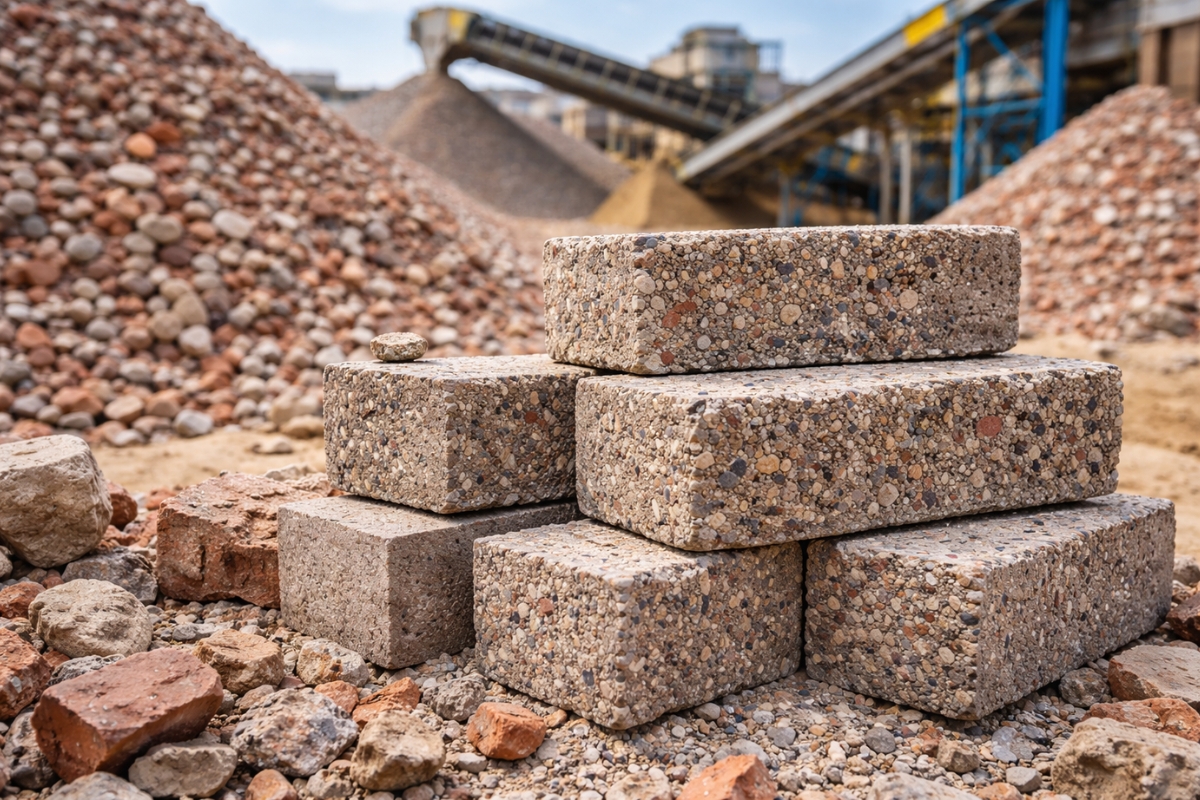


Fragments of Old Bricks, Mortar, and Demolition Debris Are Reprocessed to Create a Brick That Doesn’t Require Firing, With High Recycled Content and Aimed at Reducing the Climate Impact Associated With Traditional Manufacturing
The construction industry is responsible for a significant share of global carbon emissions and for generating large volumes of waste. Every year, millions of tons of debris from demolitions and construction sites end up in landfills, while the production of traditional materials — such as fired ceramic bricks — requires high temperatures and substantial energy consumption.
In light of this scenario, a Scottish company has developed an alternative that seeks to address both problems simultaneously: a brick made almost entirely from construction and demolition waste that does not require firing in a kiln.
A Brick Without Firing and With Over 90% Recycled Material
Kenoteq, a company spun out from Heriot-Watt University in Scotland, produces the so-called K-BRIQ, an “unfired” brick that uses more than 90% recycled aggregates from construction and demolition waste, including fragments of old bricks, rubble, and mortars.
-
Bolivian Female Construction Workers Form Association to Combat Discrimination and 38% Pay Gap in the Industry

-
Near Amsterdam, residents buy land and discover they must also build streets, manage drainage, handle waste, and grow food on half their plot.
-
Brazil’s WEG to Open New Factory in China by 2027, Expanding Production of Large Rotating Electric Machines and Low to Medium Voltage Motors in Rugao

-
Chinese Shipyard Secures $1 Billion in Orders for Low-Carbon Container Ships Amid Global Fleet Renewal Efforts


According to the company itself, when other recycled inputs used in manufacturing — such as recycled gypsum boards and recycled inert pigments — are taken into account, the total percentage of recycled materials can exceed 95%.
Unlike traditional clay bricks, which need to be fired at temperatures above 1,000°C, the K-BRIQ is produced through a low-temperature compression and curing process. Eliminating the firing step is crucial for reducing energy consumption and, consequently, the emissions associated with the material’s production.

Significant Reduction of Embodied Carbon
One of the company’s key differentiators is the potential for substantial reduction of embodied carbon compared to conventional ceramic bricks. Publicly available information about the product indicates that K-BRIQ can achieve reductions of nearly 95% in embodied carbon when compared to the traditional kiln-fired model.
The concept of embodied carbon refers to the emissions generated during the production cycle of the material, including raw material extraction, processing, manufacturing, and transportation. In the case of conventional bricks, the firing stage represents a significant portion of that environmental impact.
By using existing waste as raw material and avoiding the use of high-temperature kilns, the new brick aims to substantially reduce the sector’s climate footprint.
Circular Economy Applied to Construction
In addition to reducing emissions, the K-BRIQ proposal aligns with the principles of the circular economy. Instead of extracting new raw materials, the company repurposes waste from the construction sector to manufacture a new product that returns to the market.
The construction industry is one of the largest waste generators in the world. Transforming discarded materials into inputs for new bricks can help reduce pressure on landfills and decrease the extraction of natural resources, such as clay.
This model can also provide logistical advantages when production occurs near waste sources, reducing transportation distances and favoring more local supply chains.

Certifications and Commercial Scale Production
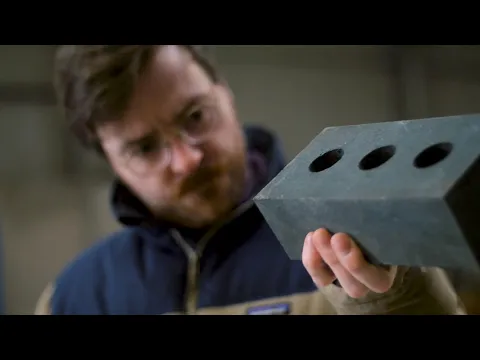
In the construction sector, the viability of a new material heavily depends on technical certifications and regulatory compliance. The K-BRIQ has received certification from the British Board of Agrément (BBA) in the UK and certification in the United States through DrJ Engineering, allowing its application in projects that require formal technical validation.
The company operates a facility in East Lothian, Scotland, and according to industry publications, has production capacity in the millions of units per year, with potential for expansion as demand grows.
These advancements indicate that the product has already surpassed the purely experimental phase and is beginning to position itself as a viable alternative within the construction materials market.
Challenges and Points of Attention
As with any innovation in the sector, professionals such as architects, engineers, and developers carefully analyze several factors before adopting a new material:
- Performance and durability over time.
- Mechanical resistance and behavior in relation to moisture.
- Consistency of the material, considering that the raw material comes from waste with variable characteristics.
- Environmental statements based on verifiable life cycle analyses.
Widespread adoption will depend not only on environmental benefits but also on economic competitiveness and proven technical performance in real projects.
Can It Transform the Brick Market?
Brick is one of the oldest and most widely used materials in modern construction. However, its traditional manufacturing process involves high energy consumption. In a context where governments and companies seek to reduce emissions and meet climate goals, low-carbon alternatives may gain traction.
If it demonstrates scalability, quality stability, and market acceptance, the model could represent an important step toward the decarbonization of the sector and the consolidation of more circular practices in the construction industry.
The challenge is significant: transforming a historically conservative and highly regulated market takes time, technical trust, and competitiveness. Nonetheless, the global pressure for more sustainable solutions is likely to drive initiatives that combine innovation, waste repurposing, and environmental impact reduction.
This article was based on information published by Stone Specialist (profile about Kenoteq), as well as institutional data released by Kenoteq itself and references related to Heriot-Watt University, an institution linked to the initial development of the technology.





Those bricks and blocks,recycled from demolition debris/scrap. Fall apart alot quicker than blocks that are done in a kiln….
Similar technology already exist which eliminates the use of a kiln to fire brick stone, by using mortar and earth soil to create earth stones that are durable strong eco-friendly and pocket friendly
New ideas are important in the construction industry.
Yes but there must be a long term benefit that isn’t in kiln blocks or bricks and the longevity just isn’t there yet.