






 Portuguese
  Spanish


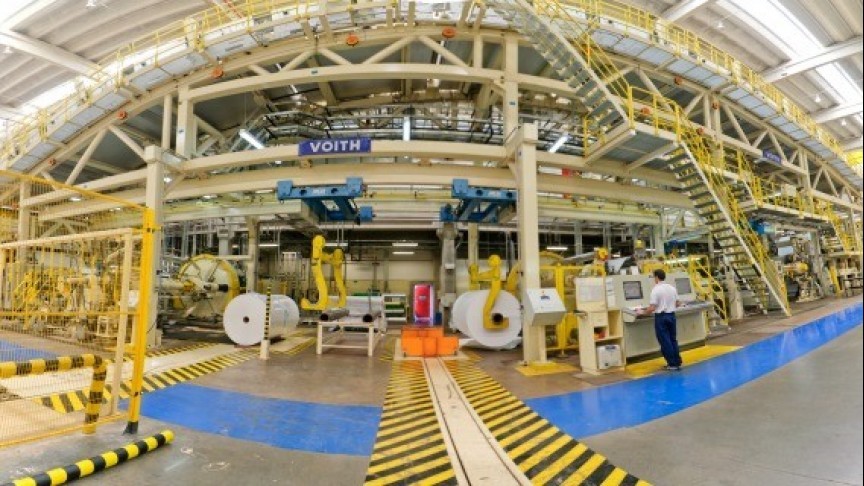

OJI Special Papers Will Receive Investment From Its Japanese Parent Company, Increasing Paper Production Capacity and Job Creation in Monte Alegre, São Paulo
OJI Special Papers will receive an investment of R$ 500 million from its Japanese parent company. The goal is to increase the production capacity of thermal paper, used in tax receipts, invoices, and labels for barcode printing. The outlook is that the market for the product will grow in the coming years in Brazil, South America, and Central America, driven by the rise of thermal printing in these regions.
The investment package includes the expansion of the manufacturing space for the installation of a new paper coating machine, as well as the modernization of other equipment at the plant. The expectation is that the new production capacity will be installed by December 2021 and start operating in early 2022.
See Also
- RigNet Signs Contract With Petrobras for FPSO Service Provision
- FPSO P-68 Obtains Operating License From Ibama
- Petroserv Announces Job Opening in Macaé for Offshore Activities on a 14 x 14 Schedule
- Ocyan Macaé With New Job Openings for Offshore and Onshore Activities on November 5th
“We are very pleased with the announcement of the investment made by the president of Oji Holdings Corporation, Masatoshi Kaku. This news brings great development prospects for Piracicaba and the region and puts the city on the map of major investments in the State of São Paulo,” highlights the president of OJI Special Papers, Agostinho Monsserrocco.
-
Over 2,000 Tons of Discarded Fishing Nets Since 2020 Repurposed into Durable Caps, Fins, and Parts

-
Seals and Sea Lions Lose Habitat and Food as Climate Change Advances, Impacting Ice, Prey, and Coastal Communities

-
Brazilian Innovator Uses 3D-Printed Device to Cool Two Rooms with One Air Conditioner
-
China Uses 432 Robots to Move a 7,500-Ton Historic Building in Shanghai, Preserving Architecture While Creating Space for Underground Center


With the pension reform approved and the end of the unclear impasse that prevented concrete investments in the country, Brazilian and global companies from various sectors of the economy are beginning to reach agreements with the government, gaining concessions, participating in auctions, and acquiring assets within the national territory.
The most recent investment agreement that the Brazilian government reached was with Saudi Arabia, which will direct 10 billion dollars from its sovereign fund to infrastructure and agribusiness projects.








