Portuguese
  Spanish


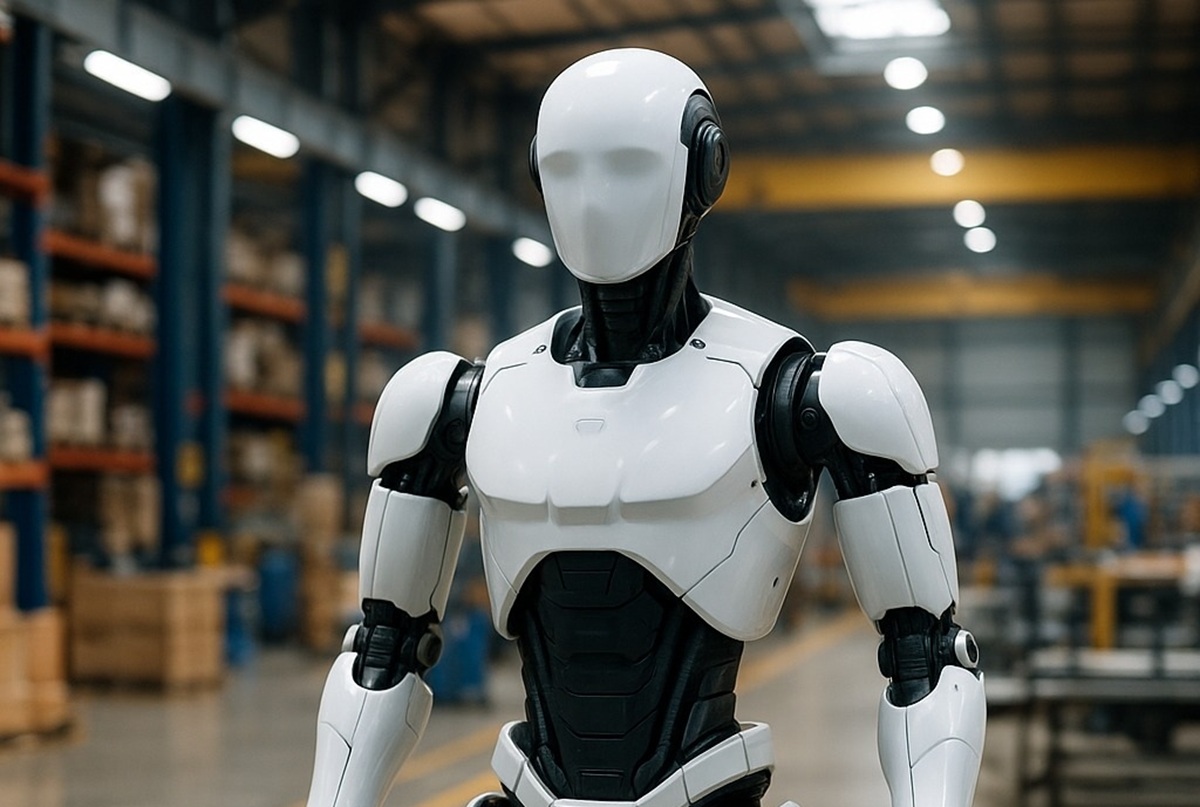

UMA, Founded on December 1 by Former Leaders of Tesla, Google DeepMind, Nvidia and Hugging Face, Has Started Development of an Industrial Humanoid Robot Designed to Operate in Hospitals, Warehouses and Residences, Focusing on Physical Autonomy and Large-Scale Application.
The creation of UMA comes at a time of accelerated advancement in artificial intelligence, as global companies seek robotic solutions capable of functioning in real environments. The initiative brings together professionals who shaped modern AI and aims to transform humanoid robots into widely adopted operational agents.
The launch highlights the transition from a sector dominated by digital interfaces to physical systems capable of performing complex tasks safely. This shift is significant as it coincides with structural challenges putting pressure on essential sectors worldwide.
Functioning
The project involves building a compact humanoid robot with dual arms, advanced mobility, and architecture designed for environments populated by humans. The equipment will be applied in warehouses, assembly lines, and hospital sectors, requiring accurate perception, object manipulation, and decision-making under uncertainty.
-
The Trap of Modern Technology: How Screen Overload and Digital Connections Can Impact Your Mental Health and Well-being

-
Wyoming Couple Grows Tropical Fruits Year-Round in -40°C Using Geothermal Greenhouse, Demonstrating Earth’s Heat Can Produce Oranges and Lemons in Snow Without Traditional Heating

-
Ship Returns from Brazilian Coast with Thirty Newly Discovered Life Forms
-
Nigerian Professor Invents Electricity-Free Refrigerator Using Clay Pots and Wet Sand, Extending Shelf Life of Vegetables to 27 Days; 7,000 Units Distributed in Energy-Deprived Villages



The approach integrates generative models, multimodal systems, and language intelligence to guide movements and situational interpretations. UMA leverages accumulated knowledge in autonomies such as Tesla Autopilot and robotics research from NYU and Google DeepMind. The technical focus includes motion control, infrastructure scalability, and the use of open platforms like LeRobot.
Economic, Social, Logistical or Environmental Impacts
Projections indicate that the global market for humanoid and mobile robots could reach $243 billion by 2035, driven by the need to reduce costs and increase operational efficiency. Health systems face a projected deficit of 10 million professionals by 2030, directly affecting hospitals and clinics.
In logistical environments, turnover rates above 40 percent lead to productivity losses and increased expenses.
The elderly population, estimated at 1.6 billion by 2050, intensifies demand for solutions that assist daily activities and ensure autonomy. For UMA, these indicators represent real pressures justifying the adoption of robots capable of performing physical work continuously.
Technical or Operational Developments
The founding team has experience in robot design, perception algorithms, infrastructure scaling, and autonomous systems integration.
The goal is to develop operational standards suitable for diverse environments, from hospital corridors to industrial areas. The mobile industrial robot will include high-precision sensors, motors optimized for stability, and AI-driven decision modules.
The company is also evaluating safety parameters, fault tolerance, and requirements for prolonged operation. Investors like Greycroft, Relentless, and Unity Growth support the technical expansion, while experts like Yann LeCun and Thomas Wolf enhance scientific credibility.
Future Outlook
UMA is hiring globally to accelerate the construction of autonomous systems aimed at the next decade, when robotics is expected to take on functions previously solely dependent on human labor.
The next steps include testing in real environments, standardizing operations, and integrating advanced AI models.
The company plans to expand applications in hospitals, laboratories, and residences, aligning development with the growing global demand for physical automation. With the market expansion and the increasing need for resilient infrastructure, technology could redefine how societies deal with labor shortages and population growth.
At the pace at which robotic autonomy evolves, to what extent could these systems transform the way physical work is distributed around the world?