Portuguese
  Spanish


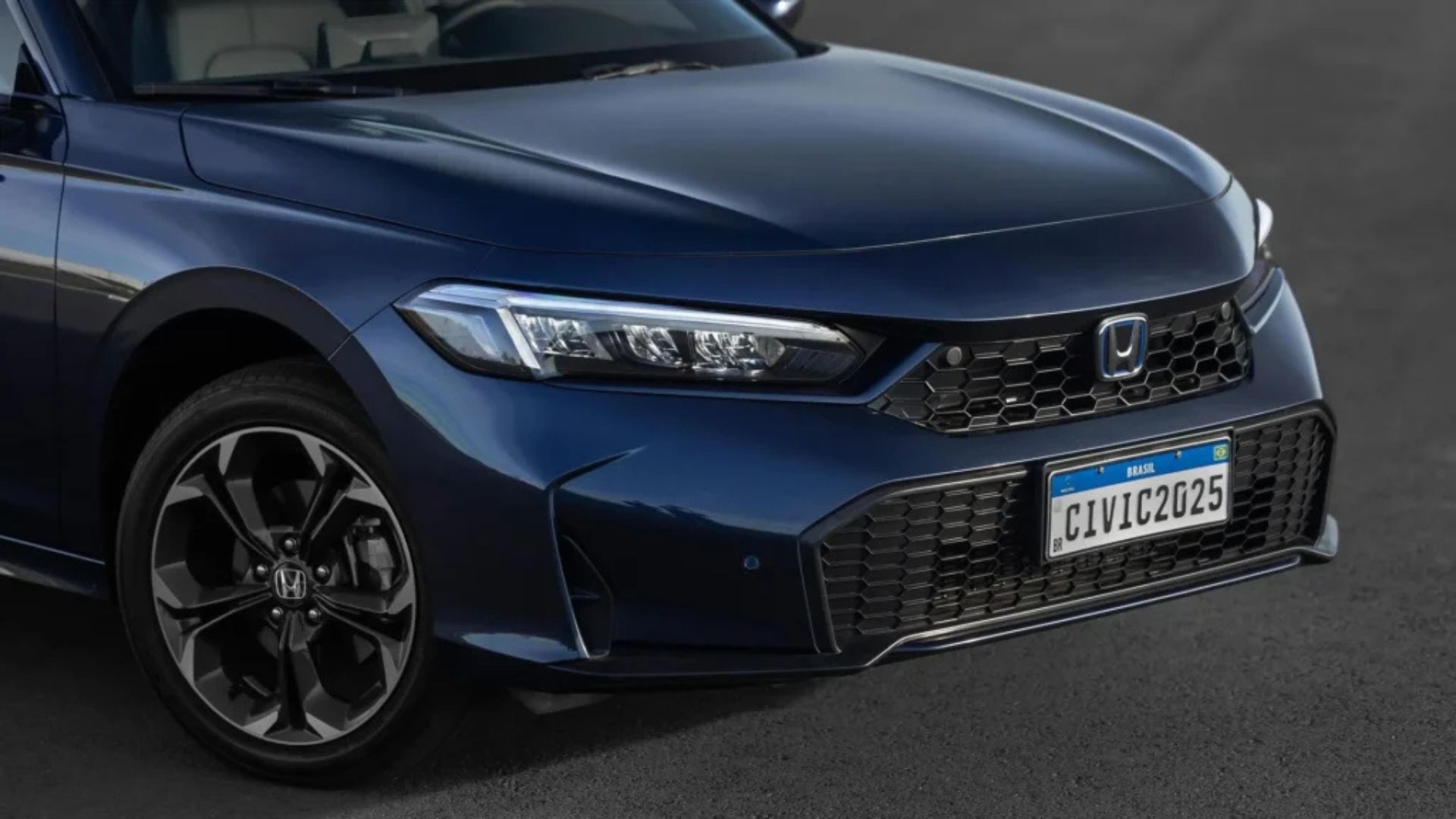

Traditional sedan changes positioning, adopts advanced hybrid technology, becomes more expensive in the Brazilian market, and loses ground to SUVs, reflecting new consumer preference and the Japanese brand’s global strategy that prioritizes efficiency, sophistication, and lower sales volume in a more restricted niche.
Still available in Brazil, the Honda Civic no longer occupies the space it held for decades among the most remembered mid-size sedans, after profound changes that altered the model’s price, proposal, and target audience in the national market.
Now imported, equipped with a hybrid system and sold for R$ 266.500, the sedan began to operate in a higher price range, which reduced its presence on the streets and alienated a significant portion of its traditional consumers.
According to a report from the G1 portal, data attributed to Fenabrave indicates that the Civic had only seven units registered in 2026, while the Civic Type R recorded eight units in the same period, numbers that illustrate the model’s sharp retraction.
-
1983 Chevrolet Runs Over 100,000 km Without Gasoline, Powered by Wood Chips, Reaches 125 km/h in Airport Test

-
Workshop Converts Giant Tractor Tire Tricycle into a Three-Wheel Drive Hybrid with 36,000-Watt Electric Motor Capable of Climbing Hills

-
Sales of Brazil’s Cheapest Electric Car Halted Before First Deliveries: E-Motors Suspends Emova Easy Due to Import Tax Increase and Rising Freight Costs

-
Nissan Discontinues Qashqai SUV Amid Cost-Cutting, Chinese Competition, and Product Line Review



Although the entity publishes monthly reports, the breakdown by version did not appear openly and verifiably in the available public consultation, which limits the full confirmation of these specific data.
This decline is directly linked to the repositioning adopted by the brand, which stopped producing the model in Brazil, began importing it from Thailand, and concentrated the offer on a single hybrid version with a higher level of technology.
New Honda Civic hybrid and change of proposal

In its current generation, the Civic Advanced Hybrid combines a 2.0-liter gasoline engine, operating in the Atkinson cycle, with an electric set and e:HEV technology, forming a system primarily focused on energy efficiency and intelligent operation.
While the combustion engine delivers 143 hp, the electric motor reaches 184 hp and 32.1 kgfm, which ensures consistent performance even with a declared focus on fuel economy.
Among the model’s highlights, fuel consumption stands out, as dealerships and market surveys indicate average figures of 18.4 km/l in the city and 15.9 km/l on the highway, numbers close to those of compact vehicles.
In addition to efficiency, the equipment package reinforces the leap in positioning, with the presence of advanced systems such as Honda Sensing, integrated multimedia center, extended connectivity, and various electronic driving assistants.
High price alienated Civic’s former audience
Historically positioned alongside the Toyota Corolla, the Civic began to distance itself from its direct rival by moving up in price range, creating a significant difference that impacts the decision of traditional consumers in this segment.
In practice, the Honda model began to compete for attention with mid-size SUVs, electrified vehicles from Chinese brands, and even entry-level options from premium brands, broadening the competitive landscape and changing the comparison profile.

In response to g1, Honda stated that the repositioning “occurred not only due to a commercial decision, but also to reflect the model’s technological evolution and the brand’s global alignment.”
As a consequence, the Civic ceased to act as a more emotional alternative to the Corolla and began to occupy a more restricted position, focusing on sophistication, efficiency, and comfort at a higher level.
Growth of SUVs changes consumer behavior
Parallel to this change, the Brazilian market underwent a significant transformation, with consistent growth in SUVs and a gradual reduction in the share of mid-size sedans in total sales.
Within Honda itself, the HR-V took center stage, surpassing the Civic even in the sedan’s last phase of national production, and further extending this advantage with the arrival of its new generation.
At the same time, the brand reinforced its portfolio with models such as the WR-V, ZR-V, and CR-V, consolidating its strategy focused on sport utility vehicles across different price ranges and sizes.
This scenario indicates that consumers have not stopped buying the brand, but have started prioritizing body types with greater versatility, a higher driving position, and characteristics more aligned with new market preferences.
Current Civic maintains quality, but loses popular appeal
Even with these changes, the Civic retains recognized attributes such as solid construction, precise steering, and well-tuned suspension, characteristics that remain present in the driving experience.
On the other hand, the current generation adopted a more sober proposal, closer to the Accord, leaving aside part of the sporty look and the more engaging driving that characterized the previous model.

In the previous generation, the sedan bet on a bolder design, a coupe-influenced profile, and differentiated dynamic behavior, elements that helped position it as an alternative to the more conservative style of the Corolla.
With the new proposal, the model became more refined and efficient, but also more expensive and distant from the public that consolidated its image in Brazil over decades.
Traditional names lose space in the automotive market
The Civic’s case is not isolated and accompanies a broader movement in the automotive industry, which has been reducing or transforming the presence of traditional models in the Brazilian market.
Vehicles such as the Volkswagen Gol, Fiat Uno, Chevrolet Corsa, Astra, Vectra, and Cruze no longer occupy the central role they had in other periods, reflecting structural changes in demand.
Currently, established names have come to function as strategic assets, being repurposed in different segments and proposals according to the needs of automakers.
In the case of the Civic, Honda preserved the name but profoundly altered its positioning, resulting in a sedan that remains technological and efficient, yet distant from the popular role it played for many years.