






 Portuguese
  Spanish
  5 min of reading
  0 comments


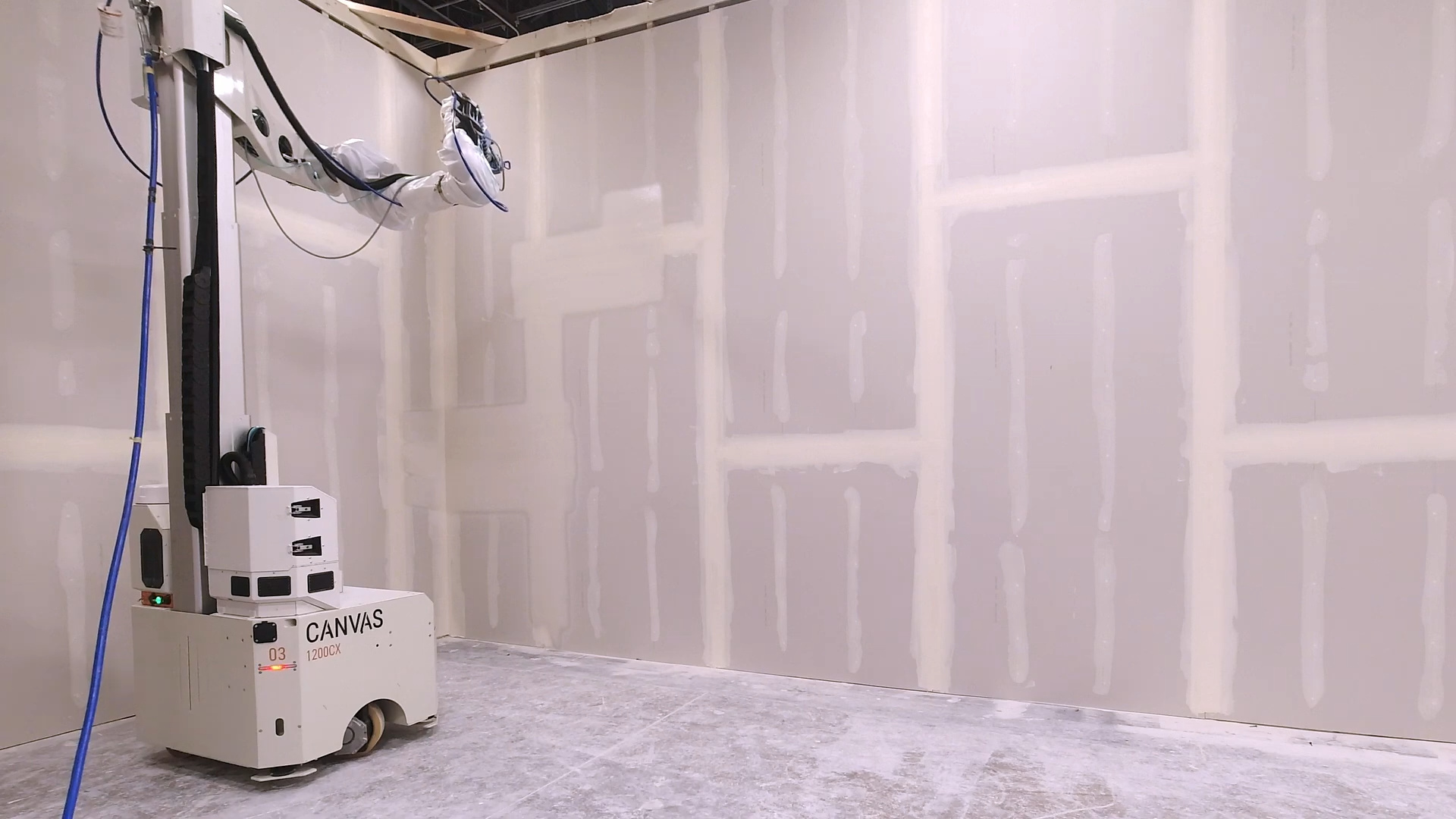
Canvas drywall robot cuts finishing time by up to 60%, reduces physical effort for workers, and accelerates automation on construction sites.
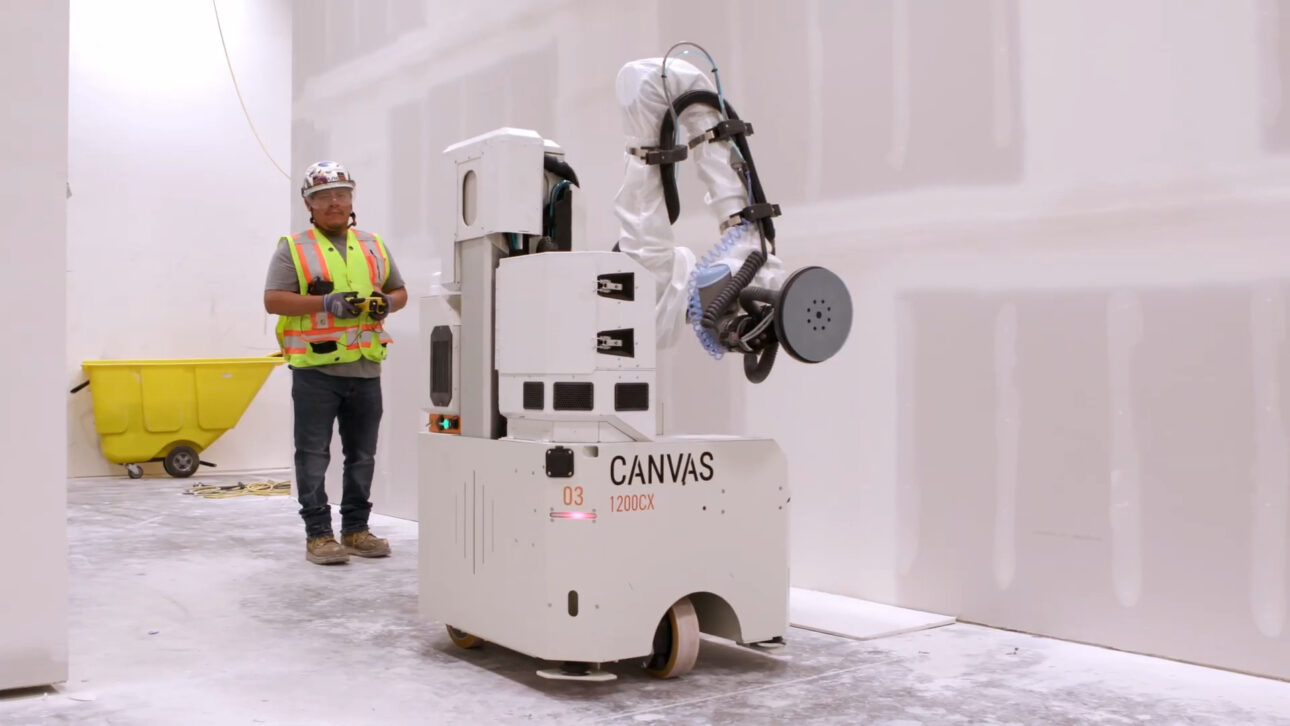
Construction sites, long seen as almost exclusively manual labor territory, have begun to fully enter the era of automation. One of the clearest examples of this is in the finishing of drywall, one of the most repetitive, tiring, and physically demanding stages of construction. According to Universal Robots, the American startup Canvas has developed a drywall robot system capable of applying compound and sanding walls with precision, reducing this service’s schedule by up to 60%. What used to take five to seven days can be completed in about two days.
This advancement is noteworthy because drywall finishing is one of those invisible jobs to those who see the completed building, but central to those inside the site. It’s a repetitive, exhausting process that’s difficult to scale when there’s a shortage of skilled labor. According to Bluebeam, the Canvas robot addresses this critical point: it approaches the wall, is positioned by the operator, identifies the surface with computer vision, and performs the application and sanding with little prior preparation.
Drywall finishing has become an ideal target for automation in construction
Drywall finishing encompasses almost everything that typically favors the introduction of robots in a sector. It’s repetitive, requires precision, demands constant physical effort, and still suffers from a shortage of workers.
-
They built an entire village in Wales with houses made of straw, clay, wood, and recycled materials, where families produce their own energy, collect rainwater, and live in one of the most famous sustainable housing projects in Europe.
-
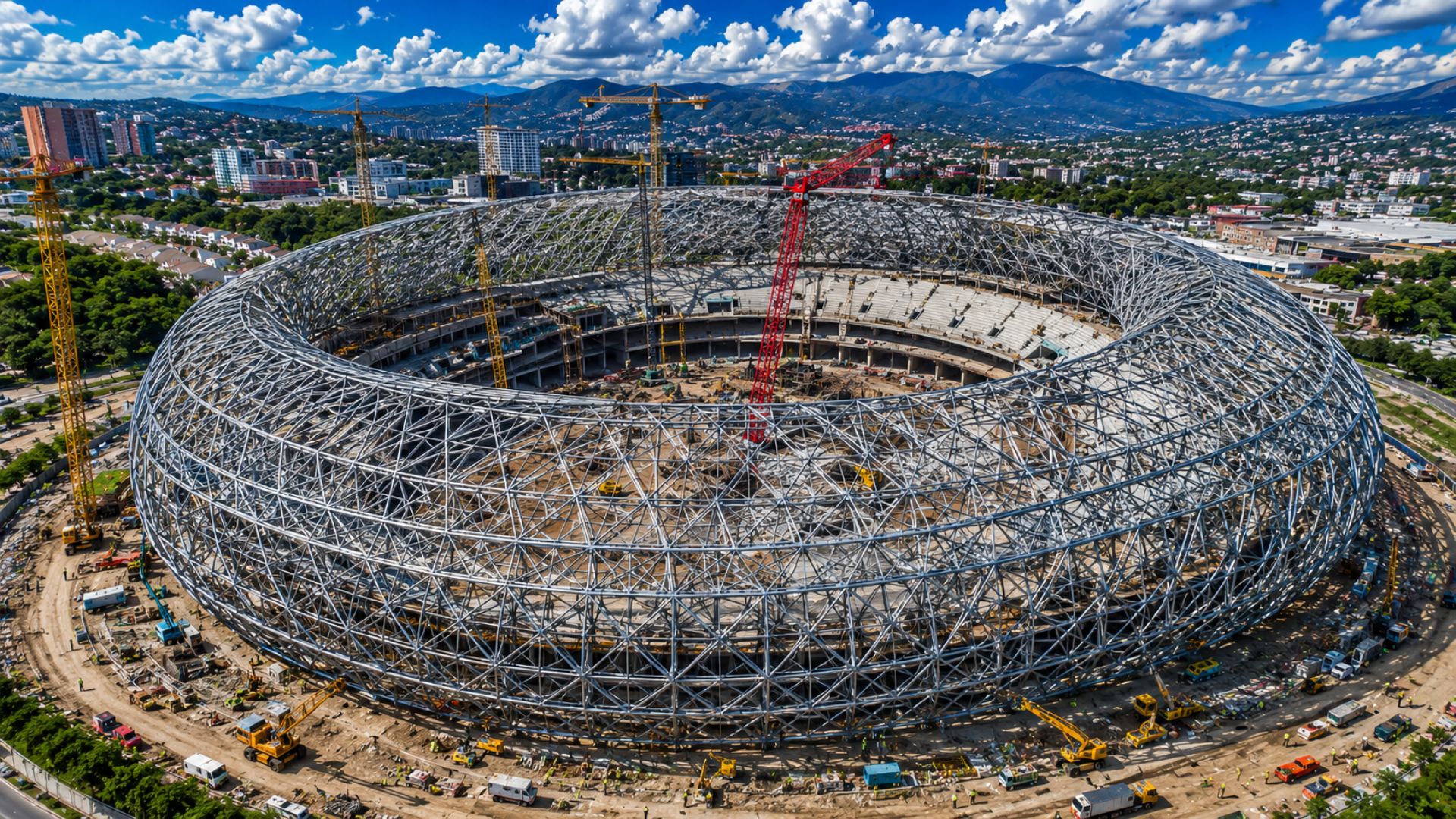
Mega stadium of R$ 2.5 billion financed by China completes perimeter metal structure at 40 meters above ground in El Salvador, with stands and internal systems advancing in parallel towards delivery in 2027

-
Bothered by millions of bricks discarded every year in Norway, a company cuts old pieces into thin slices, secures them with a metal system, and transforms demolition into a new 1,800 m² facade.

-
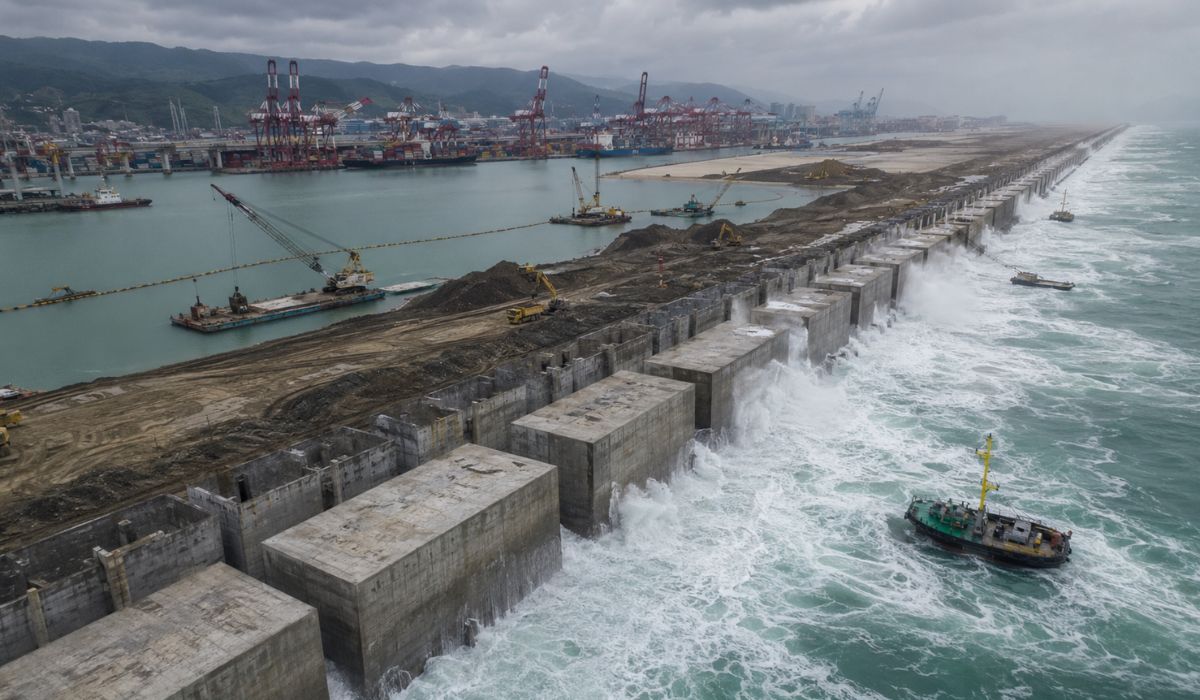
Taiwan erects a 4 km maritime wall in the Port of Taipei, installs concrete coffers against waves up to 7 meters, and transforms dredged sediments into new land to expand one of the island’s most strategic ports.


According to Bluebeam, this type of finishing involves sealing joints between panels, applying compound, waiting for it to dry, and then sanding until a smooth surface ready for painting is formed. It’s a routine that repeats wall after wall, project after project.


It is precisely this repetition that makes the service an ideal target for automation. According to Universal Robots, Kevin Albert, co-founder and CEO of Canvas, states that one in four construction workers ends their career with some musculoskeletal problem, often caused by tasks such as finishing and sanding done for long periods with arms raised.
By targeting this specific service, Canvas didn’t just choose a difficult task. They chose a stage that combines physical pain, low attractiveness for new workers, and direct impact on the project’s timeline and quality. It is precisely this combination that makes the robot relevant beyond the technological appeal.
How the Canvas Drywall Robot Works on the Construction Site
According to Bluebeam, the system is designed to operate within the real routine of the construction site without requiring complex operation. After the worker positions the machine and inputs the dimensions, the robot does the rest: it uses embedded intelligence to identify the surface, locate the joints, and apply the material with precision.
According to Universal Robots, the technical heart of the solution is the collaborative arm UR10e, integrated into the Canvas platform.
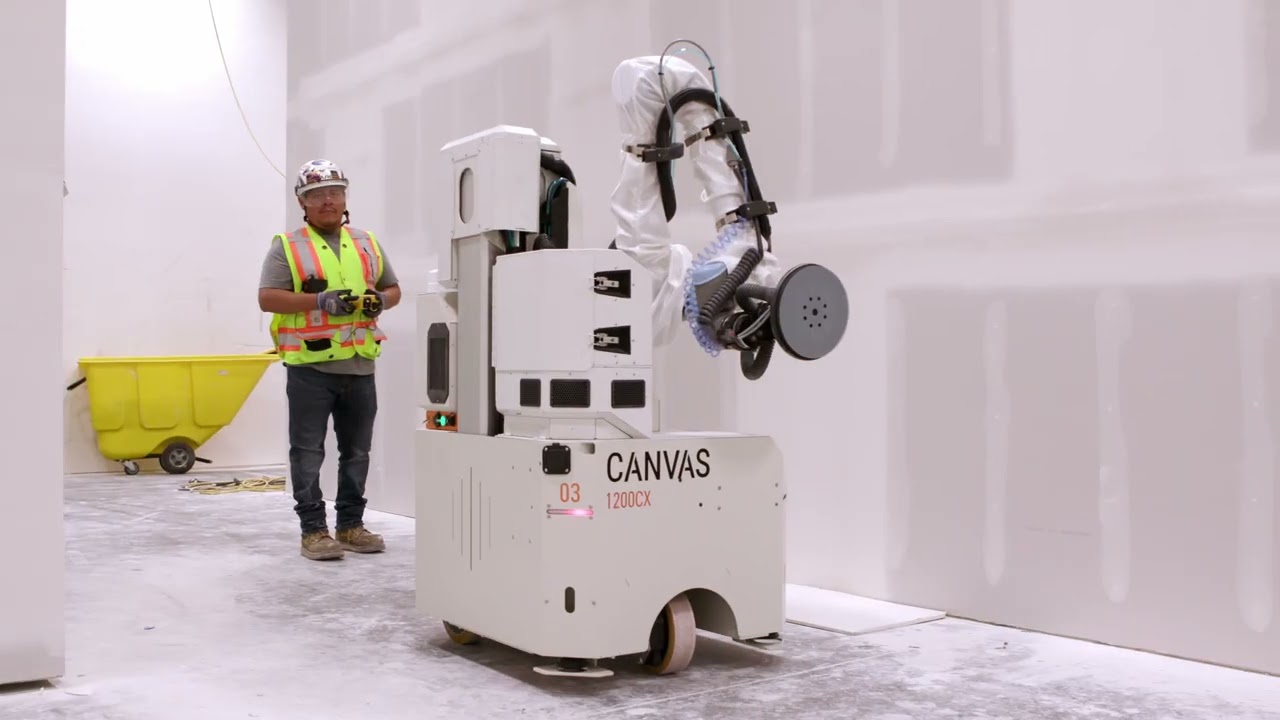
The company highlights that the system has extremely precise built-in force control, which is essential because the drywall compound is delicate and can be damaged with excessive pressure. This fine precision allows the robot to sand and apply material with much greater consistency than manual processes subject to fatigue.
In practice, the proposal is not to transform the site into a people-free environment. The worker remains present, transports the equipment, sets up the operation, and supervises the service. What changes is that the most repetitive and heavy part is taken over by the machine.
Productivity and Deadlines Put the Drywall Robot at the Center of Construction Companies’ Interest
The productivity gain is one of the main reasons explaining the growing interest in this type of robot. According to Universal Robots, Canvas managed to reduce the time needed to execute level 4 and level 5 finishes, standards used in the market to indicate the degree of surface refinement before painting, from five to seven days to about two days.
This difference is significant because internal finishing often directly influences the delivery schedule. When a stage like drywall is delayed, it pushes back painting, final installations, and the release of environments. In large-scale projects, any consistent gain at this stage spreads throughout the entire project timeline.
According to Bluebeam, the robot was also designed to operate without requiring digital plans, detailed prior scanning, or prolonged setup. This characteristic helps explain why automation began with a specific task: for it to be viable on-site, the technology needed to be quick to deploy.
Worker shortage accelerates the entry of robots in civil construction
The automation of drywall is not advancing just because the technology is ready. It advances because the sector faces a shortage of workers and increased demand.
According to Universal Robots, Kevin Albert summarizes this imbalance by stating that construction will need to produce much more in the coming decades while more people leave the sector than enter it.
According to Bluebeam, the expectation was that more than 7,000 robots would join the construction workforce by the end of 2025, which shows that the case of Canvas is not treated as an isolated curiosity but as part of a broader change in the sector.
This context changes the perception of technology. The robot is no longer seen as a futuristic luxury and is treated as a concrete response to a market that needs to build faster, with more predictability and with less availability of labor for heavy and repetitive tasks.
Drywall automation shows how robotics should enter construction sites from now on
The case of Canvas is important because it reveals the most likely format of automation in civil construction in the coming years. Instead of humanoid robots doing everything, what appears are specialized machines, trained to perform a specific task with more precision, speed, and safety than the traditional method.
According to Bluebeam, the company is already working on versions with greater vertical reach, which expands use in high areas and can also reduce risks associated with working at heights.
This reinforces the idea that on-site automation should grow by functions, starting precisely with the most repetitive, exhausting, and hardest-to-fill tasks with labor.
In the end, the Canvas drywall robot shows something greater than an advancement in interior finishing. It shows that civil construction, one of the sectors most resistant to automation due to the unpredictability of construction sites, has begun to find very concrete points where robotics already makes economic, operational, and human sense.





Be the first to react!