






 Portuguese
  Spanish
  4 min of reading
  0 comments


Lammas Ecovillage in Wales brings together houses built with natural materials, low-impact living, and helped inspire the One Planet Development policy.
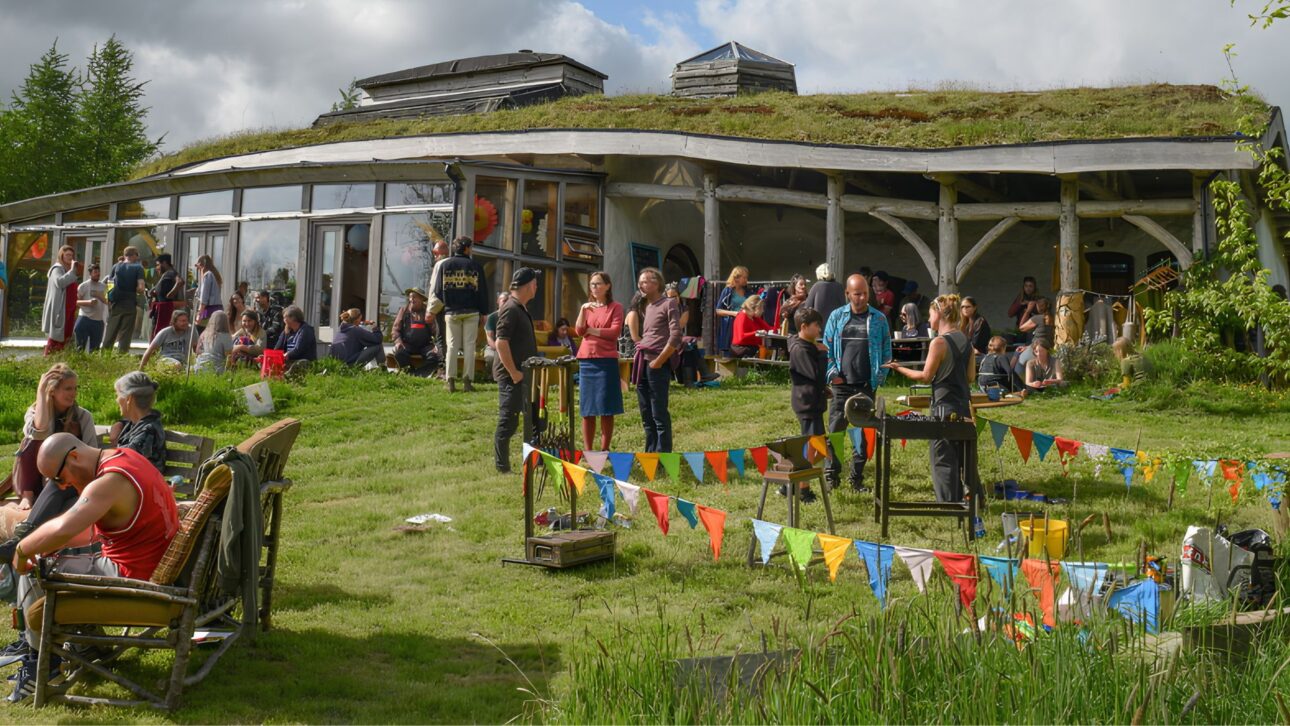
In the interior of Wales, in the hills of Preseli, in North Pembrokeshire, the Lammas Ecovillage has become one of the most well-known experiences of sustainable housing and low-impact living in Europe. The community brings together small rural plots and eco-homes built with natural materials, combining local production, ecological construction, and reduced dependence on conventional infrastructure networks.
According to Lammas Ecovillage and the UKERC Public Engagement Observatory, the residents adopt an off-grid lifestyle model, with buildings made of natural materials, use of renewable energy, and a subsistence logic linked to the land. The project gained relevance not only for the unusual appearance of the constructions but also for demonstrating, in practice, how a rural community can operate with low environmental impact.
Houses of Lammas Ecovillage were built with natural materials and low-impact solutions
One of the strongest features of Lammas Ecovillage is that a large part of the constructions was made by the residents themselves, with support from collaborators and volunteers. According to the official description of the community, the buildings use local natural materials and also reused materials, reducing costs and minimizing the environmental impact of the construction.
-
Mega stadium of R$ 2.5 billion financed by China completes perimeter metal structure at 40 meters above ground in El Salvador, with stands and internal systems advancing in parallel towards delivery in 2027

-
Bothered by millions of bricks discarded every year in Norway, a company cuts old pieces into thin slices, secures them with a metal system, and transforms demolition into a new 1,800 m² facade.

-
Taiwan erects a 4 km maritime wall in the Port of Taipei, installs concrete coffers against waves up to 7 meters, and transforms dredged sediments into new land to expand one of the island’s most strategic ports.

-
While cigarette butts appear on sidewalks, beaches, and sewers, researchers tested the waste in clay bricks and calculated a 10% savings in burning with just 1% in the mixture.




The village homes became known for the use of straw, clay, wood, and other natural solutions, as well as ecological construction techniques integrated into the land. The result is a rural landscape very different from the conventional housing standard, but designed to function permanently, not just as a visual or tourist experiment.
This model helped transform the community into a reference for those researching eco-houses, natural construction, sustainable housing, and new formats of rural occupation. More than attracting attention for its aesthetics, Lammas became known for trying to prove that this type of housing can be habitable, productive, and enduring.
Community in Wales combines renewable energy, agriculture, and off-grid living
The proposal of Lammas Ecovillage was never just to build different houses. According to the community’s official page and the UKERC, the residents combine agriculture, permaculture, traditional land management techniques, and the latest environmental technologies, creating an off-grid lifestyle routine with less external dependency.
The project became associated with the use of renewable energy and a logic of local resource production, which reinforced its image as an example of a low-carbon community. The central idea is that housing, energy, and part of the subsistence are more connected to the territory where the families live.
This combination of natural construction and decentralized infrastructure helped establish Lammas as one of the most emblematic cases of sustainable living in Wales, attracting interest from researchers, visitors, and people interested in alternatives to the traditional urban model.
Lammas Ecovillage helped to boost the One Planet Development policy in Wales
The impact of the community went beyond the settlement itself. According to the UKERC Public Engagement Observatory, Lammas received planning permission in 2009 and began to inspire other rural initiatives in Wales and beyond, also helping to develop the Welsh policy of One Planet Development.
This point was decisive in transforming the village into an international reference. Lammas ceased to be seen only as an alternative community and began to be treated as a concrete case of influence on the public debate around sustainable rural planning, ecological housing, and land use with lower environmental impact.

For this reason, the community continues to be remembered not only for the houses made with natural materials but for having helped to pave the way for a more flexible rural development model more connected to sustainability within Wales itself.
Lammas has become a European reference in sustainable housing and low-impact living
Over the years, the Lammas Ecovillage has established itself as one of the most well-known examples of ecovillage and sustainable housing in Europe. The project brings together eco-friendly homes, small properties, and a lifestyle proposal based on lower consumption, local production, and renewable technologies.
In an era marked by urban growth, standardized housing, and reliance on large energy and supply networks, the village drew attention precisely for showing another possibility. Instead of concrete, steel, and intense urbanization as the only answer, Lammas presented a model based on natural materials, low environmental footprint, and a direct relationship with the land.
More than a decade after gaining recognition in Welsh rural planning, the community continues to be observed as a living laboratory of ecological housing, renewable energy, and low-impact community living, maintaining its strength as a symbol of an alternative housing path in the European countryside.




Be the first to react!