Portuguese
  Spanish


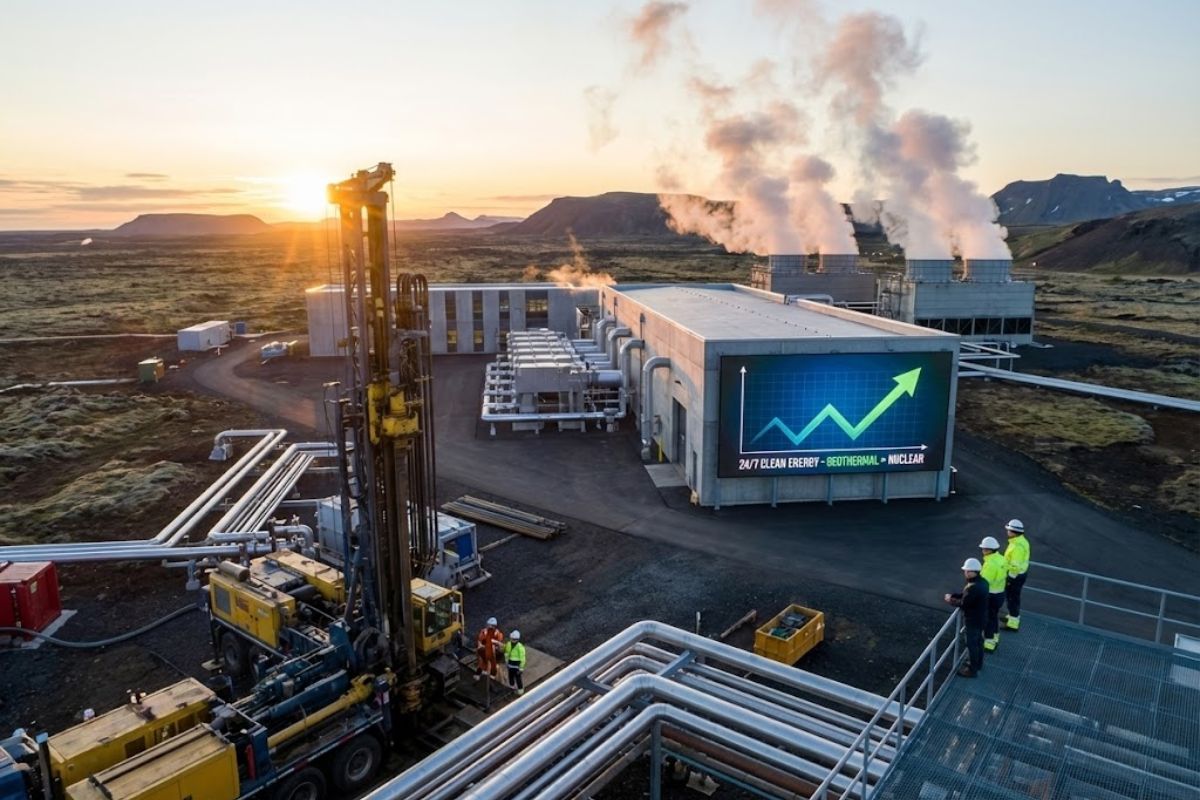

Vijay Vaitheeswaran from The Economist discussed on the Babbage podcast why geothermal energy, previously neglected, has gained traction. He stated that technology in the oil industry can expand global viability and deliver clean electricity 24 hours a day, reopening the comparison with nuclear energy to continuously supply the world.
In 2025, geothermal energy made headlines again when Vijay Vaitheeswaran, global energy and climate innovation editor at The Economist and winner of the 2025 Energy Writer of the Year award, spoke with Alok Jha, host of the Babbage podcast. The topic was the shift in perception about geothermal energy after years of low attention.
In the 2025 conversation, the hypothesis presented was straightforward: with a new set of technologies, some associated with the oil industry, geothermal energy may finally become viable in more places around the world. The highlighted promise is clean electricity 24 hours a day, reopening the question of competing with nuclear energy.
What Was Discussed on the Babbage Podcast in 2025

The starting point of the Babbage podcast was the question of whether geothermal energy could surpass nuclear energy.
-
American company drills a 1,830-meter hole in Kansas using oil well technology, places a nuclear reactor inside, and claims it will generate electricity without any cooling tower.

-
Canada invests more than 2 billion dollars to upgrade an old nuclear laboratory and try to rival the world’s major atomic energy powers.
-
Nuclear company backed by Bill Gates partners with Hyundai for next-generation 345 MW nuclear reactor

-
Russia is sailing all 8 nuclear icebreakers of its fleet simultaneously for the first time in history, as the Arctic freezes two weeks earlier than expected.




Vijay Vaitheeswaran introduced the subject as a long-neglected source, framing the discussion as a return of geothermal energy to the center of energy and climate decisions.
The conversation on the Babbage podcast also established who is speaking: Vaitheeswaran is editor at The Economist and received the 2025 Energy Writer of the Year award.
This context matters because it defines the focus: applied innovation and industrial viability, not just theory.
Why Geothermal Energy Was Treated as Neglected

The background provided describes geothermal energy as neglected.
This aligns with a history in which the source is often seen as limited by local conditions and by deployment challenges that require engineering and investment before any generation.
In this context, geothermal energy remained a specialized technical subject while other sources received more public and political attention.
The practical effect is that geothermal energy has been off the radar of part of the market for long periods.
The Role of the Oil Industry in the Technological Leap
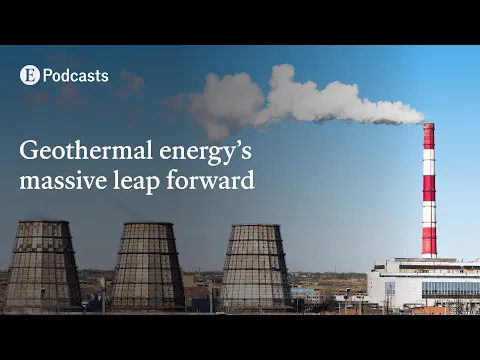

The new element pointed out by Vijay Vaitheeswaran is the incorporation of technology associated with the oil industry to unlock geothermal energy projects.
The argument is that methods, equipment, and operational routines matured in oil and gas can reduce uncertainties and accelerate learning in the field.
The Babbage podcast does not detail which specific technologies are included, but the central idea is clear: the oil industry has produced tools and practices that can now be repurposed to expand the viability of geothermal energy on a global scale.
Here, “oil technology” appears as a vector for industrialization.
Clean Electricity 24 Hours and the Comparison with Nuclear Energy
The strongest promise highlighted is that of clean electricity 24 hours a day, every day, which would place geothermal energy in the continuous supply debate.
This attribute explains why the comparison with nuclear energy arises as a key point, given that nuclear energy is often associated with firm generation.
The emphasized point is that if geothermal energy can deliver this continuous profile, it may compete in the same usage category in some electrical systems.
The material does not present cost figures, power, or timelines, but highlights the ambition to operate continuously, in contrast to intermittent sources.
What the Base Does Not Inform and What Data Need to Appear
The base does not provide metrics, implementation timelines, locations, costs, power, success rates, or safety criteria.
There is also no detailed information on licensing, environmental impact, or parameters to compare, in practice, geothermal energy and nuclear energy beyond the argument of continuous supply.
To turn the discussion from the Babbage podcast into a technical evaluation, at least three blocks of data are needed: operational performance over time, levelized cost per megawatt-hour, and implementation risk.
Without these numbers, the thesis remains in the realm of plausibility, not confirmation.
The 2025 perspective presented by Vijay Vaitheeswaran at The Economist, in dialogue on the Babbage podcast, repositions geothermal energy as a candidate for firm generation, supported by technology from the oil industry and the promise of clean electricity 24 hours a day.
The comparison with nuclear energy appears as a central provocation, but the base does not deliver the necessary data to conclude whether the shift has already happened.
If you cover energy and climate, follow new episodes, technical reports, and project announcements that bring verifiable numbers, because that’s where geothermal energy stops being narrative and becomes evidence.