Portuguese
  Spanish


Scientists In The United States Create Reinforced Wood That Maintains The Lightness And Flexibility Of The Original Material, Offering An Ecological Alternative To Steel And Concrete.
Researchers Found A New Way To Make Wood More Durable Without Compromising Its Natural Characteristics.
The Secret Lies In Ferrihydrite, A Nanocrystalline Iron Mineral That Was Incorporated Into Red Oak Through A Simple Chemical Process.
-
South Korea Tows 18 Concrete Blocks Weighing Up to 48,000 Tons Over 36 km to Construct a 3.2 km Underwater Tunnel Between Busan and Geoje, Installed Nearly 50 Meters Deep

-
Chinese Tianwen-2 Mission Targets Near-Earth Asteroid After 1 Billion Kilometer Journey to Collect Ancient Samples, Aiming to Uncover Clues About Water, Organic Compounds, and Solar System Origins Before Heading to a Comet

-
France Constructs 900-Meter Sea Wall in Brest, Expands Port by 14 Hectares for Marine Renewable Energy Hub
-
New Discovery Suggests Prehistoric “Hobbits” May Have Survived on Komodo Dragon Remains




The Result Is A Durable, Lightweight, And Flexible Material With The Potential To Replace Steel And Concrete In Various Applications.
Cellular-Level Reinforced Wood
The Discovery Emerged From The Work Of Researchers From The College Of Engineering And Computer Science At Florida Atlantic University, In Partnership With The University Of Miami And The Oak Ridge National Laboratory.
The Team Studied How Adding Hard And Safe Nanometer-Scale Minerals Could Strengthen The Cell Walls Of Wood Without Increasing Its Weight Or Harming The Environment.
The Wood Used Was Red Oak, A Common Species In North America.
The Scientists Chose This Type Because It Is A Noble Ring-Porous Wood, A Characteristic Found In Broadleaf Trees Like Maple, Cherry, And Walnut.
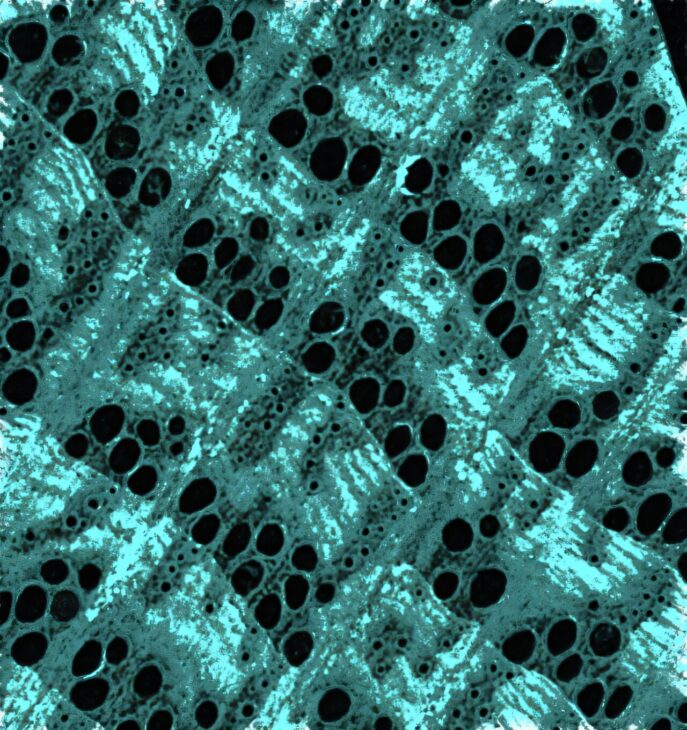
These Trees Have Large Ring-Shaped Vessels That Transport Water From The Roots To The Leaves, Facilitating The Infusion Of The Chemical Material.
Use Of Common Mineral And Accessible Process
The Reinforcement Was Made With Ferrihydrite, An Iron Oxyhydroxide Commonly Found In Soils And Waters.
To Obtain It, The Researchers Mixed Ferric Nitrate With Potassium Hydroxide, Creating A Nanocrystalline Mineral That Was Inserted Into The Wood.
The Method Was Described As Simple, Inexpensive, And Safe.
According To The Study Published In The Journal ACS Applied Materials And Interfaces, The Treatment Strengthened The Internal Cell Walls Of The Wood Without Harming Its External Structure.
Even After The Chemical Alteration, The Wood Retained Its Natural Behavior, Such As Flexibility And Resistance To Bending.
Increased Resistance, Nearly Equal Weight
The Tests Showed That The Treated Wood Gained Significant Durability With Only A Slight Addition Of Weight.
An Important Point Of The Study Was That, Although The Internal Walls Became Stronger, The Connections Between The Cells Of The Wood Were Smoothly Weakened.
This Resulted In The Larger Structure Of The Wood Retaining Properties Close To The Original, Maintaining How It Bends Or Breaks.
This Feature Is Considered Essential For Practical Applications, As Materials Used In Construction Need To Be Strong, But Also Lightweight And Flexible.
The Balance Between Internal Rigidity And External Flexibility Makes The Material Promising For Use In Buildings, Furniture, And Even Flooring.
Advanced Analysis Techniques
To Evaluate The Effects Of The Treatment, The Researchers Applied High-Precision Tests.
One Of These Was Atomic Force Microscopy (AFM), Which Allows Analysis Of The Wood At An Extremely Small Scale.
Using A Technique Called AM-FM, The Scientists Vibrated The Tip Of The Microscope At Two Different Frequencies To Obtain Detailed Images And Measure Properties Such As Elasticity And Viscosity.
Additionally, Nanoindentation Tests Were Conducted With Scanning Electron Microscopy.
Small Probes Were Pressed Against The Wood To Measure Its Reaction To Force.
Finally, The Scientists Also Tested Whole Pieces Of Wood, Comparing Treated And Untreated Samples In Bending And Breakage Resistance Tests.

Biobased Materials Gaining Ground
Wood Is One Of The Most Produced Renewable Resources In The World. The Global Annual Production Is Estimated At About 181.5 Billion Tons.
Therefore, The Possibility Of Making It More Durable And Useful Without Losing Its Ecological Character Is An Important Advance In The Search For Sustainable Alternatives To Traditional Construction Materials.
According To Professor Vivian Merk From FAU, Understanding The Behavior Of Wood At Different Scales Is Essential. “Wood, Like Many Natural Materials, Has A Complex Structure With Different Layers And Characteristics At Varying Scales,” She Explained.
“To Test Our Hypothesis — That Adding Small Mineral Crystals To The Cell Walls Would Strengthen Them — We Employed Various Types Of Mechanical Tests Both At Nanoscale And Macroscopic Scale.”
The Researcher Stated That The Integrated Approach, Combining Microscopic Analyses With Tests On Whole Pieces, Was Fundamental For Understanding The True Impact Of The Treatment With Ferrihydrite.
Advance Toward Sustainable Construction
For The Dean Of The College Of Engineering And Computer Science, Stella Batalama, The Research Represents A Milestone. She Stated That The Work Is A “Significant Advance In The Science Of Sustainable Materials” And Directly Contributes To More Ecological Practices In The Construction Sector.
The Reinforcement Of Wood Through Low-Impact Environmental Methods Can Replace The Use Of Polluting Materials Such As Concrete And Steel.
This Replacement Is Strategic As It Contributes To Reducing Carbon Emissions And Generating Less Waste.
“We Are Laying The Groundwork For A New Generation Of Biobased Materials That Have The Potential To Replace Traditional Materials Such As Steel And Concrete In Structural Applications,” Batalama Stated.
She Also Highlighted That The Impact Of The Study Goes Beyond Engineering. “It Contributes To Global Efforts To Reduce Carbon Emissions, Minimize Waste, And Adopt Nature-Inspired Sustainable Solutions.”
The Researchers Believe That With Appropriate Chemical Treatments, It Is Possible To Apply This Same Technique To Other Plant Materials.
This Could Further Expand The Use Of Renewable Resources In The Construction Of Buildings, Bridges, And Furniture.
The Union Of Science And Sustainability Shows That Even With Simple Processes, It Is Possible To Transform The Future Of Construction Materials.