





 Portuguese
  English
  Spanish
  3 min of reading
  0 comments


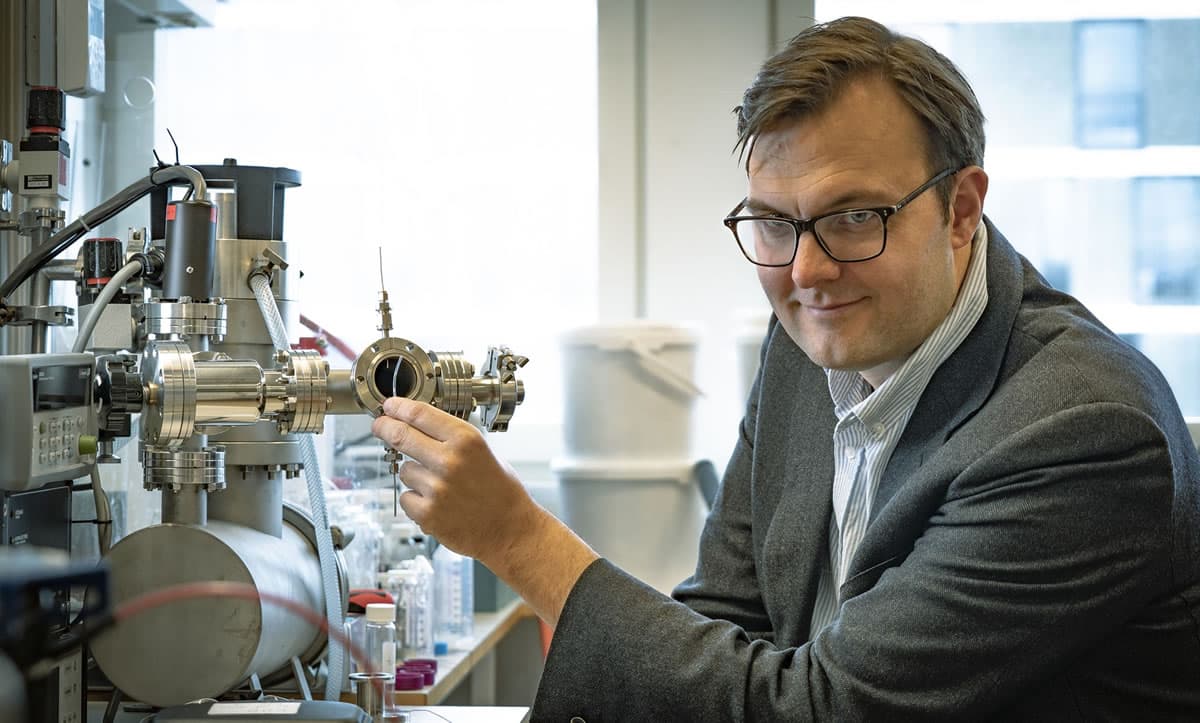
Engineers From MIT Develop Innovative Method to Produce Green Hydrogen Through the Sun. System Can Achieve Efficiency 37% Greater Than Other Conventional Methods.
Engineers from the Massachusetts Institute of Technology (MIT) have developed a revolutionary project that can efficiently utilize solar energy for the production of green hydrogen, which is carbon-free.
Through a reactor system, similar to a train, powered entirely by the Sun, the team aims to generate solar thermochemical hydrogen efficiently, separating water and producing clean fuel that can be used to power trucks, ships, and long-range airplanes without emitting greenhouse gases.
Engineers From MIT Make Significant Advancement With Thermochemical Hydrogen
Currently, hydrogen production is primarily performed through processes involving natural gas and other fossil fuels, making green fuel yet another gray energy source when considered from production to end use.
-
Carnivorous dinosaur in China left footprints at just 1 km/h and surprised researchers in the field with more than 5,000 tracks preserved for over 100 million years.

-
A 400-meter colossus powered by natural gas has just set sail from Shanghai to Europe, carrying over 24,000 containers. It is the world’s largest dual-fuel container ship and can cross the planet without refueling even once.

-
A new study overturns the central idea we learned about planets and suggests that Earth is the exception rather than the rule; most rocky worlds in the galaxy may not have a core or mantle, just a single turbulent fluid extending to the center.
-
Scientists reanimated a 48,500-year-old virus in the laboratory that had been frozen in the Siberian permafrost since before the extinction of the Neanderthals, and it was still capable of infecting living organisms after tens of millennia dormant in the ice.




On the other hand, solar thermochemical hydrogen offers a completely emission-free alternative, as it relies entirely on renewable solar energy for the production of hydrogen. However, existing projects for this fuel have limited efficiency, utilizing only about 7% of the received solar light to generate hydrogen, in addition to having high costs.
Engineers at MIT have made a significant breakthrough in this regard. According to Tech Xplore, the team estimates that their project could harness up to 40% of the Sun’s heat to generate an even greater amount of hydrogen, significantly reducing the cost of the system.
This would make solar thermochemical hydrogen a potentially scalable and accessible option to aid in the decarbonization of the transportation industry.
To optimize the fuel production process, MIT engineers use a reactor system similar to a box train, which operates on a circular track around an existing solar heat source, such as a concentrated energy tower.
Understand How Thermochemical Hydrogen Is Produced
Each reactor contains a metal that undergoes a reversible thermochemical reaction, similar to the rusting of iron in the presence of water. In the first stage, steam is exposed to the metal, which removes oxygen from the steam, leaving hydrogen behind.
Next, the oxidized metal is heated under vacuum to reverse the rusting process, regenerating the metal. With the oxygen removed, the metal is cooled and exposed again to steam to generate more hydrogen. This process can be repeated hundreds of times.
One of the challenges faced by previous solar thermochemical hydrogen projects was dealing with the heat released by the reactor during cooling. However, the project incorporates several energy-saving solutions to overcome this obstacle. For example, reactors on opposite sides of the circular track can exchange heat through thermal radiation, keeping the heat within the system.
In addition, a second set of reactors would circulate around the first, moving in the opposite direction and operating at lower temperatures. This second set of reactors is used to remove oxygen from the inner reactors, eliminating the need for mechanical pumps. In this way, the system operates continuously, generating pure hydrogen and oxygen separately.
Engineers From MIT Achieve Efficiency of 40%
The engineers from MIT conducted detailed simulations of the conceptual project, demonstrating the significant increase in the efficiency of solar thermochemical hydrogen production. The results confirmed that it is possible to achieve an efficiency of up to 40%, compared to the 7% of previous projects.
The next step is to develop a prototype of the system, which will be tested at concentrated solar power facilities in the Department of Energy laboratories. Once fully installed, the system could be used in a small building amidst a solar field, with the possibility of including several trains with about 50 reactors each.





Be the first to react!