






 Portuguese
  Spanish
  3 min of reading
  0 comments


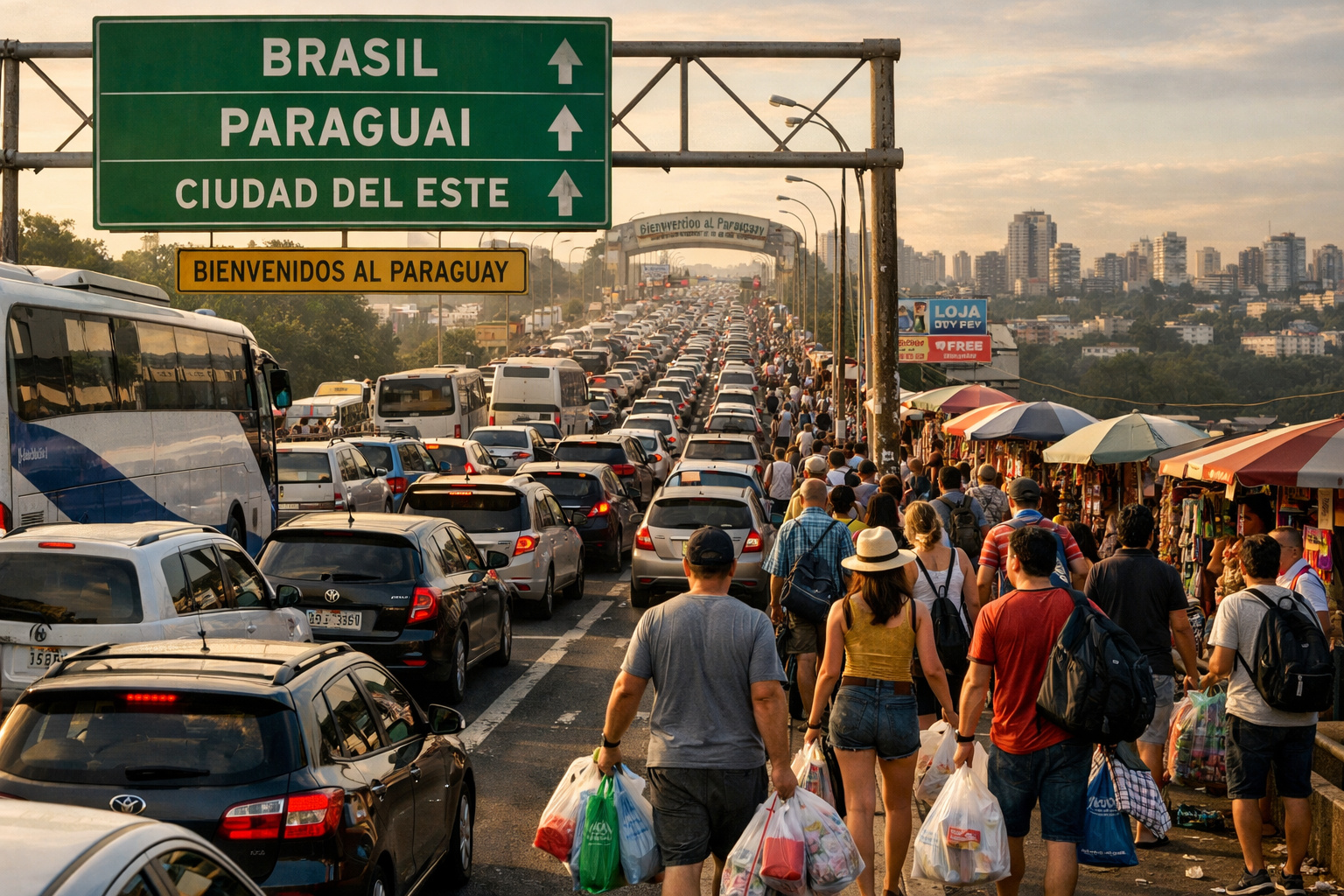
The Intense Flow Of Brazilians And Argentinians During The Carnival Holidays Transformed The Triple Border Into One Of The Busiest Places In South America, Boosting Paraguayan Commerce And Causing Kilometric Lines At The International Bridges
The carnival holidays once again had a strong economic impact on the region of the triple border between Brazil, Argentina, and Paraguay. During the festive period, thousands of Brazilian and Argentinian tourists crossed the international borders, significantly boosting Paraguayan commerce, especially in border cities like Ciudad del Este. The intense movement was felt in both tourism and commercial areas, which recorded above-normal demand.
This information was disclosed by the website La Clave, as well as by regional outlets that monitor the daily life of the border, pointing out that the flow started even before the peak of carnival. In Foz do Iguaçu, Brazil, and in Puerto Iguazú, Argentina, the increase in the number of visitors began on Friday (13), when the first tourists started arriving in the region, anticipating the extended holiday.
Regional Tourism Grows And Pressures The Infrastructure At The International Bridges
From Saturday (14) to Tuesday (17), the volume of vehicles and pedestrians crossing the international bridges exceeded the usual average. At the Tancredo Neves Bridge, which connects Foz do Iguaçu to Puerto Iguazú, the registered flow was considered above normal for the period, reflecting the interest of tourists looking to enjoy the carnival outside the major urban centers.
-
While Bolsa Família benefits 19 million families, reports about cards being withheld by traffickers in exchange for drugs involving some of the 277,000 beneficiaries in street situations reach the Chamber and raise an alert about the program.

-
China wants the world to use its currency and has presented a plan for it.

-
Labubu finally lands in Brazil with dolls starting at R$ 299.99, surprise boxes, rare characters, and a collectible craze that has already won over celebrities, social media, and now promises to shake up 20 stores in 11 states.

-
Paraguay’s bold plan aims to double the economy in just ten years, seeks to become the factory of South America with $25 billion in investments, and wants to place the country in the club of economies above $100 billion.


However, in addition to the traditional visits to the Iguazu Falls, one of the region’s main postcards, a specific activity gained prominence during the holiday: shopping in Paraguay. The stores located in the central area of Ciudad del Este became one of the main destinations for tourists, attracted by competitive prices and a wide variety of available products.
As a direct consequence of this increase in flow, the Friendship Bridge, which connects Brazil to Paraguay, recorded significant congestion. On Saturday and Monday (16), particularly, kilometric lines formed for crossing. In Foz do Iguaçu, the congestion surpassed the trench of Avenida Paraná, reaching more than three kilometers in length, evidencing the logistical impact of the carnival holiday on the region.
Electronics Lead Sales And Lower Dollar Boosts Consumption
Paraguayan commerce was directly benefited by the increase in the number of visitors. Among the most sought-after items in Ciudad del Este stores, electronic products led sales, particularly mobile phones, accessories, and technological novelties. Additionally, toys, cosmetics, perfumes, and beverages also saw significant turnover during the holiday.
According to local merchants, the carnival period is traditionally one of the busiest times of the year for the sector. In statements reproduced by the newspaper La Clave, vendor Víctor López, who operates in the Paseo San Blas area, celebrated the intense movement recorded during the festive days.
“During carnival, many Brazilians don’t go to Rio de Janeiro, but come here to do their shopping. We always have a lot of movement at this time. Thank God, we are making the most of it,” said López, highlighting the importance of shopping tourism for the local economy.
In addition to the extended holiday, another factor directly contributed to the increase in sales: the drop in the dollar exchange rate against the real. For Brazilians, the appreciation of the national currency made prices even more attractive in Paraguay, serving as an additional stimulus for consumption during the carnival holiday.
Thus, the scenario combined tourism, favorable exchange rates, and commercial tradition, resulting in one of the busiest periods of the year for Ciudad del Este and for the entire triple border region.
With the carnival holiday attracting thousands of Brazilians and Argentinians for shopping in Paraguay, will this consumer tourism model at the border remain sustainable in the coming years, or will it increasingly depend on the dollar and extended holidays?






-

-

-

-

-

-

26 people reacted to this.