Portuguese
  Spanish


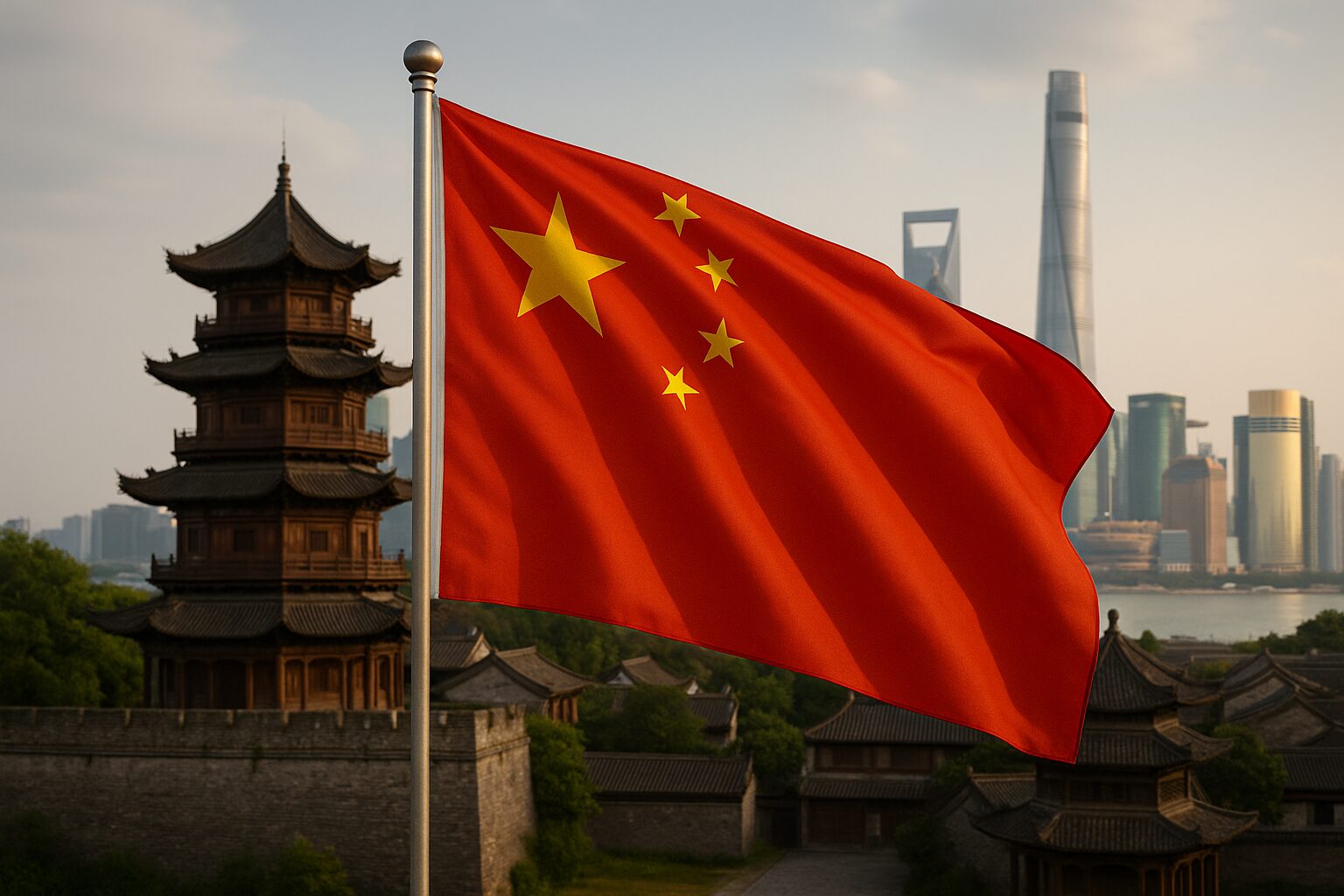

From Millennia Empire to Global Power, China Has Gone Through Wars, Revolutions, and Reforms to Achieve a Central Place in the Global Economy and Politics
For centuries, China was marked by ancient traditions, warrs and isolation. But this same nation, with over four millennia of history, underwent one of the most profound changes of the modern world. In just a few decades, it transformed from an agrarian society into one of today’s major global powers.
Tradition and Turmoil Throughout History
The journey begins with the Xia, Shang, and Zhou dynasties, which laid the cultural and political foundations of the country. For centuries, the system of hereditary monarchies maintained stability, particularly during the Qing dynasty, which lasted until the early 20th century. However, this stability was interrupted by major external shocks.
During the 19th century, China faced pressures from foreign powers, such as in the Opium Wars, and went through periods of domination and conflict.
-
European Parliament Approves Digital Euro, Aiming to Challenge Visa and Mastercard’s Dominance and Transform Payments Across Europe by 2029

-
Israel finds Hezbollah militarized tunnel over 200 meters long under village, with 4 missile launch shafts, 12 chambers, anti-tank missiles, drones, and weapons depots at a depth of 25 meters.

-
Ukraine launches largest drone attack on Moscow since 2022, Russia claims to have intercepted nearly 200 aircraft near the capital, Kapotnya refinery targeted again, and offensive reignites alert about war reaching the Russian energy heart just a few kilometers from the Kremlin.

-
Truck drivers, freight, and fines from 2022 take center stage in politics: Chamber approves MP with amnesty, mandatory tracking by CIOT, million-dollar penalties, and new minimum wage for those who spend more than 24 hours on the road.



The Japanese invasion in the 1930s further aggravated the internal situation. These events culminated in the Chinese Revolution of 1949, led by Mao Zedong, which gave rise to the People’s Republic of China.
The Turning Point: Reforms and Opening
The major turning point came after Mao’s death in 1976. Deng Xiaoping, the new leader of the country, decided to take a different path. Starting in 1978, he initiated a series of reforms known as “Reform and Opening.” These changes paved the way for a new phase of development and modernization.
One of the key points was fiscal decentralization. As a result, local governments were able to create their own rules and priorities for the use of public funds.
China also began to review and reform essential areas such as the financial system and foreign trade policy. It was the beginning of a profound economic transformation.
The Economy Accelerates and the World Takes Notice
The reforms paid off. China became a global export hub, attracting foreign investments and gaining strength in high-tech sectors.
Innovation became a priority, as did military modernization. The country started investing heavily in its industrial, scientific, and military complex.
Internationally, Chinese influence grew. One of the most striking examples was the creation of the Belt and Road Initiative. With this project, China established new trade and diplomatic ties with various countries, including Brazil.
A New Position in the World
Today, China is the second-largest economy on the planet. It is a leader in exports and a constant presence in global political and economic decisions. Its growth model, based on state control and strategic insertion into the international market, has become a reference for other countries.
What was once an isolated society has turned into a power that influences the direction of the 21st century. China’s trajectory shows that, with planning and reforms, it is possible to change the fate of a nation in just a few decades. The Chinese impact on the world is still far from over.