Portuguese
  Spanish


Company Focuses on Sanitation Sector and Adjusts Financial Structure with Sale of Renewable Assets
Equatorial Energia has initiated a restructuring process of its portfolio, putting the Amapá Sanitation Concessionaire (CSA) and two wind complexes from Echoenergia up for sale. The operation, led by Bradesco BBI, aims to concentrate investments in more profitable and strategic assets, as well as reduce the company’s debts, which reached R$ 44.1 billion in the first quarter of 2025.
Sale of CSA Reflects Change in Strategic Focus
Acquired in 2021, CSA marked Equatorial’s entry into sanitation, with a 35-year concession and a grant of R$ 930 million. Despite the promise to invest R$ 880 million, the operation faced low public engagement and high costs to expand access. In 2024, it recorded a loss of R$ 201.9 million, followed by another R$ 58.9 million in the first quarter of 2025. After acquiring 15% of Sabesp in 2024, Equatorial began to see it as its main platform in the sector. Thus, CSA became a secondary asset and of lower priority.
Divestment in Echoenergia Wind Parks
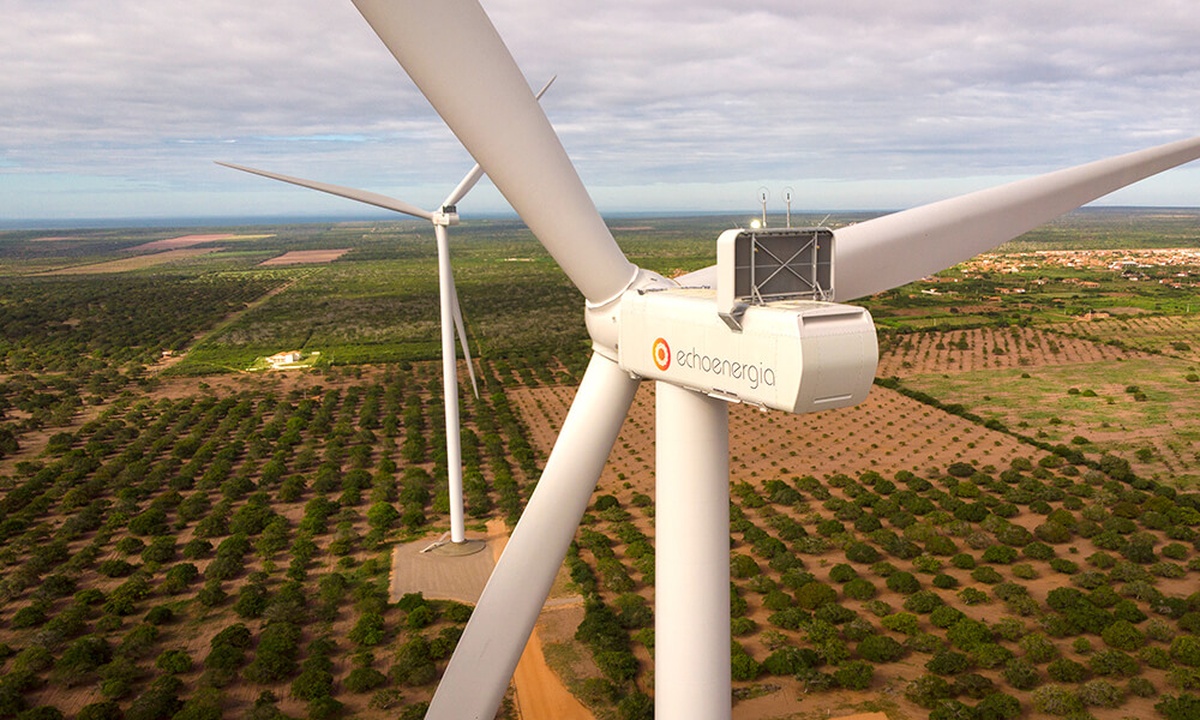
In addition to the CSA, Equatorial also put two of its main wind parks from Echoenergia up for sale: Ventos de São Clemente in Pernambuco and Ventos de Tianguá in Ceará. Echoenergia was acquired by Equatorial in 2021 for R$ 7 billion, aiming to expand its operations in the renewable generation segment. However, the renewable energy sector currently faces challenges, such as the increase of “curtailment,” a practice by the National Electric System Operator (ONS) that imposes cuts in energy generation to avoid system overload. This has devalued assets and increased the perception of risk. The sale of these parks occurs at a delicate time for the sector, with generation cuts affecting the profitability of assets, which can directly influence the value of the offers. Still, wind parks in the Northeast represent opportunities for sector investors, although the current context requires caution.
-
99Food Under Investigation by Brazilian Consumer Protection Agency for Lack of Price Transparency, Faces Potential $2.8 Million Fine

-
Race for data centers in Brazil increases pressure on critical energy

-
Growth without profit has become one of the most costly management mistakes in Brazil.

-
Anvisa blocks batch of antibiotic after unexpected discovery in sealed vial and also suspends clindamycin with impurities and saline solution used in intravenous application




Reduction Strategy
Equatorial accumulated a net debt of R$ 44.1 billion in the first quarter of 2025, with a leverage of 3.2 times, a high level even for the size of the company. The company has increased its indebtedness in recent years to finance acquisitions such as state distributors, Echoenergia, and the stake in Sabesp. As the capital market remains with closed investment windows, the way out has been to sell mature assets and seek capital through divestments. This process is already underway. In July 2024, the company sold a transmission subsidiary for R$ 1.2 billion. In May 2025, it announced the sale of its entire transmission unit to Verene Energia (controlled by the Canadian CDPQ) for about R$ 9.4 billion.
Strategic Repositioning and Focus on Profitable Assets
Equatorial decided to sell CSA and the wind parks of Echoenergia to focus on assets with greater scale and profitability. The entry into Sabesp reinforces this strategy, targeting operations with more profit potential. Given the challenges in the renewable energy sector, such as ONS cuts, capital market contraction, and high leverage, the company seeks to capitalize through divestments and possible capital increase.
Future Prospects
Equatorial’s movement, therefore, highlights a strong trend of consolidation and selectivity in infrastructure investments in Brazil. Moreover, the company states that it remains, in all situations, attentive to opportunities in the areas where it operates. However, it refrains from commenting on negotiations that are still ongoing. Consequently, the sale of CSA and the wind parks of Echoenergia marks a significant step in the portfolio restructuring. Thus, the company aims to concentrate on more strategic and, above all, more profitable assets.