Portuguese
  Spanish


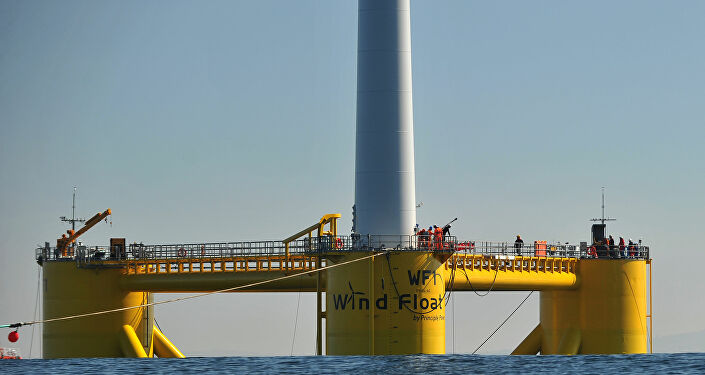

Equinor Claims It Has Started Building The World’s Largest Floating Offshore Wind Farm The Development Of The Floating Offshore Wind Farm Hywind Tampen Involves About 250 Full-Time Equivalents For Kværner Employees.
The Kværner Floating Offshore Wind Farm Project Will Also Generate About 800 Full-Time Equivalents In Ripple Effects For Suppliers And The Public Sector, Among Others, Says Equinor.
Also Read
- Pre-Salt Sets Record For The 2nd Consecutive Month In Oil And Natural Gas (LNG) Production
- Log-In Intermodal Logistics Renews Port Concession To Start Investments At Vila Velha Port Terminal Until 2048
- Piauí Mining Project Receives Investment From A US Company
“The Development Of The Floating Offshore Wind Farm Is A New Chapter In Norway’s Narrative As A Wind Energy Nation. With The Support Of Norwegian Authorities, We Are Not Only Building Norway’s First Floating Offshore Wind Project; We Are Refining Floating Offshore Wind Technology Along With The Norwegian Supply Industry,” Said Equinor’s President And CEO Eldar Sætre.
Equinor Wants To Make Wind Energy Competitive In The Energy Market
Equinor’s Ambition Is For Floating Offshore Wind Energy To Be Competitive With Other Forms Of Energy By 2030. “By Using Larger Turbines, Concrete Substructures, New Technology And A New Assembly Method, We Are On The Right Track To Meet The Goal Of Reducing Costs By More Than 40% Compared To Hywind Scotland.
-
Giant Batteries Take Center Stage in Chile Auction as Company Offers 960 GWh of Solar Energy for Nighttime Use, Aiming to Stabilize Solar Power Supply

-
After a Year of Success in Switzerland, Solar Railway Attracts Italy’s Interest for Clean Energy Transformation
-
Robots Clean Solar Panels in Desert Power Plants Without Water, Preventing Energy Losses
-
Brazil’s Offshore Wind Energy Potential Worth $1 Trillion Stalled by Long-Delayed Agreement



This Is An Important Step To Establish Floating Wind Energy As A Sustainable Power Supply Alternative,” Said The Project Director For Hywind Tampen, Olav-Bernt Haga.
“If More Large Floating Offshore Wind Farm Projects Are Carried Out In The Future, It Will Be Possible To Further Reduce Costs, And We Could See A Development In Cost Reductions Equivalent To What We Saw In Fixed-Bottom Offshore Wind Energy.”
Offshore Wind Energy For Oil And Gas Platforms
The Hywind Tampen Project Will Be The First Floating Offshore Wind Farm To Provide Renewable Energy To Oil And Gas Facilities. The Wind Farm Is Expected To Cover About 35 Percent Of The Annual Energy Needs Of The Five Platforms Snorre A And B And Gullfaks A, B And C.
Located About 140 Kilometers Off The Norwegian Coast In Water Depths Between 260 And 300 Meters, Hywind Tampen Is Expected To Reduce Emissions From The Gullfaks And Snorre Fields By More Than 200,000 Tons Per Year, Equivalent To The Annual Emissions Of 100,000 Passenger Vehicles, Said Equinor.
When The Hywind Tampen Project Becomes Operational In The Third Quarter Of 2022, Equinor Will Be Operating One-Third Of The Global Floating Offshore Wind Capacity.