Portuguese
  Spanish





A Common Mistake at a Gas Station in 1986 Led to the Indicator Arrow for the Side of the Tank, a Feature That Became a Global Standard in the Automotive Industry
An apparently trivial situation that occurred in 1986 within the Ford Motor Company resulted in one of the most functional solutions ever incorporated into modern automotive dashboards.
That year, engineer Jim Moylan parked on the wrong side of the gas pump on a rainy day and, facing embarrassment, identified a recurring problem faced by drivers in various countries.
Rather than ignoring the episode, he wrote a memo proposing the inclusion of a small arrow next to the gas pump icon on the dashboard, accurately indicating the correct side of the tank.
-
New York removed the tracks from over 2,500 subway cars and dumped everything at the bottom of the Atlantic, and what seemed like trash turned into an artificial reef teeming with fish and divers.

-
From matches sold by bicycle at age 5 to a global furniture empire: the lumberjack’s son founded IKEA at 17 in his uncle’s kitchen and transformed a small company into the largest furniture retailer on the planet.
-
The mansion in Flamengo, built in 1865 for the Baron of São Clemente and closed for 20 years, has become a spa, event hall, and gym for “Symphony,” a luxury condominium that sold 70% of its gross development value in the first month on the R$ 60 million land of the former Bennett College.

-
The Ipiranga convent, a 1924 building adjacent to the Museum that remained vacant for a decade and became home to dozens of cats, is reborn as “Alma Mater,” a luxury development worth R$ 130 million with a pool in the courtyard and a clubhouse in the former nuns’ chapel.





According to internal records later cited by The Wall Street Journal, the proposal aimed to eliminate doubts, reduce hassle, and make the refueling experience more efficient.
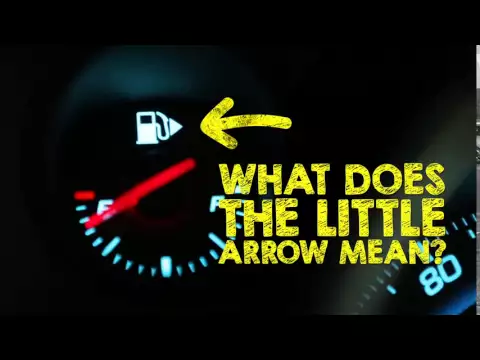

A Daily Problem That Affected Millions of Drivers
Drivers often only realized they were on the wrong side of the pump after parking, which caused delays and embarrassing situations. Although a common mistake, there had been no simple visual indicator on the dashboard to resolve the issue immediately and uniformly.
Moylan, an expert in instrument panels, understood that the fault was not with the driver, but with the lack of clear and accessible information.
Thus, still in 1986, he formalized the proposal within the company, advocating for a solution that was simple to implement and cost practically negligible.

Technical Development and Implementation in the Late 1980s
After presenting the idea, the automaker’s technical team analyzed the memo and began internal studies to make the change feasible.
According to accounts recovered years later in journalistic investigations, the symbol entered development in the late 1980s. The solution was deemed effective because it did not require structural changes to vehicles, only an adjustment in the layout of the dashboard.
Thus, the arrow was approved and progressively incorporated into the new models of the brand.
From the 1989 Ford Thunderbird to the Global Industry Standard
The first public appearance of the feature occurred in 1989, on the dashboard of a Ford Thunderbird. Although discreet, the innovation showed immediate utility and became a permanent part of the everyday experience for drivers.
Over time, other automakers adopted a similar solution, establishing the tank indicator arrow as a technical standard in the global automotive industry.
Subsequently, the same concept was also applied in electric vehicles, where the arrow began to indicate the side of the charging port.
A Discreet Inventor Without a Patent
Unlike other creators of industrial solutions, Jim Moylan did not file a patent nor seek financial recognition for the proposal. For decades, millions of drivers utilized the feature without knowing the origin of the idea.
According to The Wall Street Journal, only many years later, through an investigation conducted by a podcast and the recovery of corporate files, his authorship was officially confirmed.
Late Recognition and Permanent Legacy
The name Jim Moylan became public decades after the symbol was created, when internal documents were re-evaluated. He had already passed away when his role began to be widely recognized.
Still, his legacy remains present daily in practically all modern vehicles. Whenever a driver looks at the dashboard and accurately identifies the side of the tank before refueling, the solution created in 1986 fulfills its silent and effective function.
How many times have you used this small arrow without imagining that it all started with a simple mistake at a gas station?