






 Portuguese
  Spanish


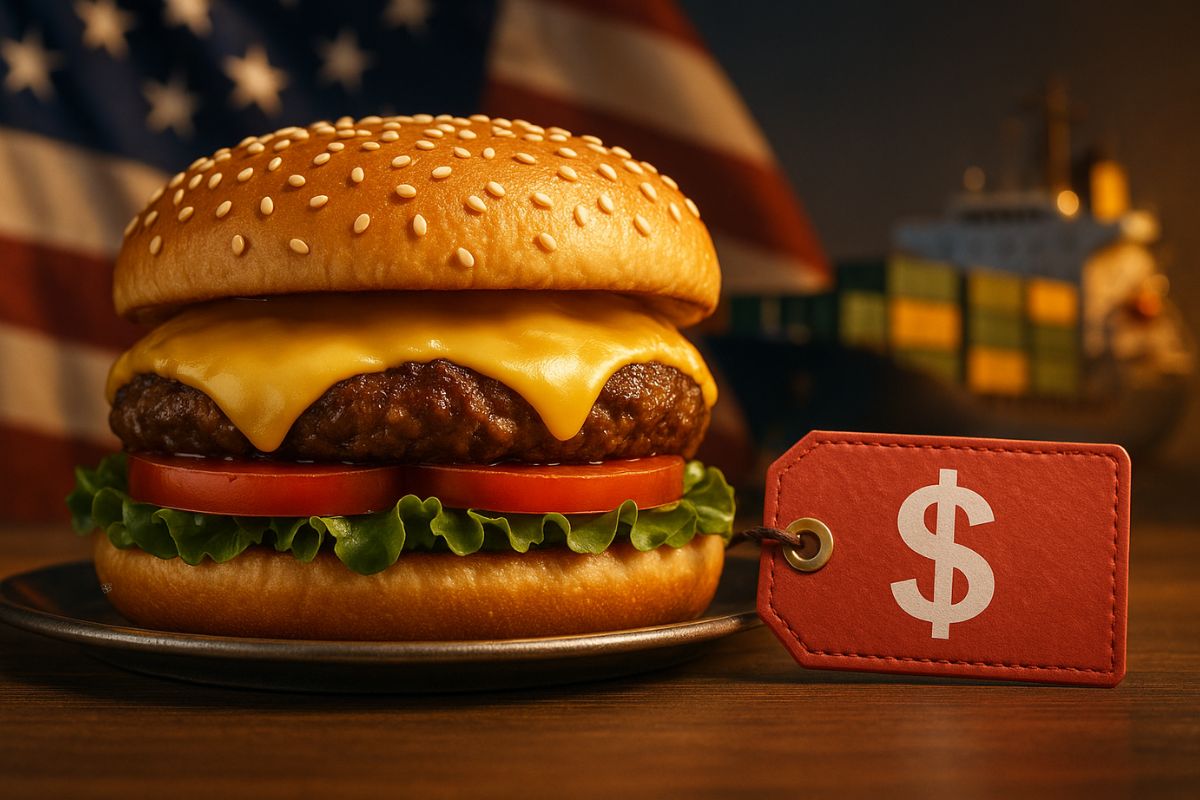


Tariff Against Brazil Raises Taxes on Beef to 76.4% and Threatens to Turn Burger into an Expensive Item in the United States, with Similar Supply Risk to Eggs in 2024.
The food market in the United States is facing new inflationary pressure. According to Infomoney, the tariff against Brazil imposed by the Donald Trump administration in August 2025 has increased taxes on Brazilian beef by 40%, raising the total burden to 76.4%. As a result, shipments have become unfeasible and paved the way for a scenario where the burger may no longer be affordable for millions of American families.
Until July, Brazil had doubled its exports to the U.S., supplying lean meat used in blends with local fattier cuts in burger production. Now, without this supply, the pressure on prices is expected to intensify amid the lower domestic supply.
Beef Becomes New Symbol of Inflation
After eggs became a symbol of rising prices in 2024, now beef takes center stage.
-
Brazilian Government Invests $140 Billion in Strategic Sectors like Fertilizers, Biopharmaceuticals, Sustainable Mobility, and Artificial Intelligence with BNDES Support

-
Mota-Engil Awaits Approval to Invest $1.4 Billion in Brazilian Northeast Railway Project Connecting to Porto Sul in Bahia
-
Global Food Prices Drop for Second Consecutive Month, but Meat Hits Record High and Vegetable Oils Rise Again, Despite Relief from Sugar, Cereals, and Dairy
-
Brazil’s Tax Authority Unveils 2026 Income Tax Data, Highlighting Professions with Highest Average Declared Wealth


Data from the U.S. Bureau of Labor Statistics (BLS) show that the product recorded eight consecutive months of increase, with August seeing the largest monthly jump in nearly four years.
The absence of Brazilian beef is particularly serious because it represents a key input for the burger industry.
Darin Parker, president of PMI Foods and member of the U.S. Meat Export Federation, was emphatic: “The prices of beef may become the Biden administration’s egg problem.”
American Herd Declining and Supply Pressured
The problem is not limited to the tariff. The American herd is at its lowest in decades, and the number of cows slaughtered has dropped nearly 9% compared to 2024, according to major meatpackers like Tyson Foods and JBS USA.
The recent suspension of cattle purchases from Mexico for sanitary reasons has further aggravated the supply shortage.
This combination of factors has created an inflationary pressure environment that puts meat at the center of political debate.
For many analysts, Trump’s decision may have consequences similar to the supply crises seen in recent years in other staple goods.
Competitors Fill the Space, but Do Not Satisfy Demand
With Brazil’s exit, Australia has increased its exports by 22% up to August, benefiting from a tariff of only 10% and a record harvest.
Uruguay and Argentina have also increased their shipments, but face higher barriers of 36.4% on volumes exceeding quotas.
Still, analysts agree that there is not enough volume to compensate for the absence of Brazil.
There is an expectation that Mexico will buy Brazilian beef to re-export its own to the U.S., but this strategy has logistical and regulatory limits.
Burger May Become a Luxury Item in the U.S.
According to Parker, stocks accumulated before the tariff are expected to run out in a few months, making it inevitable to pass costs onto consumers.
Fast food chains and supermarkets are already seeking forward supply contracts in an attempt to reduce volatility.
The impact goes beyond American tables. The burger, a symbol of U.S. popular culture, may become a luxury item, especially impacting the middle class.
The crisis also has political weight: food inflation has marked the Biden administration and now threatens Trump’s image, this time due to the direct effect of his trade decisions.
And you, do you believe that the tariff against Brazil will indeed turn burgers into luxury products in the United States? How do you assess the impact of this trade dispute? Leave your opinion in the comments — we want to hear your thoughts on this topic.




Que se laskem, McDonald’s e burguer king e o povo americano , o que importa é as consequências da tarifação deste inconsequente incompetente governo dos EUA para o comércio brasileiro
Brasil tarifas das Bluzinhas, IOF, IPI, PIS, COFINS, CSLL, IPTU, IPVA, ISS…etc etc etc e o brasileiro adora pq o SUS é “grátis”….🐎🐎🐎🐎🐎
Mentira.90% da carne bovina e produzido solo americano.10% Canadá e outros países.a saída do Brasil entrou Argentina