Portuguese
  Spanish


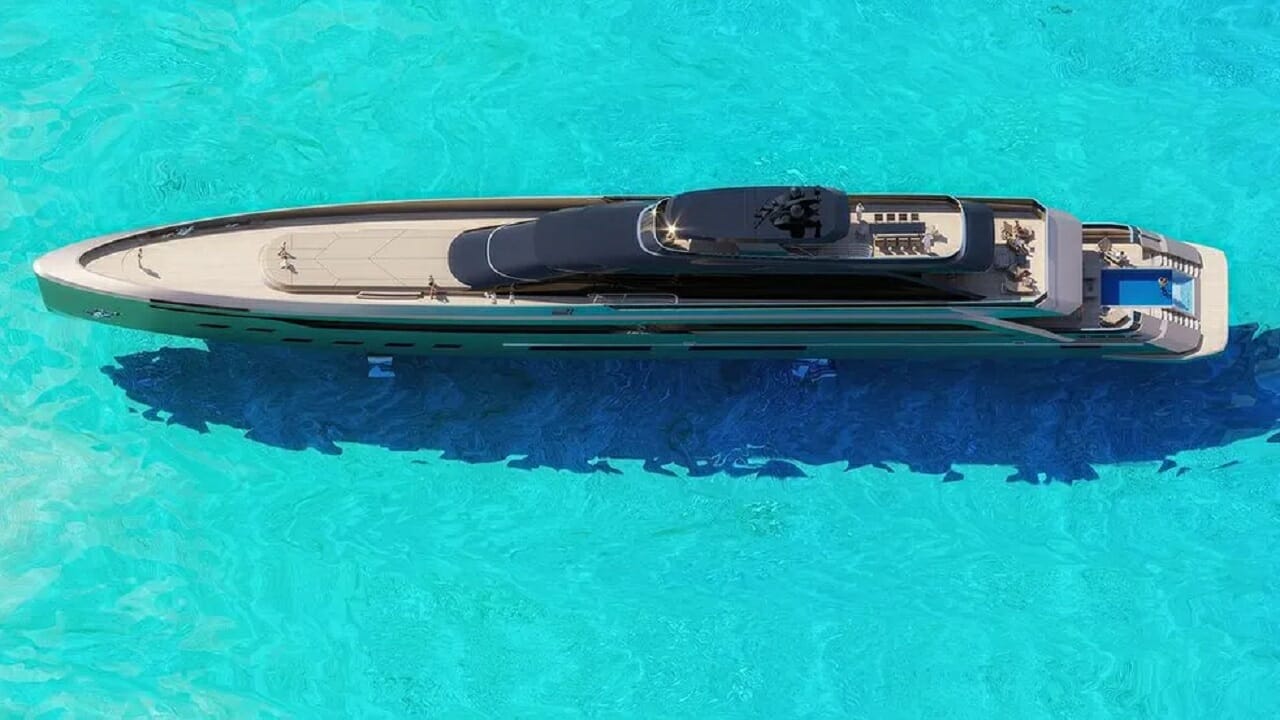

Company Develops Hydrogen-Powered Yacht. SUPER YACHT Mask Features 85 Meters and Delivers Luxury Inside and Out, Promising a Revolution in the Yacht Market.
The ONYX H2-BO 85, from MASK Architects, is the world’s first super yacht capable of moving through its own hydrogen production. The model combines electrolysis, using seawater, with hydroelectric turbines to generate a sustainable energy solution focused on short cruising distances, which does not emit harmful gases and consequently reduces environmental impact.
Hydrogen-Powered Yacht Measures 85 Meters in Length
This remarkable vessel not only heralds a new era of sustainability in the maritime industry but also establishes new standards for luxury and ecological awareness, according to the company responsible in an Instagram post.
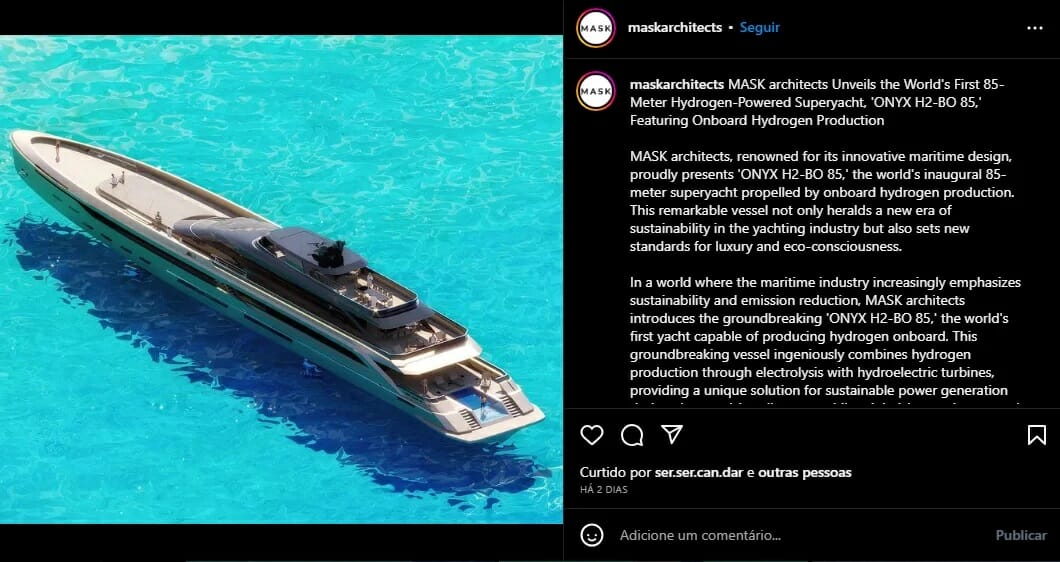
According to the manufacturer, the hydroelectric turbines of the SUPER YACHT Mask efficiently capture the kinetic energy of the surrounding water, outperforming conventional generators. The clean energy approach enables the generation and storage of hydrogen on board, reducing the need for large fuel reserves and dependence on fossil fuels, and providing easily accessible energy during navigation or low-speed anchoring.
-
1983 Chevrolet Runs Over 100,000 km Without Gasoline, Powered by Wood Chips, Reaches 125 km/h in Airport Test

-
Workshop Converts Giant Tractor Tire Tricycle into a Three-Wheel Drive Hybrid with 36,000-Watt Electric Motor Capable of Climbing Hills

-
Sales of Brazil’s Cheapest Electric Car Halted Before First Deliveries: E-Motors Suspends Emova Easy Due to Import Tax Increase and Rising Freight Costs

-
Nissan Discontinues Qashqai SUV Amid Cost-Cutting, Chinese Competition, and Product Line Review




85 Meters in Length
Measuring 85 meters in length, the hydrogen-powered yacht also draws attention with its design. The exterior is quite sophisticated, and its interior, from the cabins to the lounge, radiates elegance and luxury.
According to Mask Architects, renowned interior designers collaboratively selected every detail, blending refined material palettes, cutting-edge technology, and sustainable elements to create an inviting and environmentally friendly atmosphere.
The SUPER YACHT Mask utilizes seawater electrolysis to separate water into hydrogen and oxygen, and highly efficient hydroelectric turbines capture the energy from surrounding waters, as previously mentioned, eliminating the need for fossil fuels and drastically reducing pollutant gas emissions, marking an important advancement in minimizing environmental impact within the luxury yacht industry.
Advantages of Hydrogen as Fuel
At 85 meters long, the hydrogen-powered yacht is not only a technological marvel but also a work of art in terms of design. Interior designers contribute to every detail, combining refined material palettes with cutting-edge technology and sustainable elements. The cabins, lounges, and social spaces on board create a cozy and environmentally responsible atmosphere, demonstrating that sustainability and luxury can go hand in hand.
The estimate is that hydrogen will be the fuel of the future, and the oil industries are already studying the adoption of this element to generate electrical energy and as vehicle fuel. The main advantages of this fuel are that it is a renewable, non-polluting, and inexhaustible source of energy, combating pollution.
Other Projects Utilizing Hydrogen as Fuel
In addition to the SUPER YACHT Mask, the hydrogen-powered yacht, several other projects include the use of this fuel, such as a French startup that plans to circumnavigate the globe in 20 days using a hydrogen and solar-powered airship by 2026.
Euro Airship, the company responsible for the project, has dedicated around 10 years of research to it. For the past three years, the technology company Capgemini has also been involved in the construction of the airship.
Called Solar Airship One, the vehicle measures 151 meters in length and is filled with 50,000 cubic meters of helium, in addition to being powered by solar energy and hydrogen. During the day, 4,800 square meters of solar panels generate energy, while at night, hydrogen is used to operate a fuel cell.