Portuguese
  Spanish


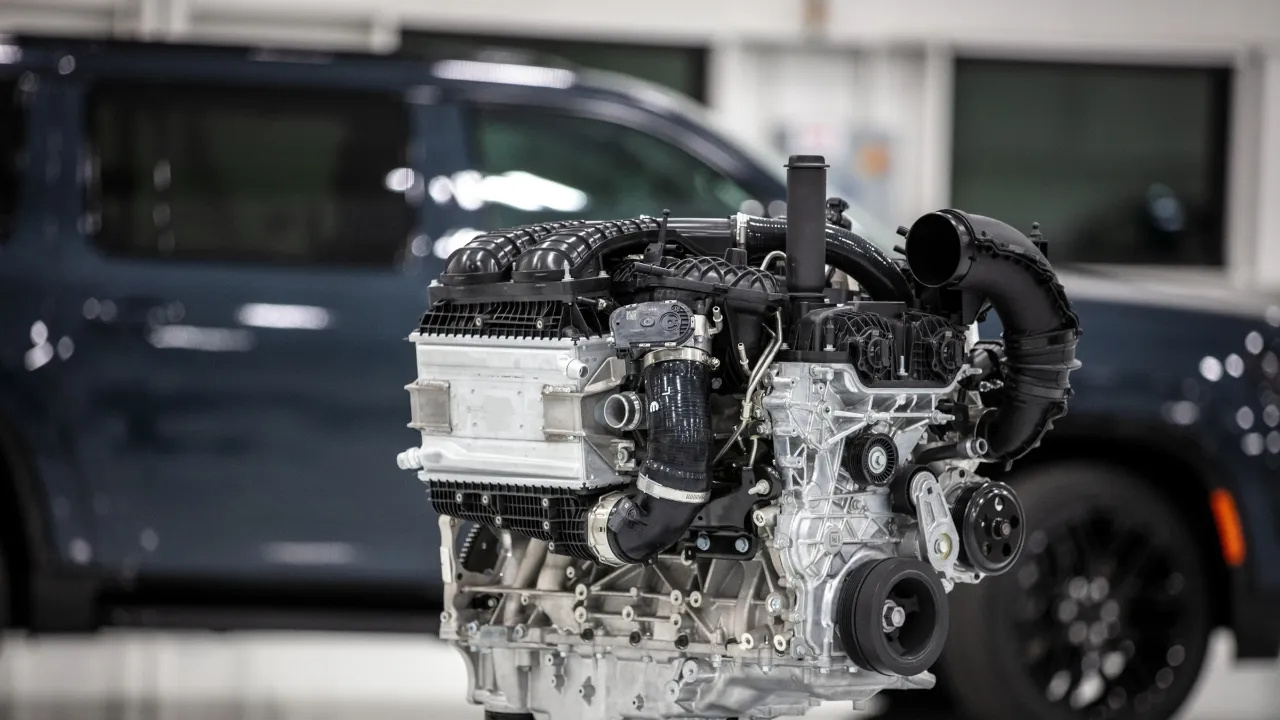


The Pre-Chamber Inspired by F1, Combined with Variable Geometry Turbo, Miller Cycle, and Dual Injection, Elevated the Hurricane 4 to a New Level of Thermal Efficiency, Wide Torque, and Specific Power in Medium and Large SUVs
The evolution of combustion engines rarely occurs in leaps as visible as electric ones. Still, the Hurricane 4 shows that there is room for deep innovation within a modern 2.0 turbo. Developed by Stellantis and applied in models from Jeep, the engine incorporates Turbulent Jet Ignition (TJI), a pre-chamber solution that gained notoriety in Formula 1 and has been adapted for mass production.
The result is a 4-cylinder engine capable of delivering up to 324–330 hp in North American versions, with torque around 450 Nm, while maintaining efficiency comparable to large SUVs. Below are the technical details explaining why the Hurricane 4 has become a reference.
TJI Pre-Chamber: Two-Stage Combustion
Turbulent Jet Ignition creates a small pre-chamber within the main chamber. In it, an air-fuel mixture is ignited by a dedicated spark plug. Micro jets of flame pass through calibrated holes and initiate combustion in the main cylinder more quickly and uniformly.
-
1983 Chevrolet Runs Over 100,000 km Without Gasoline, Powered by Wood Chips, Reaches 125 km/h in Airport Test

-
Workshop Converts Giant Tractor Tire Tricycle into a Three-Wheel Drive Hybrid with 36,000-Watt Electric Motor Capable of Climbing Hills

-
Sales of Brazil’s Cheapest Electric Car Halted Before First Deliveries: E-Motors Suspends Emova Easy Due to Import Tax Increase and Rising Freight Costs

-
Nissan Discontinues Qashqai SUV Amid Cost-Cutting, Chinese Competition, and Product Line Review




Main Technical Effects
- More complete and faster combustion
- Higher thermal efficiency
- Reduction of emissions at cold start
- Ability to operate with a higher effective compression ratio
- Better energy utilization per cycle
The system uses two spark plugs per cylinder: one in the pre-chamber and another in the main chamber for stabilization under high loads. Unlike conventional engines, the Hurricane 4 combines TJI with direct and indirect injection, enhancing fine control of the mixture.
Variable Geometry Turbo and Wide Torque Range
In the more powerful versions of the Hurricane 4, the variable geometry turbo (VGT) adjusts the airflow according to the RPM. This keeps the turbine efficient under both low and high loads.
Delivery Range
- Up to 90% of maximum torque available between ~2,600 and 5,600 rpm
- More immediate throttle response
- Noticeable reduction in turbo lag
This behavior allows SUVs weighing almost two tons to accelerate with continuous vigor, maintaining flexibility during acceleration and thermal stability during prolonged use.
Miller Cycle and Valve Management
The Hurricane 4 operates on the Miller Cycle, keeping the intake valves open longer to reduce pumping losses and optimize combustion. The intake camshaft uses an electric variable actuator, capable of repositioning the shaft even with the engine off, which:
- Improves Start-Stop smoothness
- Allows strategic de-compression of the cylinders
- Increases emission control at startup
The pressurized air passes through a compact water-to-air intercooler, with a dedicated front heat exchanger, ensuring thermal stability under load.
Construction and Architecture of the Block
The aluminum block features structural reinforcements and skirts that extend below the crankshaft line, increasing the assembly’s rigidity. The architecture resembles modern high-performance engines, focusing on durability and vibration control.
Structural Specifications
- Aluminum block and cylinder head
- Dual variable camshaft
- Two spark plugs per cylinder
- Dual injection (direct + indirect)
- VGT turbo
- Water-to-air intercooler
- Miller Cycle
Power Ratings and Applications by Model
Most Powerful Global Versions (USA)
- 324–330 hp
- 450 Nm
- Application: Jeep Grand Cherokee 2026
Brazilian Versions
- 272 hp
- 400–408 Nm
- Applications: Jeep Compass and Jeep Commander
- Flex configuration starting in 2026 on the Compass
In a North American Grand Cherokee, fuel economy can reach about 27 mpg (approximately 11.4 km/l), a significant figure for a large SUV with a robust aerodynamic profile.
Usability Nuances
The Hurricane 4 was not designed solely for maximum power. Its wide torque curve favors:
- Urban driving with less effort
- Towing with consistent response
- Thermal stability on the road
- Smoothness at low RPMs
Additionally, the faster heating of the catalyst at startup reduces initial emissions, one of the critical points in modern gasoline engines.
Technical Comparisons and Global Positioning
With specific power above 160 hp per liter in the strongest versions, the Hurricane 4 positions itself among the most sophisticated 2.0 turbos in the world. The presence of a pre-chamber in a mass-produced engine is still rare, typically seen in high-performance and competition applications.
By combining TJI, VGT, Miller Cycle, and dual injection, the design shows that the evolution of internal combustion still has significant room for improvement. Rather than increasing displacement, engineering extracts more efficiency from every drop of fuel.
The Hurricane 4 demonstrates that track technology can indeed migrate to everyday use. And by transforming a 2.0 four-cylinder engine into a global reference, the engine signals that the future of combustion may be less about size and more about thermal intelligence and precise control of internal explosion.