Portuguese
  Spanish




With Over 10 Kilometers of Elevated Lanes, the Heroes of 1932 Viaduct Complex, the “Cebolão”, is the Largest Viaduct Complex in Brazil and a Landmark of National Engineering That Handles Over 1 Million Vehicles Per Day.
In the West Zone of São Paulo, a tangle of concrete and steel rises over the confluence of the Tietê and Pinheiros Rivers. It is the Heroes of 1932 Viaduct Complex, better known by its popular nickname: “Cebolão”. This is undoubtedly the largest viaduct complex in Brazil, a gigantic traffic knot that has become an icon of the São Paulo landscape.
Inaugurated in 1978, the complex was an audacious response to the traffic challenges of the country’s largest metropolis. According to the archives of the newspaper O Estado de S. Paulo, the project was a milestone in engineering at the time. The history of the “Cebolão” is the chronicle of a monumental project, designed to distribute a flow of vehicles that today exceeds 1 million daily crossings.
What is the “Cebolão” and Where Is It Located?
The largest viaduct complex in Brazil has the official name of Heroes of 1932 Viaduct Complex, a tribute to the Paulista fighters of the Constitutional Revolution. It is located in the West Zone of São Paulo, between the neighborhoods of Lapa, Vila Leopoldina, and Jaguaré.
-
Concrete-filled PVC homes could be cheaper than traditional masonry, UPF research finds; with ready modular panels, less waste, and faster construction, the Concrete-PVC system aims to cut costs and transform affordable housing in Brazil.

-
Brazilian House Built with 32.8 Tons of Construction Debris Offers Affordable Housing Solution
-
Americans Build Entire Homes in a Day Using Compact Sand Foundations and Pre-Made Wooden Trusses, Reducing Construction Costs

-
China’s Largest Floating LNG Plant, NGUYA, Sets Sail for Congo: 2.4 Million Tons Annually for Italy’s Eni


The nickname “Cebolão” was born from its appearance. Viewed from above, the arrangement of more than a dozen bridges and viaducts intertwining at different levels resembles the layers of a cut onion.
The Inauguration in 1978: a Work for the Fastest Growing Metropolis
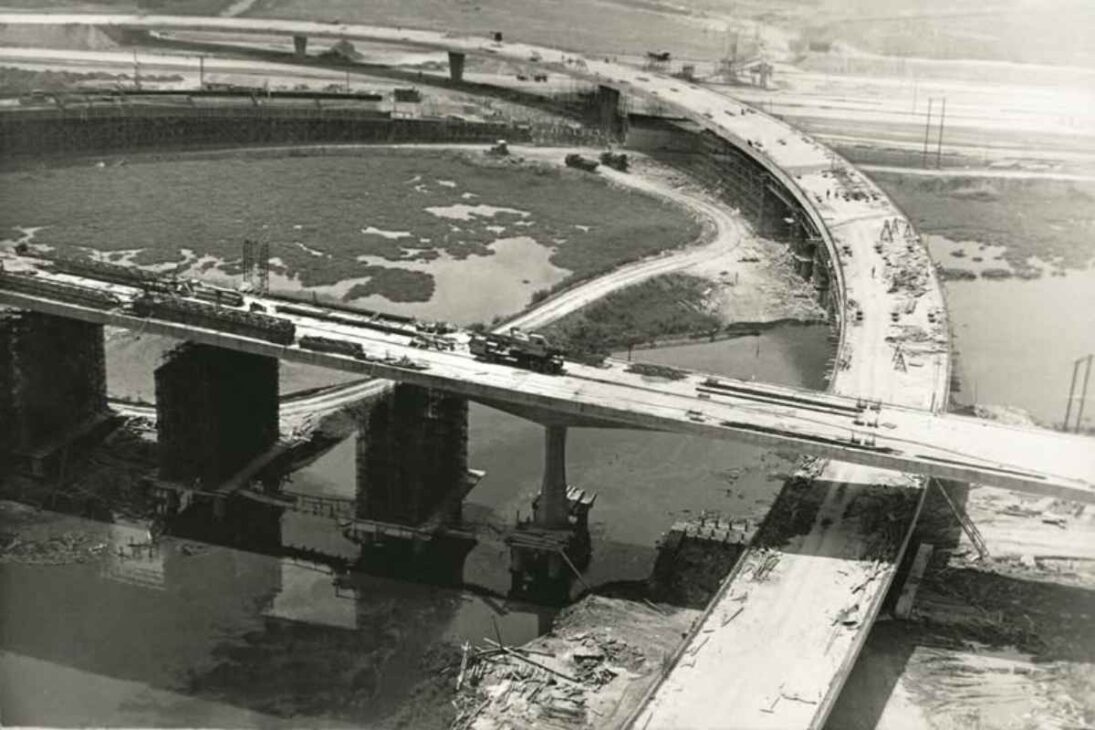
The main structure of the complex was inaugurated on July 9, 1978. The project, a landmark of national engineering, was delivered during the administration of Mayor Olavo Setúbal and Governor Paulo Egydio Martins.
Since its inauguration, the “Cebolão” has undergone various maintenance and adaptation works to support the increasingly intense traffic of the city, becoming an irreplaceable part of the city’s road network.
The Strategic Function: The Knot That Connects the Marginals and the Castelo Branco Highway
The main objective of the largest viaduct complex in Brazil is to be the main traffic distributor between three of São Paulo’s most important axes:
- Marginal Tietê (SP-015);
- Marginal Pinheiros (SP-015);
- Rodovia Castelo Branco (SP-280), the main connection from the capital to the western interior of the state.
The volume of traffic that passes through its ramps is one of the largest in Latin America, with estimates pointing to over 1 million vehicles per day.
The Engineering Behind the Colossus: 16 Viaducts and 10 km of Elevated Lanes
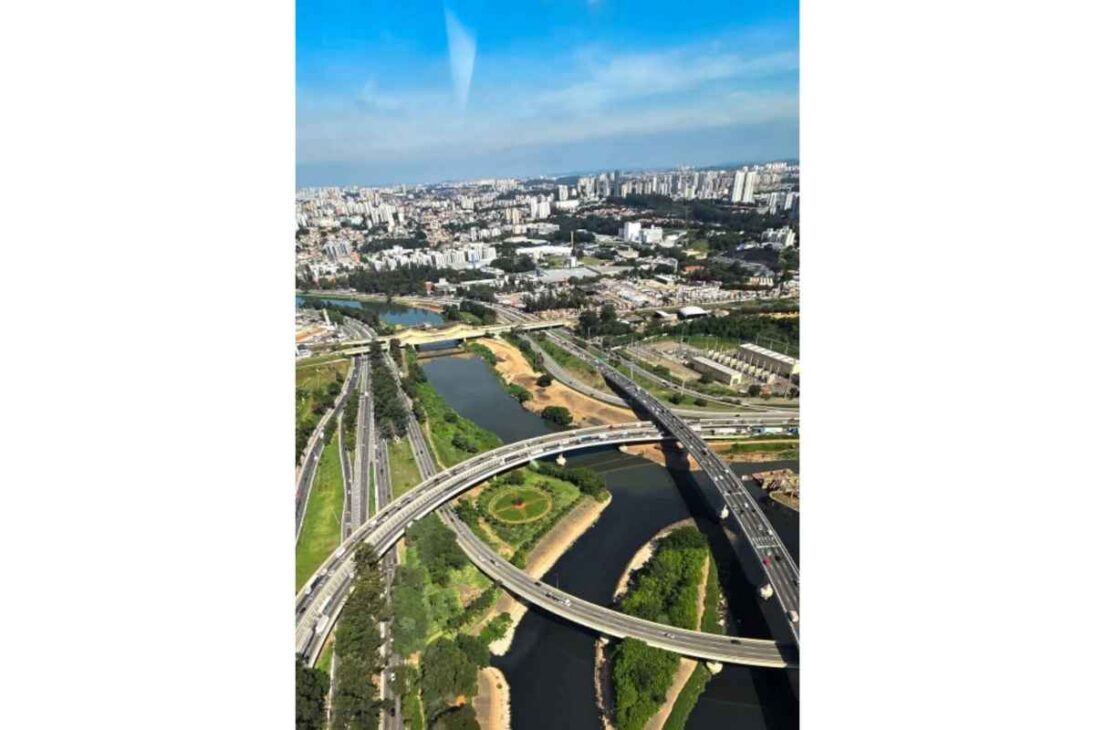
The grandeur of the “Cebolão” can be seen in its numbers. The complex consists of approximately 16 interconnected bridges and viaducts. The total length of all its elevated lanes exceeds 10 kilometers.
The project, executed by the engineering company Figueiredo Ferraz, was a major challenge. Advanced construction techniques, such as prestressed concrete, were necessary to span the vast gaps over rivers and other roads without the need for multiple support pillars.
The “Cebolão” in Perspective: How It Compares to Other Major Complexes?
Although there are other large road complexes in Brazil, such as the Maria Maluf Viaduct Complex in São Paulo and the Lagoinha in Belo Horizonte, the “Cebolão” stands out for its nature as a “traffic hub”.
Its complexity, with a tangle of access ramps and overlapping viaducts, and the immense volume of traffic it manages between three of the country’s main roads, consolidates it as the largest viaduct complex in Brazil.