Portuguese
  Spanish


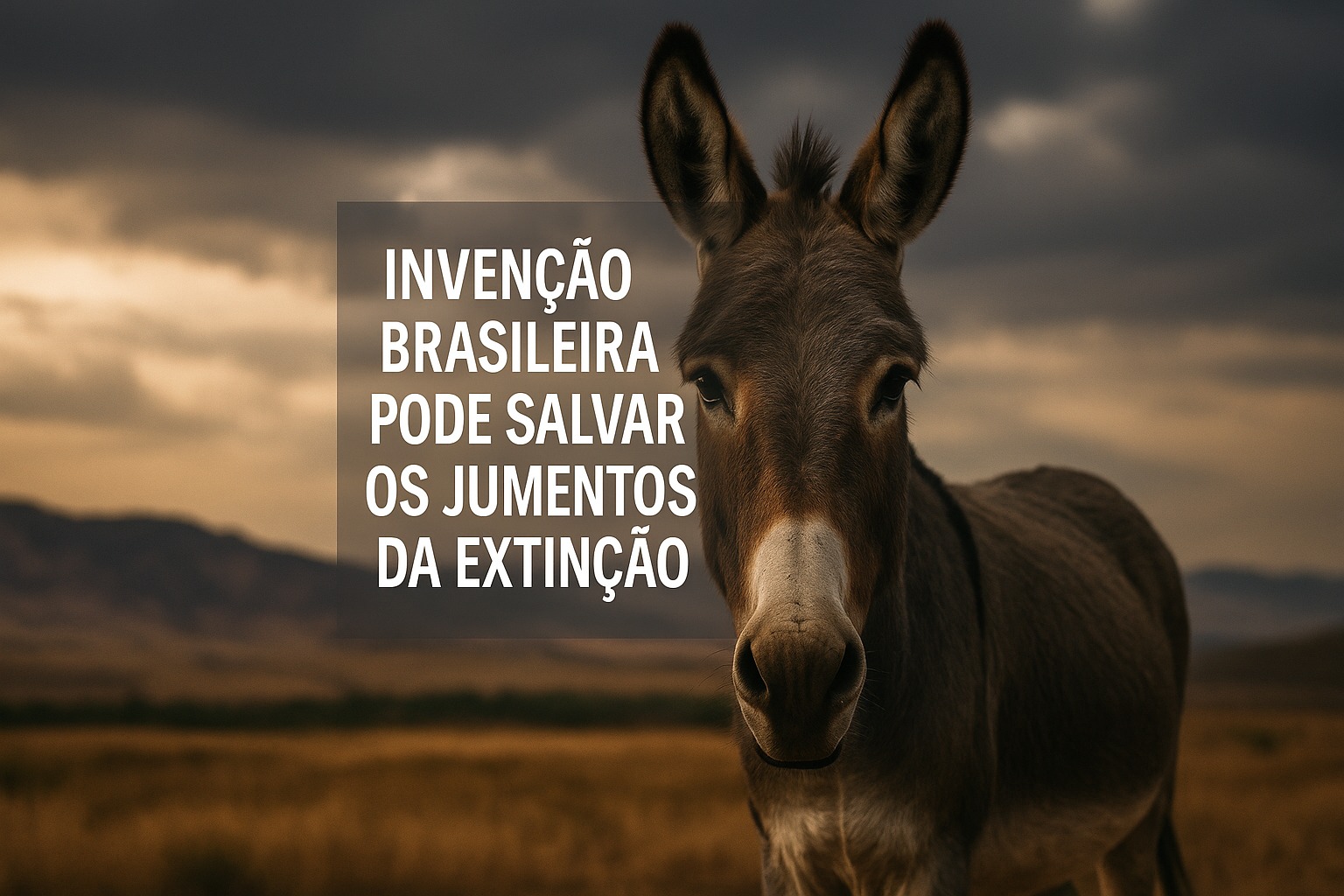


Researchers From Brazilian Federal Universities Join Forces to Save Northeastern Donkeys Threatened by the Chinese Ejiao Industry by Developing Synthetic Collagen Through Precision Fermentation as an Ethical and Sustainable Alternative
The most respected equine researchers from Brazilian federal universities have come together to face the real risk of extinction of donkeys in the Northeast region. The crisis is the result of a billion-dollar demand from China, which buys the skins of the animals to produce ejiao, an elixir used in Traditional Chinese Medicine (TCM) that promises vitality and health benefits.
Among the most promising studies is research from the Federal University of Paraná (UFPR) that aims to generate, by the end of 2026, the first results for the production of laboratory-made donkey collagen using precision fermentation.
The technique, also known as cellular agriculture, involves cultivating cells and tissues in a controlled environment and could become an alternative to slaughtering these animals worldwide.
-
Pennsylvania Mine Creates Ice in Summer Heat and Melts in Winter, Turning a Mountain Crevice into a Reverse Natural Refrigerator

-
China Accelerates Global Expansion of Robotics: From Smart Vacuums to Industrial and Humanoid Machines, Millions Exported to Over 150 Markets
-
Polar Air Mass to Hit Brazil: Temperatures to Plummet in Nine States, Near Freezing in the South with Frost Risk Until Monday
-
Chinese “dark factories” produce electric cars 24/7 with minimal human intervention, as Zeekr assembles 800 units daily, raising concerns in Brazil.



The project’s advancements were presented at the 13th World Congress on Alternatives and the Use of Animals in the Life Sciences (WC13), held in Rio de Janeiro in September.
The innovation attracted attention because it offers a possible solution to reduce the global slaughter of donkeys caused by the ejiao industry.
The demand for collagen extracted from the skin of these animals has already led to the near-total disappearance of the species in several regions of Africa.
In Brazil, scientists warn that there has been a 94% reduction in the donkey population over the past decades, putting Equus asinus at real risk of extinction.
A Species That Shaped the History of the Northeast
Donkeys arrived in Brazil in 1534, brought by Martim Afonso de Souza to the Captaincy of São Vicente.
Since then, they spread mainly throughout the Northeast, where they came to represent 90% of the total population of the country, becoming an essential part of culture and survival in the semi-arid region.
For centuries, they were used for transporting water, firewood, people, and food. However, starting in the 1990s, they began to be replaced by motorcycles, initiating a process of abandonment and disappearance that worsened over the last decade with the ejiao trade.
According to the British NGO The Donkey Sanctuary, from 2018 to 2024 at least 248,000 donkeys were slaughtered in Bahia, the only state with three slaughterhouses authorized by the Federal Inspection Service (SIF) for this type of activity. The number is alarming and has raised concerns among researchers.
“We are on the verge of being without donkeys in Brazil, and it’s not a trade that can be defended, not even from a purely pragmatic standpoint,” warns Carla Molento, a doctor in animal science and coordinator of the Animal Welfare Laboratories (Labea) and Cellular Zootecnia at UFPR.
“It’s a dead end. It would be important to stop this before we end up with no donkeys because it will only stop when we’ve wiped them out,” she states.
Global Threat and African Decision
Celebreated for millennia in China as a symbol of vitality, ejiao has become a luxury product.
However, its success has created a devastating impact on donkey populations in Africa, Asia, and South America.
In 2024, the African Union made an unprecedented decision: it prohibited the slaughter of donkeys for 15 years across the continent, in an agreement unanimously approved by 55 heads of state.
The measure went against Chinese economic interests but prioritized the preservation of a species domesticated for around 7,000 years in Africa and vital for rural communities.
The African gesture inspired Brazilian scientists, who see the donkey not only as a northeastern symbol—immortalized in the songs of Luiz Gonzaga and in cordel literature—but also as a historical and cultural heritage of the country.
A Scientific and Ethical Alternative
Researcher Carla Molento leads the group developing synthetic donkey collagen production.
The work is supported by the Ministry of the Environment and Climate Change (MMA), the Araucária Foundation of Paraná, and Wageningen University in the Netherlands.
The goal is to create a traceable, ethical, and sustainable alternative for the Chinese market—while eliminating the need for slaughtering the animals.
“The great innovation lies in producing collagen identical to that from donkeys, encoded by the DNA of the animal, but decoupled from slaughter,” explains Molento.
The process inserts donkey DNA into genetically modified microorganisms. As they multiply, these microorganisms produce the same collagen.
Then, the material is purified within a bioreactor, with no involvement of animals.
In practice, while it is currently necessary to use the whole skin to extract collagen, precision fermentation uses only the biomass generated in the reactor.
The result is essentially the same product, but without animal suffering and with a much smaller environmental footprint.
“We will still have a product for export, but without decimating our animals,” states the researcher.
A Long Path to Industrialization
Despite the urgency of the situation, the scientist acknowledges that the process will take time. The project is in the phase of scaling up and cost optimization, in addition to relying on approval from national and international regulatory agencies, especially Chinese, to enable exportation.
“We need two things: more investment and a moratorium on the sale of collagen. Only then can we make intelligent decisions,” says Molento.
Today, the MMA and the Araucária Foundation provide R$ 500 thousand for the project, an important amount, but insufficient to accelerate development.
Nevertheless, scientists believe Brazil can play a global leadership role in this type of biotechnology.
Molento does not rule out the creation of a university-incubated startup to facilitate commercial-scale production.
A report from The Donkey Sanctuary, published in 2021, indicates that 58% of Chinese consumers of ejiao would accept purchasing products made with cellular agriculture if the price were affordable.
The research, conducted by the British company YouGov, reinforces the viability of the Brazilian plan.
According to the Newsijie consultancy based in Beijing, the ejiao market generates over 58 billion yuan per year—about R$ 42 billion—and consumes 5.9 million donkey skins annually.
For researchers, replacing part of this demand with synthetic collagen would be a historic advancement.
Tragedy in Canudos and National Mobilization
The collaboration among federal universities began after a tragedy. In February 2019, a complaint led to the discovery of 200 donkeys dead of starvation on a farm in Canudos, 372 km from Salvador. Another 800 animals were slowly dying while awaiting slaughter.
The case shocked the country and led to the formation of a national network of researchers. “It was this episode that truly united Brazil’s federal universities,” recalls Pierre Barnabé Escodro, a professor at the Federal University of Alagoas (Ufal).
According to him, saving the donkeys requires a set of measures—technological, social, and political. “We seek short, medium, and long-term solutions with socioeconomic, ecological, and animal welfare impacts,” he explains.
Escodro coordinates the Research Group on Equines and Integrative Health (Grupequi), which gathers experts from various fields: agronomy, biology, social sciences, economics, veterinary medicine, and zoology.
Four Research Fronts to Save Donkeys from Extinction
Scientists are working on four major research fronts.
The first is the UFPR project, focused on synthetic collagen production.
The second aims to reinstate donkeys in family farming in the Northeast, valuing them as cultural and genetic heritage.
The third studies the use of the animals in therapies assisted with children, as already happens with horses.
The fourth focuses on derivatives bioproducts, such as mare’s milk, researched at the Faculty of Veterinary Medicine and Animal Science at USP, and the development of vaccines.
Escodro acknowledges that some ideas face resistance from animal protection organizations but advocates for ethical and productive use.
“If the meat chain is not viable, we need to find new aptitudes for the donkey—reintroducing it ethically and usefully, as it has always been,” he says.
Reproductive Obstacles and Social Justice
One of the factors limiting the intensive exploitation of the species is the long gestation period, which lasts 11 to 12 months.
Furthermore, the donkey only reaches slaughter age after three years, which makes large-scale production unfeasible.
For Patrícia Tatemoto, a doctor in veterinary medicine and spokesperson for The Donkey Sanctuary in Brazil, the issue goes beyond biotechnology: “The preservation of donkeys is a matter of social justice. Brazil needs to stand in solidarity with the African Union and protect the invisible communities that still depend on these animals,” she states.
The False Economic Miracle of Donkey Skin
Another point highlighted by scientists is the low economic return of the ejiao industry for Brazil.
“It’s not a good business. It generates few jobs and doesn’t change the economic reality of the cities,” assesses Roberto Arruda Souza Lima, a professor at Esalq/USP and specialist in agribusiness economics.
He explains that tax revenue is small and that the majority of the profit stays in the Chinese industry, not in Brazilian slaughterhouses.
“It’s as if we were transferring Brazilian resources to China,” he summarizes.
Escodro agrees: “We don’t have a productive chain. What exists is international extractivism around donkey skin.”
The Beginning of Chinese Demand for Donkey Skin
The demand for donkeys arrived in Brazil in 2015 when the then Minister of Agriculture, Kátia Abreu, commented on Twitter that China had requested 1 million donkeys per year to meet its ejiao industry.
The comment, made in a joking tone, ended up opening the doors for later negotiations.
Since then, politicians and businessmen from interior Bahia began celebrating agreements with Chinese companies.
The city hall of Amargosa, for example, signed a protocol of intentions with Deej World, a branch of the giant Dong’e Ejiao Corporation (DEEJ), the world’s largest producer of ejiao and controlled by the state-owned China Resources Pharmaceutical.
According to city hall statements, the agreement included technology transfer and technical support for local agribusiness. However, no document mentioned the donkeys.
Nonetheless, DEEJ, which dedicates 93.64% of its production to ejiao, intended to set up a “genetic improvement complex for donkeys” in Amargosa.
Intervention by the Public Prosecutor’s Office of Bahia
In September 2024, the Public Prosecutor’s Office of Bahia (MP-BA) deemed the agreement unconstitutional and suspended the Chinese company’s plans, arguing that the project constituted mass exploitation of donkeys for skin export.
The Frinordeste slaughterhouse, located in the municipality, is currently the largest supplier of donkey skins in the country and the main exporter authorized by the SIF.
The MP also pointed out environmental risks and lack of proper licensing, as well as the absence of evaluation by the National Technical Biosafety Commission (CTNBio), which should analyze the use of genetic technologies.
According to a technical opinion, “the protocol omits information and fails to comply with the rules of Resolution 16/2018, which requires prior submission to CTNBio.”
The city hall of Amargosa did not respond to the interview request. In 2021, the then mayor Júlio Pinheiro stated that the sector was the third largest employer in the city, behind only the city hall and a shoe factory.
Sanitary Risks and Labor Complaints
Persecution of donkeys has led to serious sanitary problems, according to researchers and public agencies.
The Bahia Agricultural Defense Agency reported cases of glanders in humans — an infection transmitted by equines that causes pneumonia and can be fatal. The risk emerged amid operations for transporting and slaughtering the animals.
Additionally, inspections revealed child labor and conditions analogous to slavery on farms and transport routes associated with the skin trade.
For Barnabé Escodro, it is necessary to address not only the extinction of the species but also the social impacts of this model. “We must understand the donkey within the northeastern ecosystem and ensure that it regains a dignified role,” he states.
The Future of Brazilian Donkeys
The set of initiatives across Brazilian universities marks a historic moment in defense of the species.
The group of scientists bets on biotechnology as the main tool but also works on cultural and educational projects to recover the symbolic value of the donkey in the Northeast.
“We need to look at these animals with the same respect we give to our history. They have been essential for the survival of millions of people,” summarizes Escodro.
The hope lies in uniting science and tradition. If lab-produced collagen reaches the market and public policies advance, Brazil may become a world reference in animal welfare and sustainable innovation, reversing a cruel cycle that threatens one of the most emblematic species in the region.
Meanwhile, scientists remain committed to proving that there is a future for the donkey—without slaughter, without suffering, and with Brazilian technology.
With information from BBC.