Portuguese
  Spanish


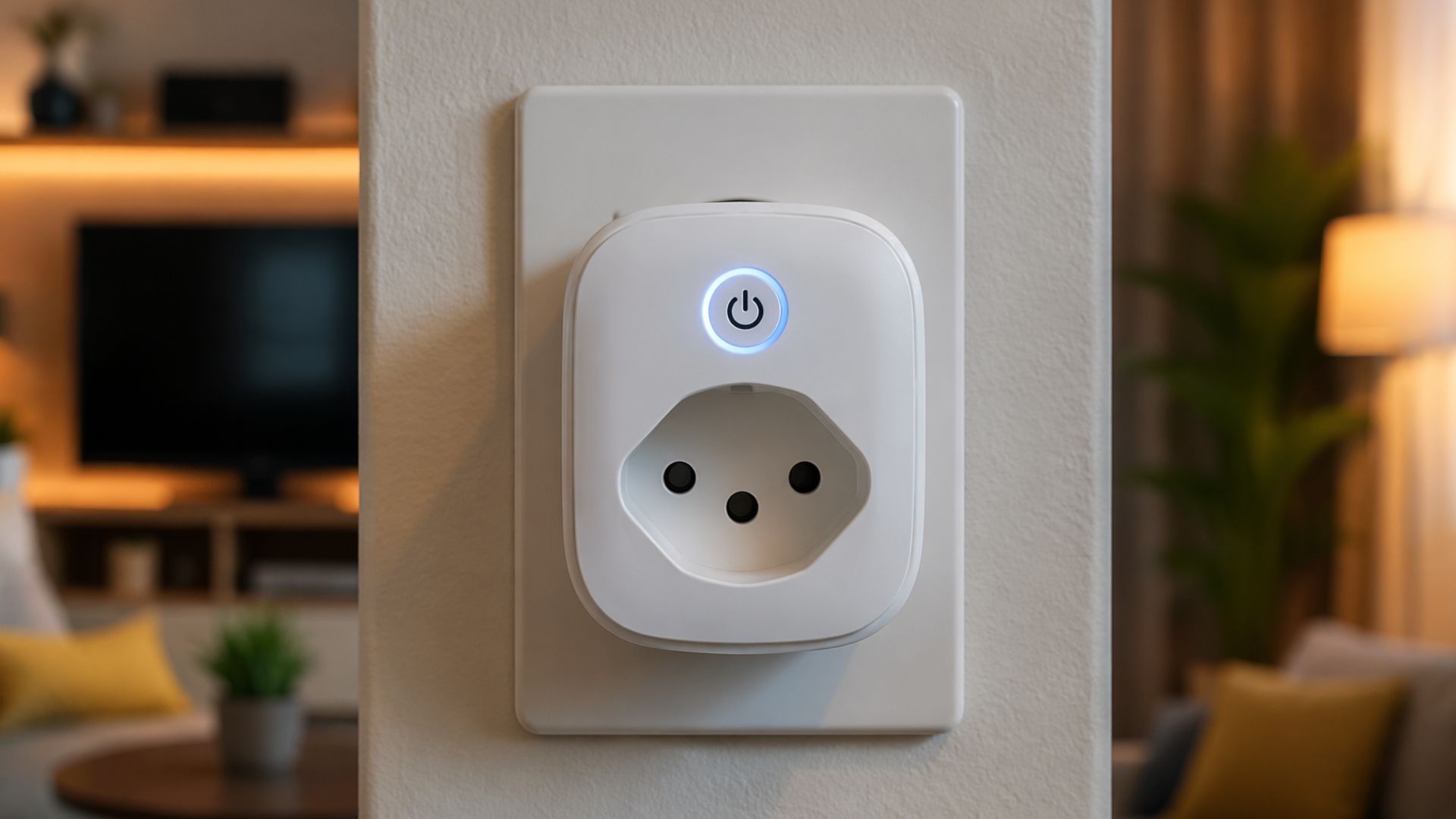

Smart home technology gains space by enabling remote control, routine automation, and detailed monitoring of electricity consumption, expanding awareness of invisible waste and paving the way for real savings when allied with consistent usage habits and daily monitoring.
The presence of smart plugs is growing in Brazilian homes by combining remote control, automation, and consumption monitoring in a single device, increasing the interest of consumers looking to reduce waste without drastically altering their domestic routine.
Despite their popularity, they do not automatically reduce electricity bills, as the financial impact directly depends on how the user utilizes their functions in daily life and organizes the operation of connected devices.
When properly configured, savings arise by eliminating waste, turning off devices outside of hours, and monitoring, in real-time, the consumption of each item throughout the month, allowing for more conscious adjustments.
-
She spent 73 years breathing inside an iron lung, survived the aftereffects of polio, and became the last woman in the United States dependent on the equipment before dying at 78 years old.

-
Brazilian students created a $1 filter using pine bark, cotton, and 3D-printed parts to clean cassava wastewater, reduce the toxicity of a hazardous waste, and transform contaminated water into biofertilizer.

-
Astronaut from Artemis II steps down after mission to the Moon and decision surprises after a record of 406,771 km, a historic 10-day journey, and an unprecedented achievement for Canada.

-
A fossil kept for years in a small museum in Montreal concealed 450-million-year-old soft tissue, a discovery that has only happened once before in history.


In this context, manufacturers and energy efficiency guides point out that the benefit lies less in the device itself and more in the disciplined use of resources such as scheduling, timers, and remote shutdown integrated into daily life.
By incorporating these routines, residents begin to reduce standby consumption, avoid unnecessary operating periods, and identify more precisely which devices truly impact the monthly bill.
In homes where televisions, video games, speakers, decoders, lamps, and part of the remote work structure remain powered on unnecessarily for long periods, automation helps reduce waste that typically goes unnoticed.
On the other hand, in environments with few electronics or more controlled usage, the financial gain tends to be limited, although there is still an advantage in terms of practicality and control.
Energy savings with smart plugs: where is the real gain
Among the main attractions is the ability to interrupt the invisible consumption of devices that continue to use energy even when they appear to be off, something common in various electronics present in daily life.
According to international energy efficiency guidelines, standby loads can be reduced when there is an effective cut in power, a practice that directly fits into the functionalities of smart plugs.
This effect is more evident in entertainment electronics and home office equipment, which often remain connected to the electrical network even without active use for a good part of the day.
Televisions, consoles, audio systems, monitors, printers, and chargers continue to consume energy while in standby, which, over the month, can represent a significant accumulated expense.
By programming the shutdown of these devices during the night or in times of absence, the user eliminates this continuous consumption and reduces energy waste in a practical way.
Moreover, the built-in monitoring in some models changes the consumer’s relationship with the electricity bill, as it allows for tracking detailed data without relying solely on the monthly invoice.
Instead of waiting for the billing cycle to close, it becomes possible to view instantaneous power, usage history, and accumulated consumption directly in the app.
This monitoring facilitates the identification of consumption habits and allows for more accurate decisions about energy use.
Without concrete data, savings remain based on perception, while access to detailed information transforms behavior adjustment into a more objective and measurable action.
If monitoring reveals constant consumption outside of usage hours, automatic shutdown tends to be effective, while devices with low standby consumption may not justify automation solely for savings.
Smart Plug’s Own Consumption: Impact on Total Spending
At the same time, it is important to consider that the smart plug also consumes energy to operate, as it needs to keep its circuits active and connected to receive commands remotely.
In models available on the market, manufacturers indicate standby consumption of less than 1 watt in some cases, while others may show variations depending on technology, connectivity, and additional features.
Although this expenditure is considered low, it should not be ignored, especially in homes that use several units distributed across different environments.
In scenarios with few outlets, the impact tends to be almost imperceptible, but the sum of consumption can become significant when there is a large number of devices installed.
The financial gain becomes clearer when the plug controls devices that frequently waste energy or remain on unnecessarily for long periods.
Thus, the most efficient installation usually concentrates these devices in strategic points of the house, where there is greater potential for reducing energy waste.
Environments with televisions, video games, secondary modems, decorative lamps, printers, and intermittently used appliances tend to show more noticeable results.
How to Measure Energy Savings in Practice
To assess whether the smart plug really generates savings, the most reliable way is to compare consumption before and after automation over a complete billing cycle.
Analyses based on a few days can distort perception, as variations in household routine directly influence the consumption recorded on the electricity bill.
Initially, it is necessary to identify which devices will be connected and understand the usage pattern of each throughout the day.
Next, observing the operating time, standby hours, and periods of inactivity helps define more efficient automation strategies.
Based on this information, the user can schedule shutdown times, create timers, and adjust remote commands according to the household routine.
With the system in operation, comparing the data becomes more consistent and allows for evaluating the real impact of the changes implemented.
The ideal is to cross-reference the information from the smart plug app with the variation in monthly consumption recorded on the energy bill.
The historical data in kWh provided by models with measurement contributes to a more accurate and realistic analysis.
This monitoring also reveals common distortions, such as overestimating the consumption of certain devices or underestimating equipment that remains active for long periods.
Which devices work best with smart plug automation
Not all equipment is suitable for use with a smart plug, as compatibility depends on factors such as power, type of load, and electrical operation characteristics.
Manufacturers recommend checking these specifications before installation, avoiding risks and ensuring the correct use of the device.
Devices with resistive loads tend to have better compatibility, while inductive loads or devices with compressors may require additional attention.
This caution is essential when considering items such as air conditioners, refrigerators, and freezers, which have specific operation and may not be suitable for frequent automatic shutdown.
In certain situations, the plug can be used only for monitoring, provided that the manufacturer authorizes it and the electrical specifications are respected.
For heaters and other high-power devices, the analysis should include current capacity, quality of the electrical installation, and usage conditions.
Electrical compatibility remains the main criterion for the safe and efficient use of the smart plug.
Therefore, more predictable savings tend to occur in equipment with stable operation and evident waste outside of usage hours.
Lighting, entertainment electronics, and part of the remote work structure usually fit better into this profile.
When it is worth investing in a smart plug
In homes with an intense routine and a large number of electronics, the investment tends to yield more consistent results over time.
In these scenarios, automation reduces forgetfulness, organizes operating hours, and allows for greater control over daily energy consumption.
Although the financial return is not immediate, it becomes more likely when the outlet directly addresses recurring waste.
In homes with low consumption, the economic impact tends to be smaller, even though the device offers benefits related to practicality and detailed monitoring.
In addition to savings, many users value the ability to control devices remotely and track the individual consumption of each power point.
The smart outlet stands out as a consumption management tool, allowing for more conscious decisions and more precise control over electricity use in the home environment.