






 Portuguese
  Spanish


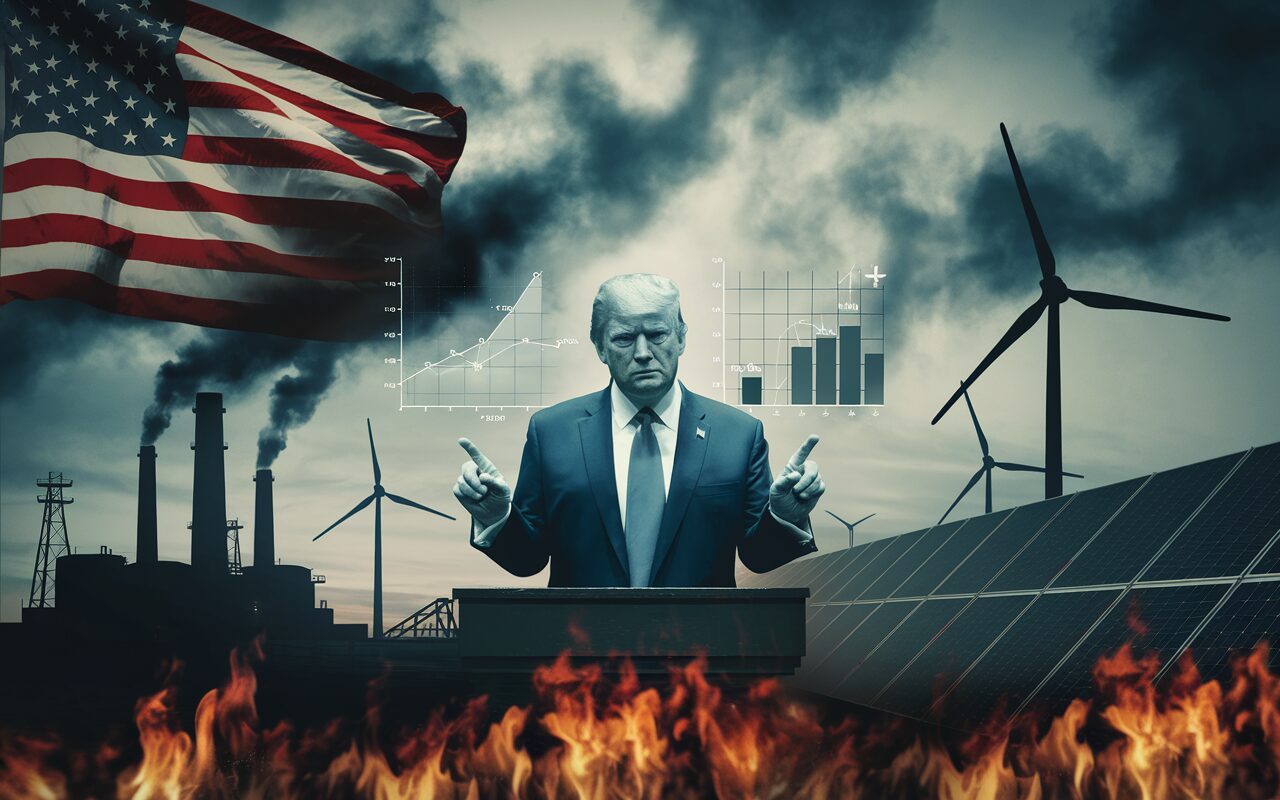

Trump Administration Statements Mark a Break with Previous U.S. Climate Agenda and Rekindle Debate on Renewables.
During the energy security summit held on Thursday (24) by the International Energy Agency (IEA) in London, the United States took a critical stance on reducing fossil fuel use in favor of renewable sources. The remarks by U.S. envoy Tommy Joyce marked a shift in U.S. energy policy, signaling the new positioning of the Trump administration.
“We oppose these harmful and dangerous policies,” said Joyce, who serves as acting assistant secretary for international energy affairs. According to him, the attempt to phase out fossil fuels in the name of carbon neutrality does not contribute to global energy security. “Some want to regulate all forms of energy except so-called renewables, until their total disappearance. That is not energy security, and we know exactly where that leads,” he declared.
Statements Reveal Shift in U.S. Energy Policy
The participation of the United States in the IEA summit marked a distancing from the guidelines of the previous administration, led by Joe Biden, which had placed the U.S. at the forefront of the transition to renewable energy. Under the Trump administration, the U.S. now adopts a position of climate skepticism and reaffirms the strategic role of oil and natural gas for the country.
-
European Parliament Approves Digital Euro, Aiming to Challenge Visa and Mastercard’s Dominance and Transform Payments Across Europe by 2029

-
Oil production grows in Rio, but reserve replacement raises a warning sign
-
Israel finds Hezbollah militarized tunnel over 200 meters long under village, with 4 missile launch shafts, 12 chambers, anti-tank missiles, drones, and weapons depots at a depth of 25 meters.

-
Petrobras is expected to complete the drilling of the Morpho well in the Foz do Amazonas in August 2026, the first well in the Equatorial Margin, an oil frontier that the ANP estimates at more than 30 billion barrels and could redraw the map of Brazil.





Tommy Joyce’s criticism also targeted the IEA itself, which, in 2021, recommended that no new fossil fuel projects be initiated if countries wanted to meet the carbon neutrality goal by 2050. At the time, the recommendation generated a strong reaction among oil and gas producers.
Despite the new posture of the United States, IEA Executive Director Fatih Birol tried to adopt a conciliatory tone. During his speech, he acknowledged that oil and gas are still “important elements of our energy mix” and will continue to be for many years.
Divisions Mark Debate on the Future of Energy
The summit brought together representatives from 60 countries and about 50 companies in the energy sector. The discussions take place amid an unstable global landscape, with armed conflicts in Ukraine and the Middle East, as well as trade disputes and changes in the environmental policy of powers like the United States.
The differences among participants became evident early in the speeches. While some countries advocate for accelerating the transition to renewable sources, others argue that a rapid abandonment of fossil fuels could compromise supply security and create economic risks, especially in nations that still heavily rely on these resources.
The U.S. positioning, one of the world’s largest oil producers and consumers, reinforces the tension between environmental goals and national energy interests. The defense of continued fossil fuel use places the United States at odds with European countries and with the direction the IEA had been taking in recent years.
Impacts and Repercussions on the International Stage
The remarks from the U.S. representative reflect a broader trend of the current administration in reevaluating environmental commitments made in international forums. Under the Trump administration, the U.S. demonstrates a clear priority: to strengthen its energy security through the utilization of its fossil reserves, even if that represents a setback in climate commitments.


This repositioning could have direct impacts on multilateral climate negotiations, especially in forums like COP and other global meetings on the environment. The new stance of the U.S. may also influence countries that are still hesitant to adopt more ambitious emissions reduction targets.
Despite the global increase in investment in renewable sources like solar and wind, fossil fuels continue to dominate the energy matrix of many countries, including the United States itself. The debate between energy security and decarbonization remains one of the major challenges of the current decade.
U.S. and the Future of Renewables: Dilemma Between Energy Independence and Climate Commitments
Even with the advancement of renewable sources in the United States, the remarks of the U.S. representative signal a clear preference for the continued use of oil, gas, and coal. The dilemma between reducing emissions and ensuring a constant energy supply remains present in the country’s policies.
With this stance, the United States seems to indicate that, under the current administration, energy transition targets will be re-evaluated in light of national security and energy independence. The future of renewable energy in the United States will therefore depend on the ability to balance these interests with the demands of the global market and international agreements.
The IEA summit concluded with a partial consensus: oil and gas will still play a significant role in the short and medium term. But the pressure for sustainable solutions continues, and the actions of the United States will be central in defining the direction the world will take in the pursuit of a cleaner and safer energy matrix.
Source: UOL








