






 Portuguese
  Spanish


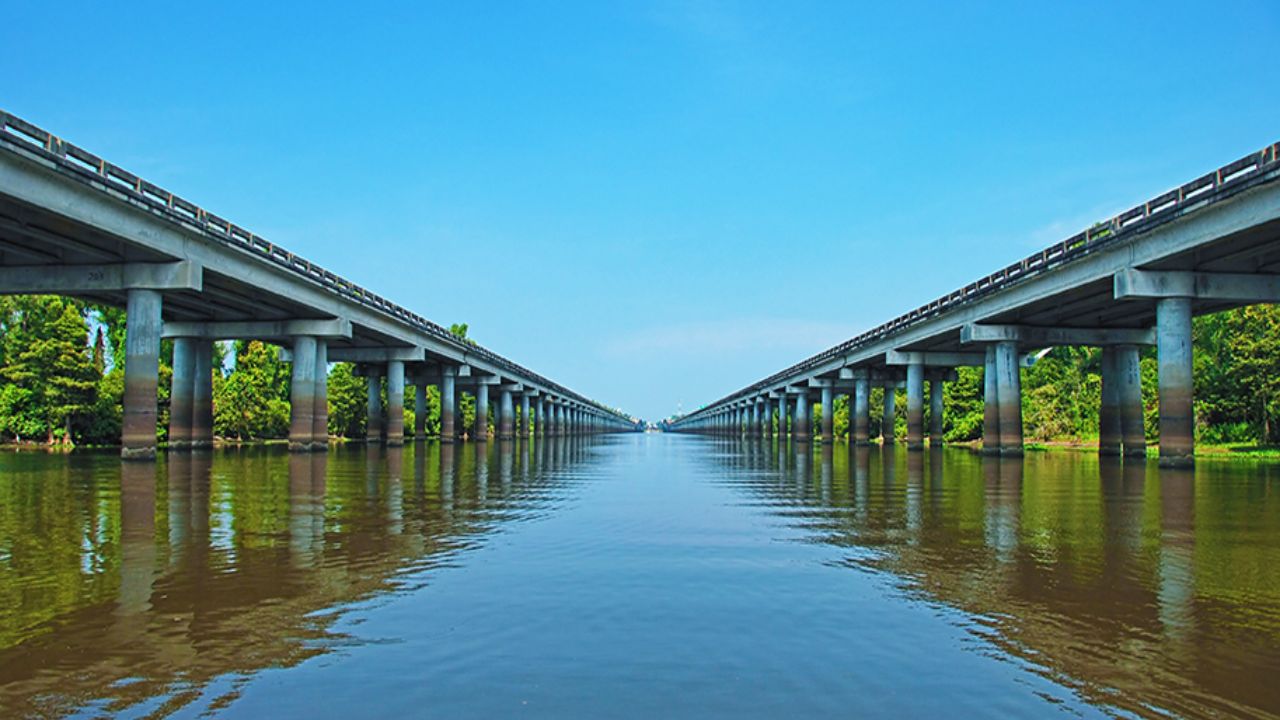


The Largest Bridges in the World Show How the Longest Bridges in the United States Transformed Bridges in the United States into Great Engineering Works and Became Symbols of American Engineering Strength.
When we talk about the largest bridges in the world, it is impossible to ignore the longest bridges in the United States, scattered across swamps, lakes, and ocean inlets that would be impassable without these giant structures. In a country with hurricanes, earthquakes, and unstable terrains, bridges in the United States have become great engineering works that perfectly encapsulate what American engineering is about: bold solutions designed to last decades and move millions of vehicles.
Over the past few years, American engineering has built some of the largest bridges in the world exactly where it seemed most difficult to construct. These longest bridges in the United States cross entire lakes, span kilometers of swamps, and extend over stretches of open sea, connecting cities, boosting tourism, and ensuring the flow of cargo. These bridges in the United States are not just concrete and steel; they are direct responses to nature’s challenges.
The Strength of Bridges in the United States
The United States has a geography that complicates any infrastructure project. There are flooded regions, large lakes, coastal areas exposed to hurricanes, and entire states cut by geological faults prone to earthquakes. In this scenario, a common bridge won’t suffice.
-
U.S. City Builds Tiny Home Village on Water Company Land to House 136 Homeless People: Inside the Social Housing Units

-
Woman Turns Shipping Container into Home, Embraces Rural Life to Cut Monthly Expenses to Just Over $330
-
France Revamps 530 Social Housing Units with Large Balconies and Glass Facades Without Demolishing Existing Buildings

-
Facing high rent, couple transforms parents’ garage into a fully functional apartment, creating a complete home at a fraction of the market cost.




That’s why some of the largest bridges in the world are in American territory, and many of them appear on any serious list of the longest bridges in the United States. These structures need to withstand strong winds, rough seas, tropical storms, and even seismic shocks, all while maintaining the daily traffic of millions of people.
Each of these bridges in the United States emerges from years of calculations, tests, and adjustments. They are great engineering works designed to function as permanent arteries of the economy. And while they impress by their scale, they also reveal the maturity of American engineering, which has learned to build over swamps, within lakes, and in hurricane-prone areas.
Lake Pontchartrain Causeway: A 38-Kilometer Road over Water

In the vicinity of New Orleans, Louisiana, lies one of the largest bridges in the world and a classic symbol of the longest bridges in the United States. The Lake Pontchartrain Causeway spans Lake Pontchartrain over a stretch of about 38 kilometers, connecting the cities of Mandeville and Metairie.
Throughout most of the crossing, the driver sees water on all sides. The average height of the bridge is about 4.5 meters above the lake, enough to allow navigation underneath while keeping the structure protected. Building a bridge in this scenario required overcoming unstable terrain and a climate marked by intense storms.
Today, about 9 million vehicles cross the Lake Pontchartrain Causeway each year, highlighting the importance of this link to the metropolitan area of New Orleans. It is a perfect example of how American engineering transformed a large lake into a daily route, solidifying this structure among the main bridges in the United States and among the largest bridges in the world.
Manchac Swamp Bridge: Crossing an Infinite Swamp

Still in Louisiana, the Manchac Swamp Bridge is another must-mention when it comes to the longest bridges in the United States. At approximately 36 kilometers long, it crosses a vast swamp and connects cities like LaPlace and Ponchatoula.
Instead of “open” water like at the Lake Pontchartrain Causeway, the challenge here was to erect pillars over flooded ground, with vegetation, mud, and instability along practically the entire stretch. The average height is around 3 meters, allowing small boats to pass below the structure.
The construction required deep foundations and extremely strong supports prepared for years of moisture and water level variations. Even so, the bridge became vital for regional transport, being used by about 4 million vehicles per year. Once again, it is clear how these bridges in the United States are great engineering works designed to conquer environments that, at first glance, seem impossible.
San Mateo-Hayward Bridge: Earthquake-Resistant Technology in California

In California, the San Mateo-Hayward Bridge is one of the most strategic bridges in San Francisco Bay. With about 12 kilometers long and an average height of 15 meters above the water, it allows large vessels to pass through and integrates important traffic routes in the region.
The first version of the bridge was built back in the 1920s and, over time, underwent expansions and reinforcements. Today, it combines older structures with modern sections, a direct result of the evolution of American engineering in the face of earthquake risks. Designing a bridge in an earthquake-prone area requires special calculations, damping systems, and materials prepared to deform without collapsing.
The result is a structure that not only integrates the list of the longest bridges in the United States but also symbolizes the ability of American engineering to adapt classic projects to current safety requirements. With around 80 million vehicles per year, the San Mateo-Hayward Bridge practically demonstrates how the largest bridges in the world also need to be flexible, resilient, and constantly updated.
Seven Mile Bridge: A Florida Postcard

In Florida, the Seven Mile Bridge is perhaps one of the visually most famous bridges in the United States. With about 11 kilometers long, it connects stretches of the Florida Keys and offers an open ocean view that looks like a movie scene.
The highest point reaches approximately 6 meters above sea level, allowing boats to pass through. During construction, engineers had to deal with unstable terrain, tropical storms, and strong winds, typical of a hurricane-prone area.
Despite all these challenges, the bridge has established itself as a landmark of American engineering and also an important tourist attraction, receiving about 2.5 million vehicles per year. It shows that the largest bridges in the world serve not only to connect two points on the map but also to create visual experiences that strengthen the image of great engineering works in the United States.
Twin Span Bridge: Resilience after Hurricane Katrina

Back in Louisiana, the Twin Span Bridge again crosses Lake Pontchartrain, linking New Orleans to Slidell over approximately 12.5 kilometers. The original version of the bridge was severely damaged by Hurricane Katrina, one of the most devastating events in recent American history.
Instead of simply repairing what existed, the response of American engineering was to build a more modern, higher, and reinforced structure, designed to withstand future storms with much greater safety. Today, the bridge accommodates about 6 million vehicles per year, ensuring an essential connection for the region.
The Twin Span Bridge is a hallmark case among bridges in the United States because it unites two concepts that mark the largest bridges in the world: large scale and the ability to be rebuilt after disasters. It shows that the longest bridges in the United States are not just giant structures; they are symbols of resilience.
Why These Bridges Are Great Engineering Works


More than just extension numbers or traffic statistics, these bridges in the United States function as a living laboratory of American engineering. In all of them, there are common elements:
- Projects designed to withstand decades of intense use
- Structures calculated to face wind, water, corrosion, and, in some cases, earthquakes and hurricanes
- Constant maintenance to ensure safety and prolong lifespan
That’s why, when we talk about the largest bridges in the world, we are not only mentioning length. We are talking about great engineering works that connect entire regions, prevent areas from becoming isolated, and keep the circulation of people and goods alive.
Without these longest bridges in the United States, much of the country’s logistics would be slower, more expensive, and in some cases, simply unfeasible. They support production chains, boost tourism, bring communities closer together, and help keep the economy moving.
The Future of American Engineering in Bridges
Looking ahead, it is likely that new bridges in the United States will keep the country in the spotlight among the largest bridges in the world. With lighter and stronger materials, smart sensors, and sustainable solutions, the trend is that the next great engineering works will be even more integrated with the environment.
Structures capable of generating clean energy, monitoring their own wear in real-time, and adapting better to climate change are already being discussed. American engineering has a history of turning geographical limitations into opportunities, and the longest bridges in the United States are proof of that.
From Lake Pontchartrain to the Louisiana swamps, from San Francisco Bay to the Florida Keys, these bridges in the United States show how technology can literally reshape a country. And that’s why they remain firmly among the largest bridges in the world, serving as a showcase of American engineering’s capabilities.
And you, which of these bridges impressed you the most, and which other bridge do you think deserves to be on a list of great engineering works in the coming years?







