Portuguese
  Spanish


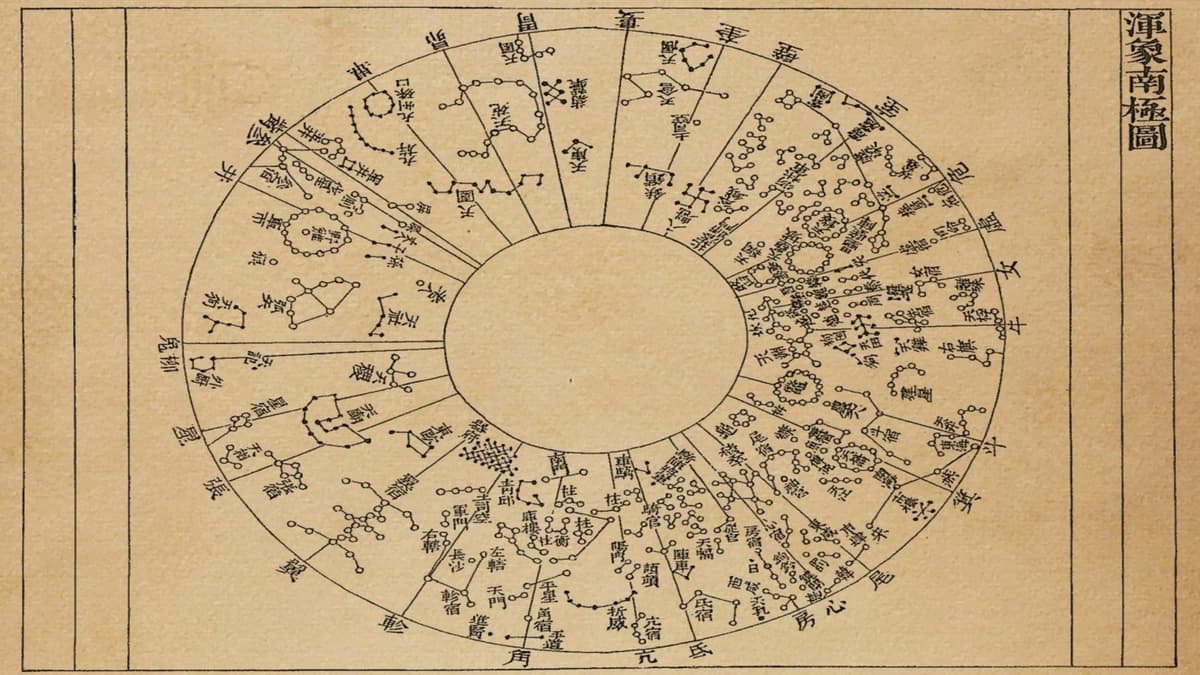

New Analysis Reveals That the “Star Manual of Master Shi,” Created in China Around 355 B.C.E., Is the Oldest Structured Celestial Map Ever Identified.
A new study may have forever changed the history of astronomy. Researchers from the Chinese Academy of Astronomical Observations concluded that the “Star Manual of Master Shi” is, in fact, the oldest celestial map in the world.
The discovery places the document as predating any known Western representation of the stars.
Rediscovery With Modern Technology
For decades, the Star Manual of Master Shi has intrigued scientists due to its uncertain dating. It was believed to have been produced around 125 C.E.
-
Oceanographer Turns Abandoned Fishing Nets from Brazilian Waters into Bags, Creating Jobs and Earning Over $7,000 Monthly

-
Australia deploys poisoned sausages and uses traps, shooting, and fences in a battle against invasive cats that kill over 1.5 billion native animals annually, threatening more than 200 species.

-
NASA Rover Captures “Tired Face” on Mars, Highlighting Human Brain’s Tendency to See Faces in Rock Formations

-
Ancient Stone City in the Desert, Once Home to 30,000, Puzzles Scientists with Nabateans’ Water Mastery 2,000 Years Ago





However, by using new imaging techniques, researchers were able to accurately identify the period in which the observations were made.
The method used was the “Generalized Hough Transform,” a computer vision technique capable of detecting errors and comparing images with modern data. As a result, astronomers were able to accurately verify the positions of the stars described in the ancient document. The result was surprising: the map would have been drawn around 355 B.C.E.
A Detailed and Structured Work
The star catalog compiled by Master Shi contains records of 120 stars, with 118 of them having complete positional data.
Although the Babylonians had already described stars in the 8th century B.C.E., this study specifically focuses on a structured map with precise coordinates.
The document drew attention not only for its content but also for the methodology applied. The use of a spherical coordinate system — common among Chinese astronomers — was one of the clues that helped reinforce the authenticity of the proposed dating.
This type of representation gained traction in China after the invention of the armillary sphere, an instrument made of movable rings that simulate the paths of constellations.
Adjustments Over the Centuries
The researchers also pointed out that some inaccuracies observed in the map may have originated from modifications made later, in the 2nd century. This would explain why earlier scholars found conflicting data when trying to identify the origin of the document.
Experts cited by Live Science emphasized that these alterations may have been caused by the very instrument used to draw the map.
The discovery helps resolve old confusions and confirms the sophistication of the work done by Master Shi in the 4th century B.C.E.
Historical and Political Dispute
The importance of the study goes beyond astronomy. According to the authors of the research, ancient maps of the stars hold priceless cultural value. They influence both modern science and the historical understanding of civilizations.
The publication of the research also highlights the political aspect of the discovery. Having the world’s first stellar map is a coveted title. Modern cultures seek this recognition as a way to value their past and reinforce their historical presence in science.
The new study shows that Master Shi’s catalog is older than the known Ptolemaic Catalog, which was the Western reference until then. This repositions China as a pioneer in the structured representation of the sky, with more than two centuries of advantage.