





 Portuguese
  English
  Spanish
  4 min of reading
  0 comments


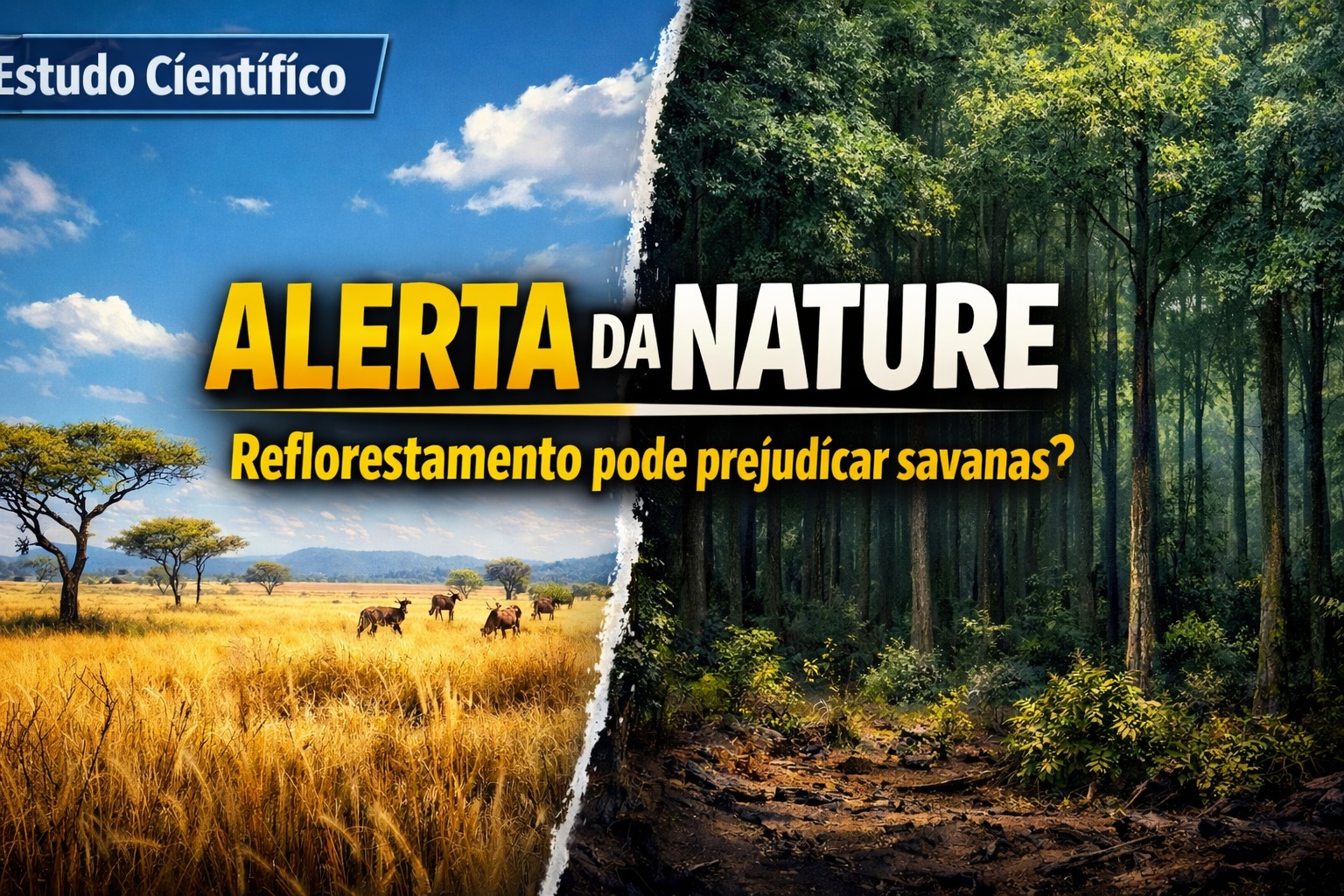
Researchers Warn That Planting Trees in Savannas and Prairies Can Reduce Fire-Adapted Species and Alter Carbon Stocks in Soil.
For decades, tree planting has been treated as a direct synonym for climate solution. Global reforestation campaigns have gained political support, international funding, and strong public appeal. However, recent research published in the scientific journal Nature and analyses associated with landscape ecology has highlighted a crucial point: planting trees does not always mean restoring nature, especially when the target is naturally open ecosystems, such as savannas and prairies.
These environments are not “degraded forests”. They are distinct biomes, structured by grasses, shrubs, herbaceous plants, and natural fire regimes that shape their biodiversity over thousands of years.
Savannas and Prairies Are Not Empty Areas
Ecosystems such as the Brazilian Cerrado, African savannas, and North American prairies are complex and highly biodiverse systems. A significant portion of plant and animal diversity is adapted to the constant presence of direct sunlight, specific soils, and periodic fire cycles.
-
The sea has stopped just warming and has started pushing storms towards the continent: marine heatwaves are already entering the path of up to 25% of extreme coastal rains and can increase storms by 30%, worsening floods on the coast.

-
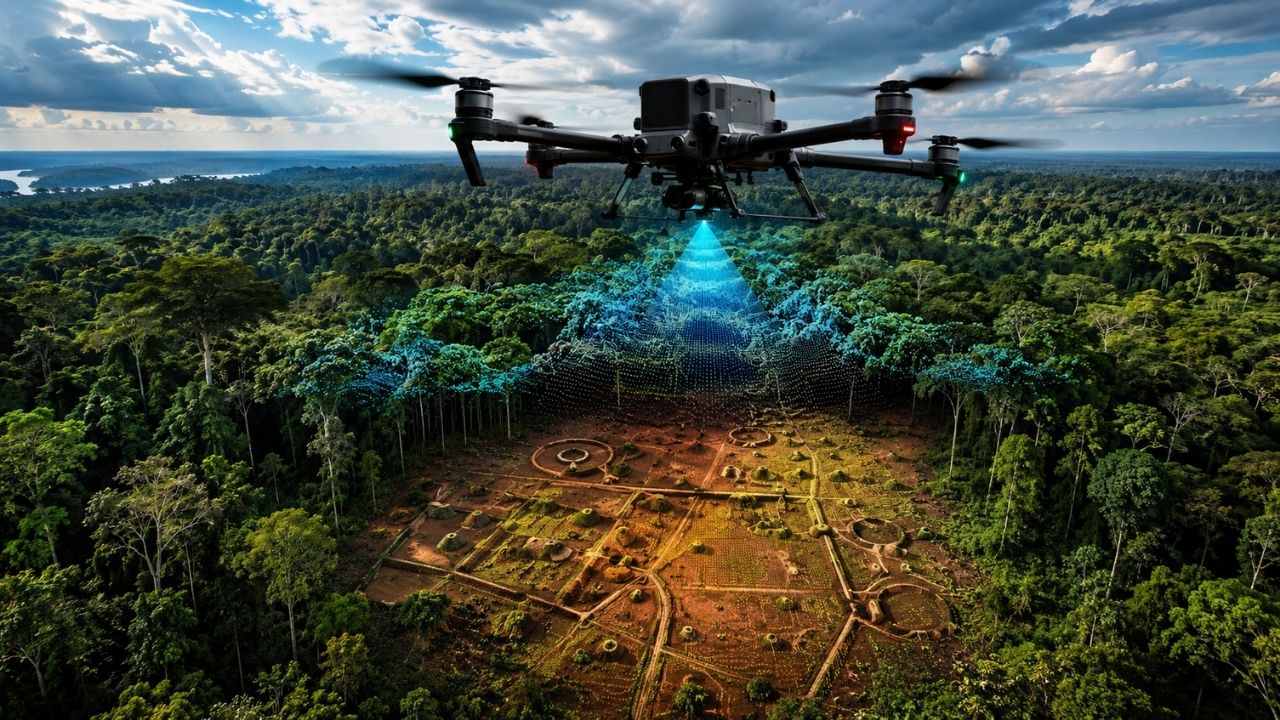
Drone flies over indigenous area in Xingu and creates a point cloud capable of penetrating the tree canopy, revealing the forest floor, and mapping archaeological sites, ancient villages, roads, and ditches used to understand the historical occupation of the Kuikuro territory.
-
New technology may retire the common electric shower: Xiaomi introduces an intelligent model with tempered glass, a giant 305 mm spreader, antibacterial function, four water modes, and controls inspired by piano keys for around R$ 640 in China.

-
Japan surprises the world by launching a wooden satellite only 10 cm in size into space: the LignoSat project spent 240 days exposed on the ISS, withstood radiation, and could reduce space debris generated by metal structures.



The massive introduction of trees into these environments profoundly alters this dynamic. Species adapted to open fields may lose space to tree vegetation, leading to a reduction in the diversity of herbaceous plants, insects, birds, and mammals specialized in these habitats.
Ecological research shows that the artificial increase of tree cover in savannas can reduce landscape heterogeneity — an essential factor for maintaining biodiversity.
The Carbon Paradox
One of the most commonly used arguments to justify mass plantings is carbon sequestration. Trees accumulate carbon in above-ground biomass, which seems like a direct solution to offset emissions.
However, in many prairies and savannas, carbon is primarily stored in the soil, especially in grassland systems with deep roots. Converting these ecosystems to forest formations can alter the balance of underground carbon.
Moreover, changes in the natural fire regime may affect the carbon cycle. Savannas depend on periodic natural burns to maintain their ecological structure. The excessive introduction of trees can modify these cycles, affecting both biodiversity and long-term carbon dynamics.
In other words, the gain in above-ground carbon does not always compensate for losses or alterations in the underground stock.
Impact on Natural Fire Regimes
Fire in savannas is not just destruction — it is part of ecological functioning. Many plant species have evolved to withstand and even depend on controlled or natural burns.
When tree cover artificially increases, the behavior of fire changes. There may be:
– changes in the frequency of burns
– increased intensity of fire
– loss of species adapted to the natural cycle
These changes compromise the ecological stability of the system and can create cascading effects on local flora and fauna.
The Scientific Critique of “Planting Trees at Any Cost”
Researchers have warned that global mass planting campaigns need to consider the ecological context. Not every open area should be reforested.
The logic of restoration should be based on the original biome. Restoring a degraded forest is different from transforming a functional savanna into an artificial forest.
Studies discussed in Nature reinforce that simplified climate policies can lead to unintended ecological consequences when they do not respect the identity of ecosystems.
The Case of the Cerrado as an Example
The Brazilian Cerrado is often cited as an example of a misunderstood biome. For a long time, it has been viewed as a “less noble” area compared to the Amazon, leading to the undervaluation of its biodiversity.
It is one of the world’s biodiversity hotspots, with thousands of species adapted to open environments. Transforming areas of typical cerrado into artificial forests may mean irreversible loss of species that cannot survive under a closed canopy.
What This Means for Global Climate Policies
The main lesson is that ecological restoration is not an automatic synonym for tree planting.
Public policies and climate goals need to:
– differentiate degraded forests from naturally open ecosystems
– consider impacts on biodiversity
– assess carbon stocks in the soil
– respect historical ecological regimes
Science shows that climate solutions need to be specific to biomes and not generalized.
The Complexity of Environmental Restoration
The debate does not position trees as villains. On the contrary: forests are essential in their natural ecosystems.
The central point is that planting trees outside the appropriate ecological context can generate more negative impact than positive.
True restoration requires understanding what that environment was like before human intervention. In some cases, restoring means allowing the savanna to continue being a savanna.
And this raises an important question for the contemporary environmental debate: is the pursuit of quick global reforestation goals ignoring the ecological diversity of the very biomes it seeks to save?





-

-

-

-

-

13 people reacted to this.