Portuguese
  Spanish


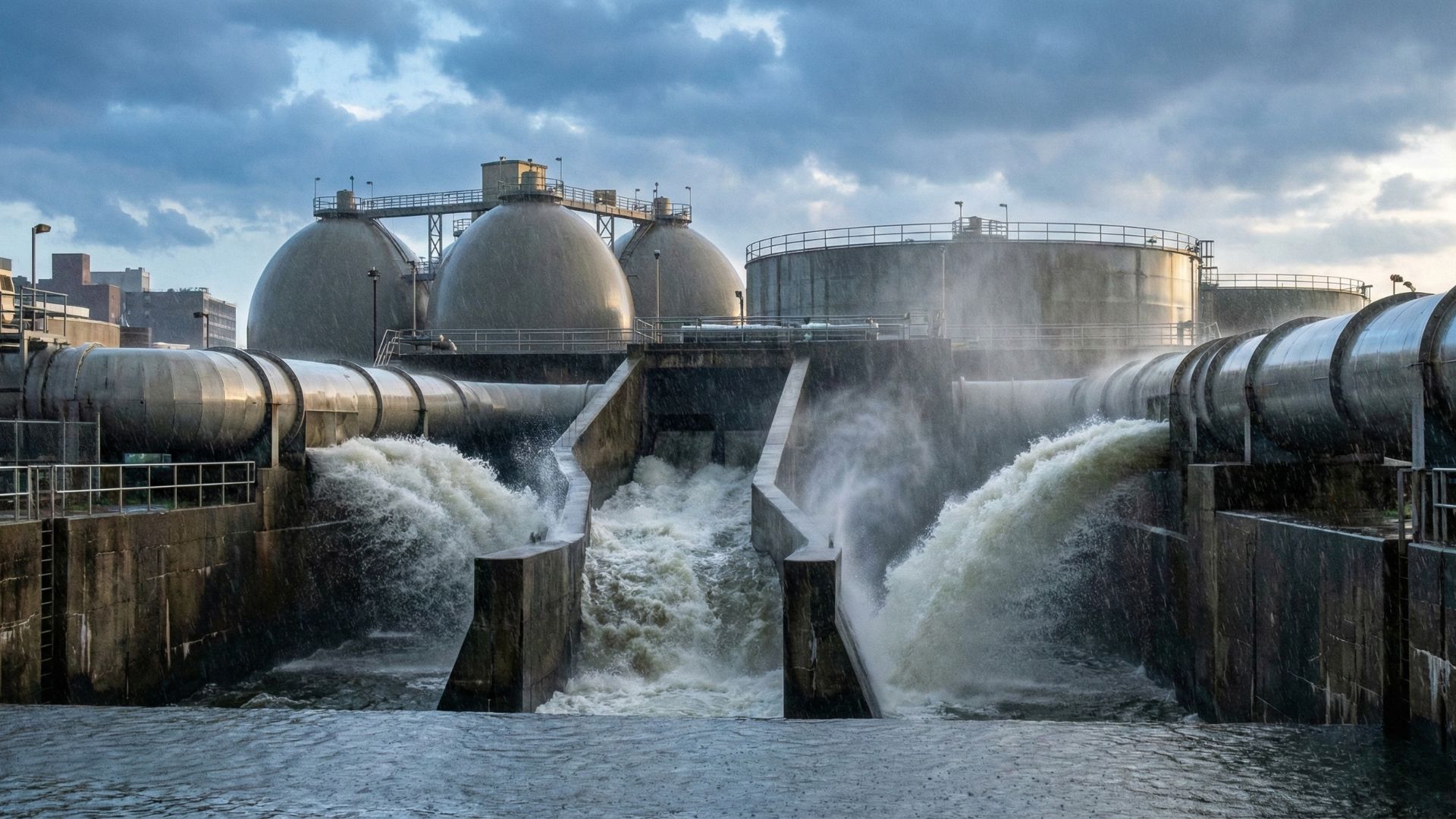


New York Subterranean Infrastructure Turns Rainfall Peaks into Renewable Energy by Processing Up to 720 Million Gallons Per Day, Producing More Than 500 Million Cubic Feet of Biogas Annually and Injecting Renewable Natural Gas into the Urban Grid.
On heavy rain days, the Newtown Creek wastewater treatment plant in New York can receive up to 720 million gallons per day and manage the flow while turning part of the waste into biogas and supplying the grid with renewable natural gas.
Located between Brooklyn and Queens, the facility operates off the postcards but sustains a crucial routine for the city: reducing pollutants before they are discharged into the environment and capturing methane generated in the sludge, preventing energy waste and decreasing the need for flaring.
Expanded Capacity on Heavy Rain Days
The strength of Newtown Creek appears when rainwater enters the sewer system and abruptly increases flow, pressuring pipes and interceptors that lead the material to treatment, especially during intense and concentrated events.
-
67-Year-Old Brazilian Woman Fulfills Lifelong Dream of Wearing Lipstick After Cleft Lip Surgery, Showcased in Emotional Exhibition

-
Father Lives with 3 Children on a 15-Meter Off-Grid Houseboat, Reduces Living Costs to £500 a Month, and Filters Canal Water with a £300 System He Built

-
In 1961, Hollywood held a unique audition with 152 black cats to cast the perfect feline for the horror film The Black Cat.
-
Brazilian Truck Driver in the U.S. Earns $11,200 Commission on Heavy Haul, Highlights High Income Potential and Demands of the Job





According to records associated with modernization works, the plant expanded its processing capacity during “wet time” from 310 to 720 million gallons per day, a leap designed to handle rain periods and reduce the risk of system relief with improperly treated effluent.

This expansion has a direct effect on the quality of the final discharge, as it reduces the chance of the excess volume escaping into local waterways when the networks reach their limits, something that dense cities frequently face during storms.
At the same time, the facility is pointed out by the city’s Department of Environmental Protection as the largest station in the municipal system, serving an extensive drainage area that includes parts of Manhattan, western Queens, and northern Brooklyn.
Physical Stages and Biological Treatment of Wastewater
Treatment begins with physical stages that remove what shouldn’t have gone into the pipes, such as larger objects and materials that hinder operation and accelerate wear, requiring continuous removal to prevent damage to equipment.
Next, sedimentation tanks use gravity to separate heavier solids and part of the floating material, preparing the flow for the biological phase and reducing the risk of overload when the station receives spikes associated with rainy days.
Although these stages do not independently resolve the pollution load, they stabilize the process and make operations more predictable, which helps maintain essential efficiency parameters when inputs vary rapidly, something common in urban networks.
After this, the wastewater moves to secondary treatment, in which microorganisms consume dissolved and suspended organic matter, reducing the load that, if uncontrolled, would degrade channels and rivers, affecting dissolved oxygen and aquatic life.
Egg-Shaped Digesters and Biogas Generation

In secondary treatment, the station controls conditions such as aeration and retention time to sustain active bacterial communities, allowing organic matter to be degraded efficiently, even when incoming volumes rise during periods of instability.
Once this phase is completed, final clarifiers separate biomass from the effluent, producing a much cleaner liquid for discharge back into the environment, not aimed at potability but focused on meeting discharge standards and reducing ecological impact.
The other side of the process, less visible to those living above ground, is in the path of the solids that accumulate and form the sludge, as this fraction carries much of the energy potential captured in the next phase.
By concentrating and treating this material, the plant reduces volume, stabilizes organic compounds, and creates conditions to generate biogas, in a route that connects sanitation to energy without relying on external fuels to produce methane.
Newtown Creek is marked by the “egg-shaped” digesters, structures used in the anaerobic digestion of the sludge, in a closed, heated environment without oxygen, where microorganisms decompose organic matter and release biogas rich in methane.
Technical materials from DEP describe that the station operates eight digesters of this type, with a minimum retention time of about 15 days and a temperature around 98 degrees Fahrenheit, parameters designed to keep the process stable and productive.
According to statements from DEP, the facility produces more than 500 million cubic feet of biogas annually, a volume directly linked to the functioning of treatment and the decomposition of sludge generated in the normal flow of the station.

For many years, also according to the DEP, approximately 40% of this biogas was reused internally in boilers that heat buildings and help maintain the digesters at the right temperature, while the excess was flared for safety.
Renewable Natural Gas in the New York Grid
The most recent change involves converting excess biogas into renewable natural gas with grid quality, through a conditioning system that removes impurities and adjusts the composition to meet technical distribution requirements.
The partnership with National Grid appears in official city statements as an arrangement that essentially directs all biogas to beneficial uses, reducing the need for flaring and allowing the renewable fuel to be injected into the local grid.
This type of project relies on strict control because raw biogas contains components that need to be treated before being sent to the system, as distribution requires quality and safety standards comparable to those of conventional natural gas.
In practice, the station operates as a point of urban energy production, with a fuel that comes from a sanitation process and enters the energy infrastructure, creating a direct connection between the “invisible side” of the city and its consumption.
Co-Digestion of Organic Waste and Efficiency Increase
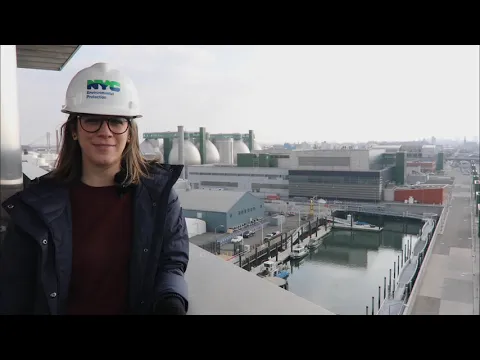

Another element that reinforces production involves co-digestion, a practice in which processed organic waste, such as food scraps transformed into an appropriate “pulp,” enters the circuit alongside sludge to enhance biogas generation.
Materials presented by the DEP indicate that co-digestion with food waste began in 2016, and technical documents cite sending this pulp from an organic processing facility in the Brooklyn area.
The logic is to take advantage of an organic flow prepared for the system, reducing landfill disposal and increasing the efficiency of the anaerobic process, without confusing the sewage goal with regular waste disposal, which would require a different structure.
By incorporating this material, the plant needs to maintain the balance of digestion, controlling temperature, mixing, and feeding, as fluctuations can reduce performance and compromise stability, especially at times when flow also varies with rain.
Operation Under Pressure and Urban Environmental Impact
Intense rain does not just bring more water; it can carry particles accumulated on streets and galleries and increase the solid load reaching the station, requiring operational adjustments and constant monitoring to avoid loss of treatment efficiency.
Moreover, everyday habits weigh in: items that do not degrade and improperly discarded fats elevate the volume of material retained in the initial stages and can generate clogs, increasing removal costs and failure risks.
In metropolitan systems, scale turns small mistakes into tons, and the station starts to function as a thermometer for the city, because what enters the pipes directly affects the energy needed to operate and the quality of the final effluent.
Newtown Creek, therefore, serves two simultaneous roles: protecting water bodies by reducing organic load and pollutants, and capturing methane that would already be generated in digestion, converting it into usable renewable fuel outside the plant.