






 Portuguese
  Spanish
  6 min of reading
  0 comments


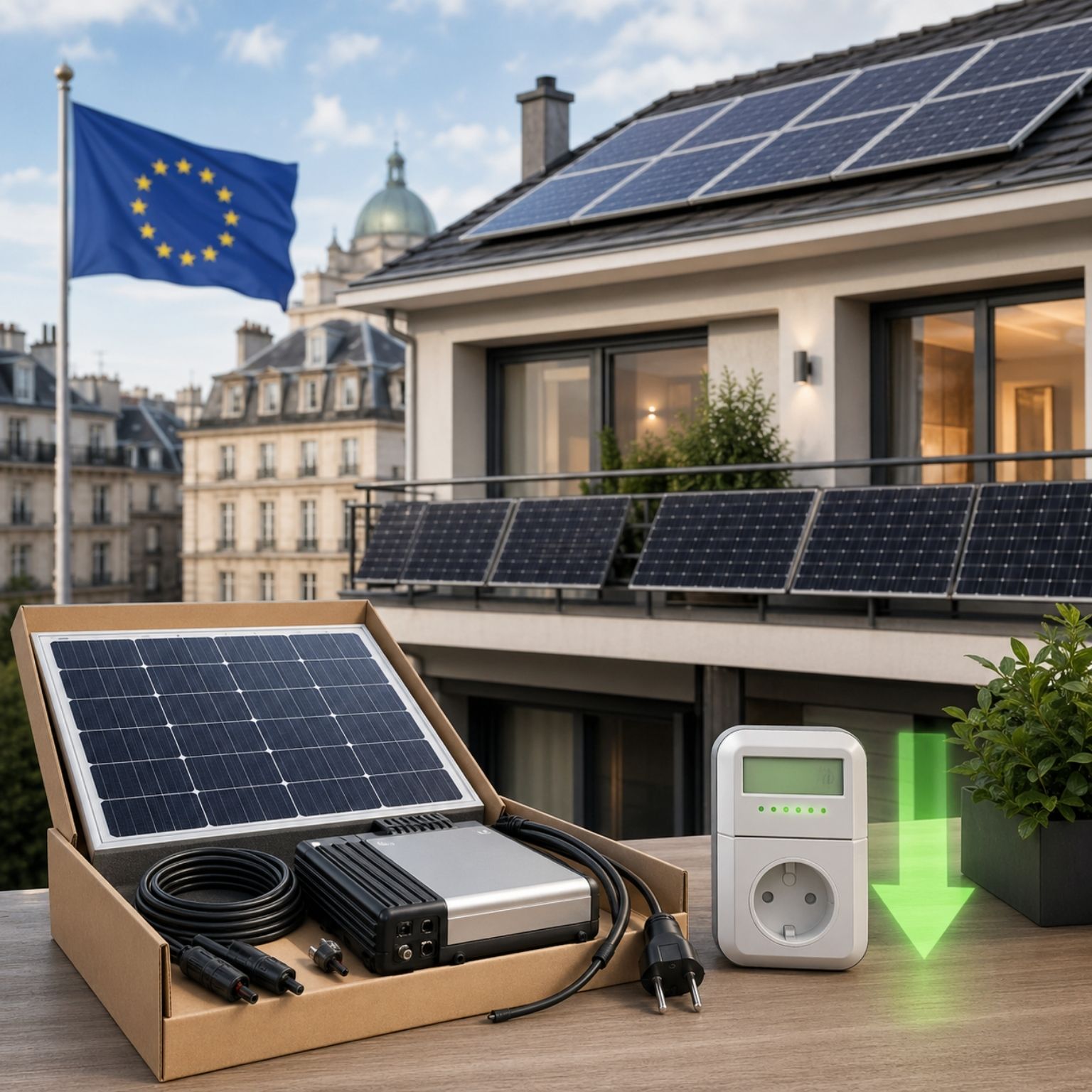
Residential solar plants and solar energy gain strength in Europe to reduce dependence on the power grid, generate electricity, and ease electricity bills amid the energy crisis.
Domestic-scale solar plants are gaining ground in Europe at a time of strong energy pressure and criticism of the continent’s dependence on imported fossil fuels. With panels installed on roofs, facades, and even balconies, consumers are beginning to transform houses and apartments into small electricity generation hubs, with a promise of investment return in two to six years, depending on the model, location, and price paid.
The movement draws attention because it combines energy crisis, more accessible technology, and direct impact on the wallet. In countries like Germany, Spain, and the United Kingdom, residential solar systems appear as an alternative to reduce exposure to power grid tariffs, especially during peak hours. In some cases, smaller kits can cost around €200, while larger models with storage are below €1,000.
The change is happening in a scenario where Europe has returned to discussing energy security after the war with Iran triggered a new crisis. In this environment, local electricity generation has come to be seen by many consumers as a concrete way to reduce vulnerability and gain more autonomy over consumption at home.
-
Helicopter Drops 180 Tons of Sand and Gravel on Swedish River to Revive Ecosystem Damaged by Decades of Exploitation

-
Brazilian Company Launches Retro Smartphone with 48 MP Camera, T9 Keyboard, and Privacy Features for Social Media-Free Use

-
Self-Taught Chinese Farmer Builds 5-Ton Submarine from Scrap, Launches It in Anhui River
-
Invisible Induction Technology Enables Wireless Power for Blenders, Coffee Makers, and Air Fryers, Reducing Countertop Cables




At the same time, the advancement of domestic solar plants expands the reach of renewable energy beyond large projects and brings the discussion into everyday life. The proposal is no longer just environmental and involves practical independence, spending predictability, and a new relationship between residents and the power grid.
What are the mini solar plants that are arriving in European homes
The so-called domestic mini solar plants are distributed generation systems that allow consumers to produce part of the electricity they use at home. In practice, this can happen through solar panels installed on the roof or other surfaces of the residence, in addition to plug-in models, which can be fixed on external walls or balconies and connected to an internal socket.
This solution is gaining prominence because it expands access to solar generation even for those living in apartments or who do not own large properties. Instead of relying solely on large roofs and bigger installations, the technology now offers smaller and simpler formats, adapted to urban space and the reality of ordinary consumers.
Why the energy crisis made solar plants even more attractive

The recent energy crisis reinforced the perception that being less dependent on the power grid can be a strategic advantage for families. According to the Director-General of the International Energy Agency, Fatih Birol, no country will be immune to the effects of this new shock, which helped to put local generation solutions at the center of the debate.
In this context, domestic solar plants have come to be seen not only as a long-term choice but as a form of protection against price fluctuations. When the house can produce part of its own electricity, dependence on purchased energy from the grid decreases, especially if the system is combined with a storage battery.
What changes in practice for those who can generate energy at home
The main change is in the relationship with the power grid. If the resident can store the energy produced during the day, when the sun is strongest, they can use this electricity during periods when the tariff is higher, such as early evening when residential consumption usually spikes.
This effect becomes even more important with the expansion of dynamic tariffs in several European countries. In this model, the price of electricity varies throughout the day, rising during peak demand hours. As a result, locally produced energy becomes even more valuable to the consumer because it reduces the need to buy electricity precisely at the most expensive times.
The numbers that explain the advance of solar plants in Europe
Data from Germany helps to gauge the scale of this movement. Between 2022 and 2025, over 1 million balcony solar system units were put into operation in the country. In the same period, prices fell by half, which helped accelerate adoption.
Today, smaller models can cost around €200, while larger versions with storage go for less than €1,000. According to Solar Power Europe, the average time to recoup the invested value ranges from two to six years, depending on the initial cost, system size, and installation location.
Even less sunny countries can benefit
Although solar energy is more associated with very sunny countries, technological advancements are expanding possibilities even in less sunny regions. Systems have become more sophisticated, allowing consumers in different parts of Europe to also benefit from local renewable generation.
Spain is highlighted as an important example in this process. According to the think tank Ember, the growth of wind and solar energy in the country has reduced the influence of expensive fossil fuel power plants on electricity prices by 75% since 2019. This change occurred faster than in other gas-dependent countries, such as Italy and Germany.
The UK case shows how technology has become more accessible

In the United Kingdom, the government recently announced that plug-in solar energy will be permitted in British homes for the first time. The news was met with enthusiasm in a country that, according to Statista, has the third most expensive electricity tariff in Europe.
This scenario helps explain why the idea of domestic mini solar power plants has become more viable for a larger number of people. The possibility of connecting a system similar to a household appliance reduced the perception of complexity and brought solar generation closer to consumers who previously viewed the technology as distant or too expensive.
What still requires attention before installation
Despite the practicality of plug-in systems, installation should not be treated as automatic in any property. In the UK, experts warn that many homes have old, modified, or poorly maintained electrical installations, which requires professional assessment before connecting any generating equipment.
This caution is important because what may be safe in one house could pose a risk in another. Therefore, the recommendation is for a qualified electrician to check the electrical installation before purchasing or using the system, especially in older properties.
Why domestic solar power plants are no longer a niche
What is happening in Europe shows that domestic solar power plants have moved beyond restricted innovation and firmly entered the debate about cost of living, energy security, and residential autonomy. The combination of lower prices, simpler formats, and relatively quick returns has shifted the weight of the decision for many families.
By reducing grid dependence at a time of volatile energy prices, these systems now represent more than future savings. They offer a concrete change in the role of the home, which ceases to be merely a consumer and actively participates in electricity production.
A change that could reshape electricity bills in the coming years
With more consumers generating and storing part of their own electricity, the trend is for the traditional relationship with energy to become less passive. Instead of just receiving the bill and absorbing market fluctuations, residents begin to have more influence over their own spending.
This is one of the points that make the advancement of domestic solar power plants so relevant. Amidst the energy crisis, the technology has come to combine practicality, economy, and a sense of independence in a way that just a few years ago seemed distant for most European consumers.
Would you install a mini solar power plant at home if the investment could be recouped in up to six years and reduce your reliance on the electricity grid?



Be the first to react!